Pakistan: Govt planning to boost olive oil production
Most countries that decide to grow olives start by buying saplings. Pakistan started with something rarer: tens of millions of wild olive trees already standing on its hillsides, and a plan to convert them one graft at a time.
The reasoning behind Pakistan’s olive ambition has never been culinary. It is an accounting problem. The country imports the large majority of the edible oil it consumes, and that bill has for many years sat near the top of the national import list, second only to petroleum in some years — a permanent, enormous drain of foreign exchange on a product that could, in principle, be grown at home. Officials have made the point for two decades, and the arithmetic has only become more compelling as prices have risen. What makes Pakistan’s version of the story unusual is the asset it started with.
The wild olive nobody planted
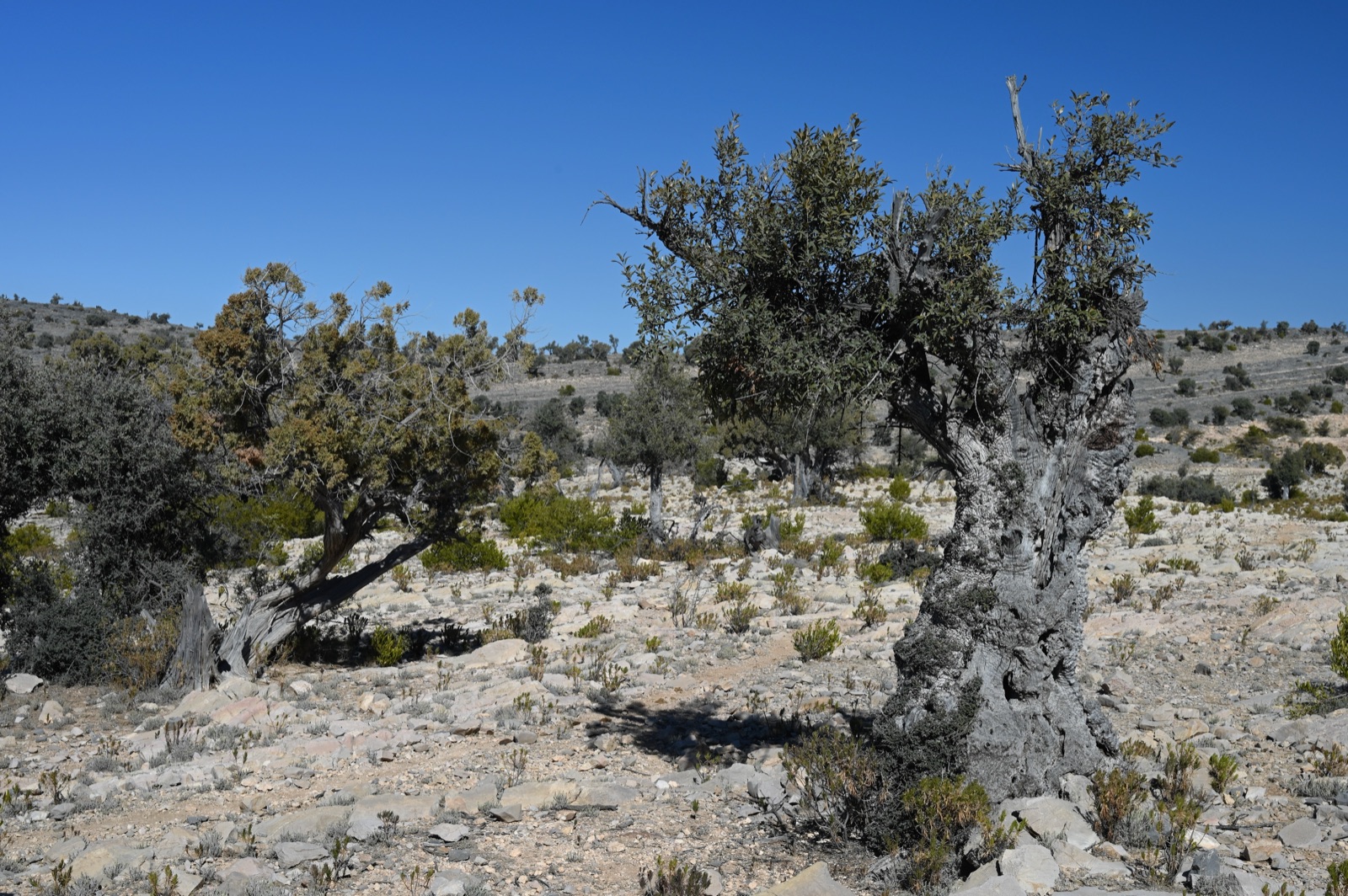
Across the northern and western uplands grows Olea cuspidata, the wild olive of Asia and East Africa — a close relative of the Mediterranean olive, hardy, long established, and present in numbers that official surveys count in the tens of millions of trees. It fruits, but the fruit is small, sparse and of little commercial use for oil. What it has is far more valuable than its crop: a root system that has already proved it can survive that soil, that rainfall and that heat, over decades.
That is the whole basis of the national programme. Rather than clearing land and planting orchards from scratch, you graft a productive cultivar onto the wild tree and let it inherit an established root system. Successful grafts can be brought into meaningful production in a fraction of the time a new orchard takes, on ground nobody had to buy, irrigate or level. Government programmes across Balochistan, Khyber Pakhtunkhwa, Punjab, Sindh and Azad Jammu and Kashmir have been built around exactly this, alongside conventional new plantings on the Pothohar plateau — the district most often described as the country’s olive valley.
What grafting can and cannot do
Grafting is genuinely clever and genuinely limited, and both halves get lost in the announcements. On the positive side it is cheap per tree, it skips years of juvenile growth, and it uses drought-hardened roots that a nursery sapling would take a decade to match. On the other side, it is skilled handwork. Survival rates depend on the season, the cut, the tie, the weather in the following weeks and whether anyone comes back to manage the tree afterwards. A graft that takes and is then abandoned is a wild tree again within a few years.
There is a harder logistical problem too. Wild olives grow where they landed, which means scattered across rough hillsides rather than in rows. Scattered trees are expensive to prune, expensive to protect and above all expensive to harvest — and harvested fruit has to reach a mill within a day or two or the oil suffers. A grove that is really a forest is a difficult thing to run as a business.
The part that is not about trees at all
Here is the thing every emerging olive country learns late. Planting is the easy fifth of the job. An olive industry is mills within reach of the fruit, laboratories that can grade oil credibly, extension officers who can teach pruning and fly control, storage that does not cook the oil, packaging, and a domestic market that knows what to do with the stuff. Any one of those missing turns a successful harvest into a disappointing bottle.
Pakistan has been building that middle layer — mills, training, nurseries, grading — and it is unspectacular work that attracts far less attention than a tree-planting figure. But the tree number is the vanity metric. The honest question about any national olive project is not how many trees went in the ground, it is how many litres of properly milled, correctly graded oil reached a buyer who came back the following year.
| Approach | What it costs | What it gives |
|---|---|---|
| Grafting wild olive | Skilled labour per tree, follow-up management | Established drought-hardy roots, fast entry to production |
| New orchard planting | Land, levelling, irrigation, years of waiting | Rows, spacing and access designed for harvesting |
| Scattered hillside trees | High harvest and pruning cost per kilo | Use of land with no alternative agricultural value |
| Mill capacity | Serious capital, sited near the fruit | The difference between oil and spoiled fruit |
| Extension & training | Ongoing public expenditure | Pruning, pest control and harvest timing that actually work |
What to take from it
- Roots are the scarce asset. In a hard climate, an established root system is worth more than a young tree of a fashionable variety.
- Count litres, not trees. Planting figures are easy to publish and tell you almost nothing about an industry.
- Milling distance is destiny. Fruit more than a day from a mill will make a lesser oil no matter how well it was grown.
- Grafting needs a second visit. The graft is the beginning of the work, not the end of it.
- New origins deserve curiosity, not suspicion. Wild-relative olives and unfamiliar growing regions have produced some genuinely interesting oils.
Olive growing in Pakistan: common questions
Does Pakistan grow olives?
Yes, both through new plantings and through a large national programme to graft productive cultivars onto existing wild olive trees, concentrated in the Pothohar plateau, Balochistan and Khyber Pakhtunkhwa.
What is Olea cuspidata?
The wild olive of Asia and East Africa, closely related to the Mediterranean olive. It grows across Pakistan’s uplands in very large numbers but produces small fruit of limited commercial oil value.
Why graft instead of planting new trees?
Because grafting inherits a mature, drought-adapted root system and brings a tree into production far faster and more cheaply than establishing an orchard on new land.
Why does Pakistan want an olive industry?
To reduce a very large edible-oil import bill. The country imports the majority of the edible oil it consumes, which is a persistent drain on foreign exchange.
Is Pakistani olive oil available to buy?
Production exists and is growing but remains small in international terms, and most of it is consumed domestically. Availability outside the country is limited.
I have a soft spot for the grafting idea, because it is the opposite of how most countries approach this. The usual pattern is a government announcement, a million imported saplings of whatever variety was fashionable that year, and a photograph. Grafting is slower to photograph and much smarter: you are borrowing forty years of root growth that nobody paid for. But do not let anyone tell you it is a shortcut to an industry. The tree was never the hard part. The hard part is a mill close enough to matter, someone who can tell a good oil from a bad one, and a buyer who comes back. Get those three and the trees look after themselves.
Drawn from Pakistani government olive programme reporting on wild olive grafting in Balochistan, Khyber Pakhtunkhwa, Punjab and the Pothohar region, and published assessments of the country’s edible oil import dependence.