How California Makes Its Oil
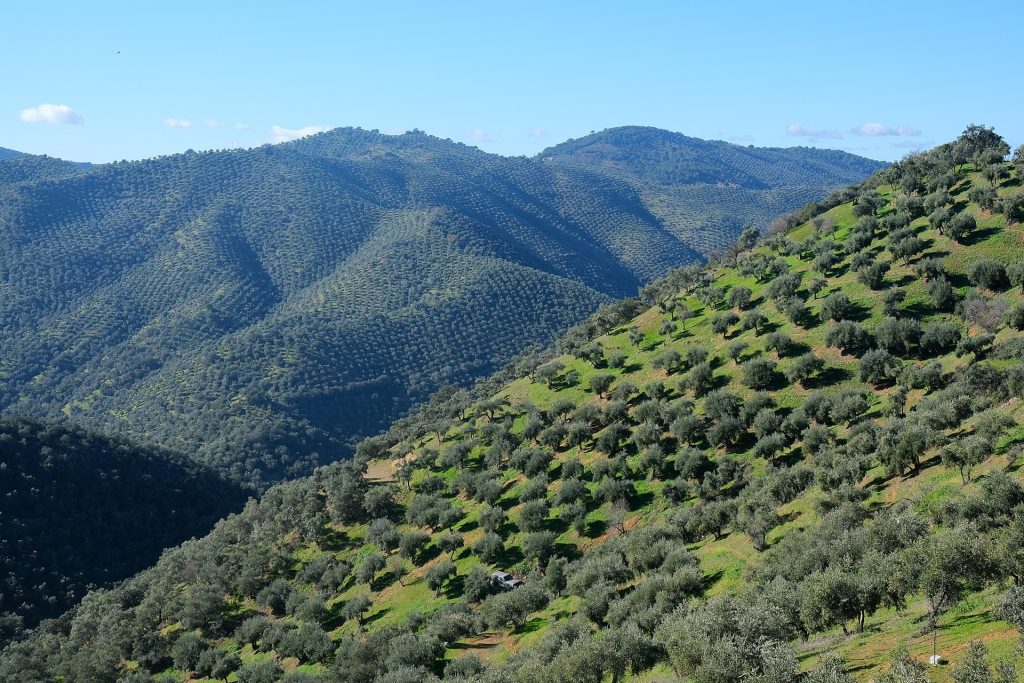
California learned olive oil late and built it like an engineer would. With no centuries of tradition to lean on, the state designed a system around machines, freshness and data — and set a quality benchmark older regions have had to answer.
California is the New World’s most serious olive country, and the way it makes oil is the whole story. The state had no inherited recipe, so it borrowed the model from wine grapes: plant in tight hedgerows, harvest by machine, press the same day. That speed — not heritage — is the engine of California quality, and it forced the rest of the trade to talk about freshness in a way it had managed to avoid.
Machine harvest and same-day pressing
The defining California move is the super-high-density orchard: olives planted in tight hedgerows so an over-the-row harvester — the same machine shape used for wine grapes — can strip the fruit in a single pass. It is fast, cheap per acre, and crucially it lets growers pick at the right moment and press within hours. That speed matters more than almost anything else in oil quality: the shorter the gap between tree and mill, the lower the acidity and the fresher the result. Many California mills sit right in the orchard, turning fruit into oil the same day it is picked.
Standards, and the corners that remain
California also writes its own rules. The state’s producers pushed for grade standards tighter than the federal minimum, partly to distance themselves from the adulteration scandals that have dogged imported oil. That is a genuine strength — a bottle marked “California Olive Oil” with a harvest date is usually what it claims to be. But the state isn’t immune to the wider trade’s tricks: cheaper blends still get cut or stretched, and “light” or refined products trade on the halo of the good estates. Read the grade and the date, not the scenery on the label.
The split the marketing hides: two Californias in one bottle
Here is the non-obvious truth. California is really two industries pretending to be one. In the north, around Corning, sits the old canned black-ripe table-olive business — mild, uniform, sterilised in the tin, a mid-century American product with little to do with flavour. The oil business is younger and elsewhere: high-density Arbequina down the Central Valley, boutique Frantoio on the coast. When a label leans on California’s wholesome image, it is borrowing equity built by the oil estates — even if what’s inside is a cheap blend. The state’s name does not, by itself, tell you which California you are buying.
The mill in the orchard, and why minutes matter
The single technical detail that does the most for California oil is also the easiest to overlook: a great many of the state’s mills sit right among the trees. An olive starts to degrade the moment it leaves the branch, its sugars fermenting and free acidity creeping up with every hour it waits warm in a bin. By crushing fruit within hours — sometimes within minutes of the harvester’s pass — the orchard mill simply denies that decay the time it needs. This is why a mid-priced California oil so often tastes cleaner than a pricier import that travelled days from grove to press. It is not magic or terroir; it is logistics. When you read “estate grown and milled” on a Californian label, that phrase is doing real work: it is telling you the gap between tree and oil was short.
| Main regions | Sacramento & San Joaquin valleys; coastal & foothill estates |
|---|---|
| Harvest | October to November |
| Orchard model | Super-high-density hedgerows, machine-harvested |
| Milling | On-site continuous centrifuge, often same-day |
| Signature olives | Arbequina, Arbosana (high-density); Frantoio, Leccino (estate) |
| Standard | California grade rules tighter than the US federal minimum |
What to do with this at the shelf:
- The harvest date is your single best signal — buy the most recent crush and use it within a year of that date, not the “best before.”
- Read the grade and origin, not the scenery: “California Olive Oil” with a date beats a romantic label every time.
- Don’t confuse the canned black olives of the north with the oil estates of the valley — different industries.
- Treat “light” or refined bottles with suspicion; they trade on the good estates’ halo.
- A current-season California Arbequina at a fair price will out-taste a tired imported “premium” every time.
How California makes its oil: common questions
When is California’s olive harvest?
Roughly October into November. Because so many mills sit in the orchard, fruit is often pressed the same day it is picked, which keeps the oil fresh.
What is super-high-density growing?
Olives planted in tight hedgerows so an over-the-row machine — the same shape used for wine grapes — can strip the fruit in one pass. It lets growers pick at the right moment and press within hours, which is the heart of California’s freshness pitch.
Is California oil more trustworthy than imports?
Often, yes. The state’s grade rules are tighter than the federal minimum, and a dated “California Olive Oil” is usually what it claims. But cheaper blends can still be cut or stretched, so read the grade and date rather than the label art.
Why is California oil rarely cheap?
Land, water and labour cost real money, and the quality model depends on fast, fresh, traceable production. The bargain bottles are usually blends; you pay for the freshness and the candour.
What does it taste like?
The dominant Arbequina style is soft, buttery and lightly fruity with mild pepper. Estate Frantoio-led oils are greener and more peppery. Both exist, and the price gap between them is usually justified.
Treat California as a freshness play, not a heritage one — the selling point is a recent harvest, a clear grade and a mill close to the trees. But know the sleight of hand: the state runs two industries, the old canned-olive business up north and the modern oil estates in the valley, and a wholesome “California” label borrows the oil estates’ reputation even when the contents are a cheap blend. Read the grade and the date. A current-season Arbequina at a fair price beats a tired imported “premium” every time.
Drawn from California Olive Oil Council standards and university extension research.