Hojiblanca Lands a 3,000 Ton Olive Oil Order From China
Hojiblanca, the Andalusian cooperative group that is Spain’s largest olive oil producer, has agreed to supply 3,000 tons of extra virgin olive oil to Wilmar, the Singapore based agribusiness giant, in a one year contract worth an expected 6 to 7 million euros. The deal lands in the middle of a Chinese buying trip to Madrid that also covers ham, wine and Spanish government bonds. Here is what was agreed, why China is worth this much trouble, and what the shape of the contract tells you.
The deal
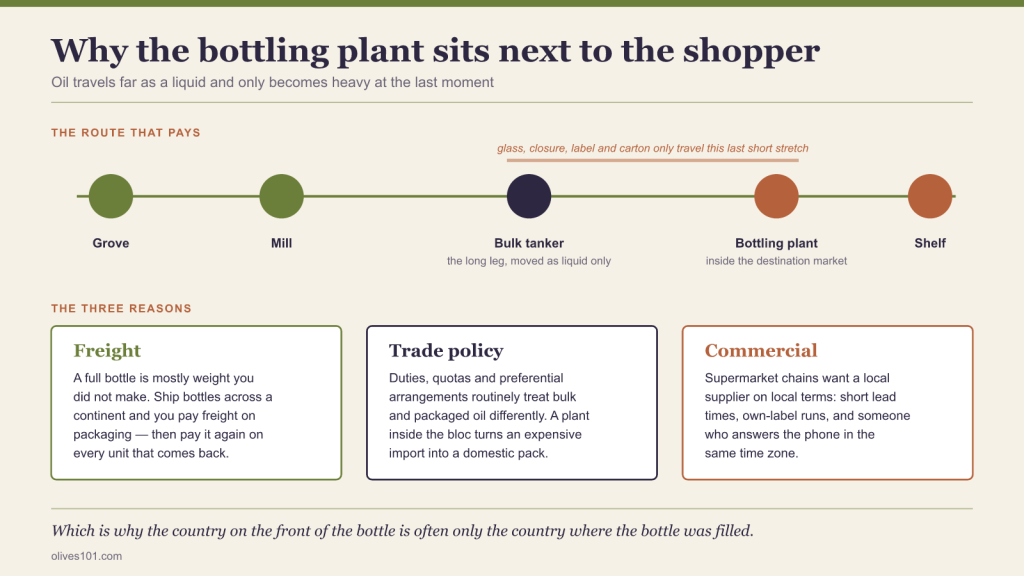
Cesar Ruesgas, Hojiblanca’s sales vice president, told the Spanish agency Europa Press that the group had been trying to break into Asia for years and had worked with most of the big Chinese distributors and producers without landing anything this size. The oil will go out in bulk to be bottled in Singapore. Ruesgas said the hope is to bottle in Andalusia later on and to turn the contract into a long term relationship.
The buyer is not a small one. Wilmar is Asia’s largest agribusiness group, with tens of thousands of employees and distribution in more than fifty countries. Hojiblanca already sends about 2,500 tons a year to China and reckons it holds around 12.5 percent of the Chinese olive oil market. Adding 3,000 tons in a single year would take that to roughly a fifth.
| Item | Detail |
|---|---|
| Volume | 3,000 tons of extra virgin |
| Term | One year |
| Expected value | 6 to 7 million euros |
| Shipped as | Bulk, bottled in Singapore |
| Hojiblanca’s China share now | About 12.5 percent |
Why China
China imports roughly 60,000 tons of olive oil a year, about half of it Spanish, and nine out of ten bottles are sold in the big coastal cities. That is a small market by Mediterranean standards, smaller than what Italy drinks in a month, but it is growing while Spain’s own consumption sits flat and prices at home are below what the oil costs to make.
The politics helped. The contract was announced alongside a package of economic agreements tied to a Chinese state visit to Madrid, which the Guardian reported would include purchases of Spanish olive oil, ham and wine and support for Spanish sovereign debt. The olive oil line in that package is put at about 9 million dollars. For a country with four million unemployed and borrowing costs near the top of the eurozone, a Chinese shopping list is worth a photograph.
What the contract actually buys
Read the deal again and the interesting part is not the tonnage, it is the word bulk. Three thousand tons is a few tankers. It leaves Andalusia as a commodity, is bottled six thousand miles away, and reaches the Chinese shelf under a label that Hojiblanca does not own. The cooperative gets volume, a reference customer and a year of predictable shipments. It does not get a brand in China.
That is the pattern of the Spanish trade in one contract. Spain makes most of the world’s olive oil and sells much of it in bulk to people who put it in bottles: Italians for decades, now Asian groups as well. The margin lives in the bottle. Every Spanish plan of the last twenty years has promised to fix this, and every good bulk offer makes it easier to put off.
For growers in Andalusia the immediate effect is simpler and more welcome. Stocks are heavy, farm gate prices are under the cost of production, and 3,000 tons leaving the country is 3,000 tons that stops pressing down on the domestic price. A deal like this is a relief valve, not a strategy.
When you see a producer announce a big export contract, look for who bottles the oil. A bulk contract is a sale of liquid; a bottling contract is a sale of a name. Spanish cooperatives have been shipping liquid for a century and wondering why the money stays in Lucca and Bari. The Chinese buyers understand this perfectly well, which is why the first contract is always bulk, and why the promise of bottling at origin tends to stay in the next paragraph of the press release.