Lebanon’s Signature Oils
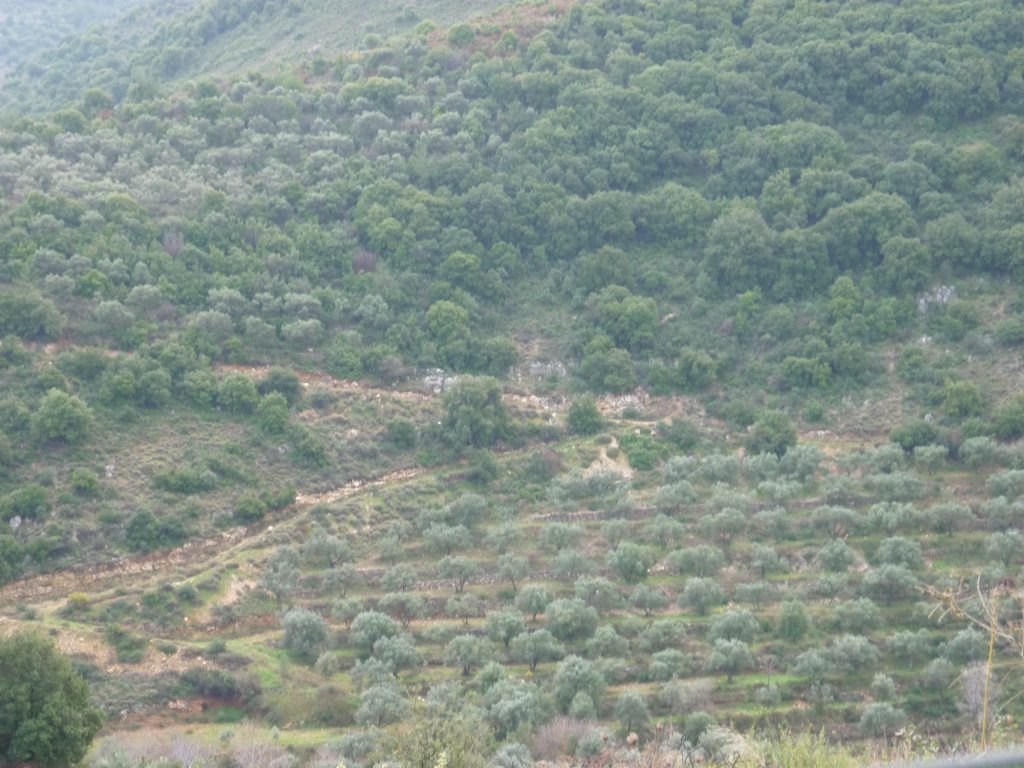
Lebanese olive oil has a distinct signature — often bold, green and peppery, shaped by old mountain groves and the native Baladi olive, with the robust Souri behind the southern style. Less famous abroad than Italian or Spanish oil, but among those who know it, a good Lebanese bottle is a quiet favourite.
Lebanese oil tastes of where it grows, and where it grows is hard: old, rain-fed terraces high on the slopes, fruit ripening under fierce sun on thin mountain soil. That is the recipe for an assertive oil, and Lebanon delivers one — green, grassy, with a peppery throat-catch that signals a healthy load of polyphenols. These are not shy, buttery oils. They are built to stand up to the garlicky, herb-heavy, lemon-bright food of the Levantine table, and that is exactly where they belong: poured over hummus, labneh or warm flatbread, a fresh Lebanese oil is completely at home.
The native varieties behind the style
Two olives shape Lebanese oil. The dominant one nationwide is Baladi — literally “local” — a dual-purpose variety grown for both table fruit and oil, and the backbone of the northern groves around Koura. The other is Souri (the same ancient Levantine olive found across the region), more associated with the south, prized for its robustness and a particularly bitter, peppery, long-keeping oil. Both thrive on the same hard terms: altitude, dry-farming and old trees. The result, whichever leads the blend, tends toward the intense end of the Mediterranean spectrum — green and grassy when fresh, with real bitterness and pungency rather than soft, ripe sweetness.
Recognising quality
Because Lebanese oil often reaches buyers through informal channels — family, diaspora shops, small importers — you have to read it a little differently from a supermarket bottle. Look for single-origin oil with a clear harvest year, ideally named to a region or village, and expect a green, peppery profile if it is fresh and well kept. Cloudy, unfiltered oils are common and not a fault in themselves, though they don’t keep as long. As with any oil, the enemies are age, heat and light: a wonderful Lebanese oil left open and warm for a year will taste like a sad one. Buy what you’ll use, and use it young.
- Best signal: a named village or region and a recent harvest year.
- Expect: green, bitter, peppery — not soft and buttery.
- Don’t panic at: a little cloudiness in an unfiltered oil.
- Use it raw: finishing, not deep frying, to get your money’s worth.
| Style | Built on | Tastes of | Use it for |
|---|---|---|---|
| Northern Baladi | Baladi (native) | Green, grassy, peppery | Finishing mezze, labneh, flatbread |
| Southern Souri | Souri (native) | Bitter, robust, long-keeping | Bold dishes, dipping, raw |
| Unfiltered village oil | Baladi / Souri | Fuller, rustic, cloudy | Everyday cooking, use young |
| Early-harvest single-origin | Named village | Intense, fresh, peppery | Showcase raw, drizzling |
The non-obvious point: buy the shop, not just the bottle
With most origins you read the label; with Lebanon you read the seller. Abroad, the best Lebanese oils turn up in diaspora grocers and Middle-Eastern food shops rather than supermarkets, and the person behind the counter often knows exactly which village and which harvest the tin came from. That conversation is worth more than any front-label claim. Ask which region, ask which year, and a good shopkeeper will tell you without hesitation — the vague answer is itself the warning. It is an old-fashioned way to buy oil, and for this particular origin it is also the most reliable one.
Lebanon’s signature oils: common questions
What variety is most Lebanese olive oil made from?
The native Baladi olive is the national backbone, grown across the country for both table fruit and oil. In the south the robust Souri is more prominent. Both give green, bitter, peppery oils rather than soft, buttery ones.
Why is Lebanese oil so green and peppery?
Because it comes from old, rain-fed, high-altitude groves and is often picked relatively early. That combination concentrates polyphenols, which read on the palate as bitterness and a peppery throat-catch — a sign of freshness and quality, not a defect.
Is Souri the same olive across the Levant?
Yes — Souri (also spelled Suri) is an ancient regional variety grown across the eastern Mediterranean, including in Lebanon’s south. It is prized everywhere it grows for a robust, bitter, long-keeping oil.
Where should I buy Lebanese oil abroad?
Diaspora grocers and Middle-Eastern food shops, rather than supermarkets, are your best bet. Ask the shopkeeper which village and harvest the tin is from; a good one will know, and that traceability is the real guarantee with this origin.
How should I use a fresh Lebanese oil?
Raw and young. Drizzle it over hummus, labneh, lentils or warm flatbread, where its green, peppery character is an asset. Don’t waste it on deep frying, and keep it cool and dark so that character survives.
The honest correction first: you will read that Souri “dominates” Lebanon — it doesn’t. The native Baladi is the national backbone; Souri is the robust southern olive. Either way the style is the same proposition: green, bitter, peppery oil from old hill terraces, made to stand up to Levantine food. Abroad, skip the supermarket and find a diaspora grocer who can name the village and the year on the tin — that conversation is worth more than any label. Expect bite, use it raw and young over labneh and flatbread, and don’t for a second treat that peppery catch as a flaw. It is the whole point.
Drawn from Lebanese variety records and Levantine kitchen practice; oils vary widely by producer.