A Grower’s Map of Lebanon
Lebanon presses oil from groves that are among the oldest continuously worked in the world. From the coastal hills to the high terraces, olive growing here is woven into village life and has survived decades of upheaval. This is a working map of the country, grove by grove.
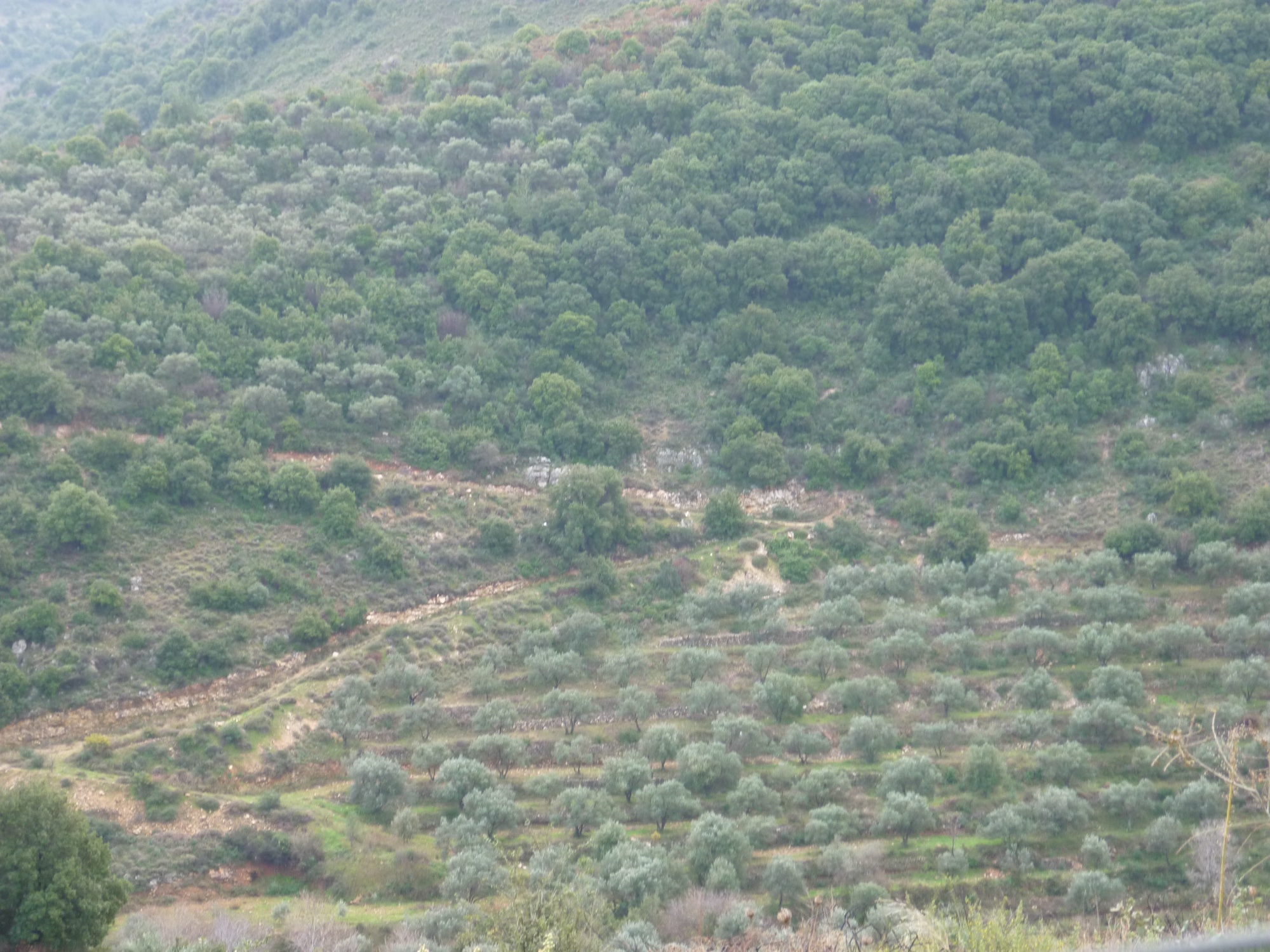
Lebanon is a small country with a very long olive memory. Groves cover the coastal plains and climb the terraced mountainsides, some at altitudes that would surprise a grower used to flatter Mediterranean country. The trade here is old-world — most holdings are small, family-run and rain-fed, worked much as they were generations ago — and it has come through war and upheaval largely intact. This is a working map of where the oil comes from, and how to find the real thing.
From coast to mountain
Lebanon’s olives climb. The groves start on the coastal plains and rise up the terraced slopes of Mount Lebanon, some near a thousand metres. The north — around Koura and the hills behind Tripoli, plus Zgharta and Akkar — is classic, dense olive country feeding village mills, and produces a large share of the national oil. The south has its own long tradition, and trees of genuinely ancient age dot the landscape, a few claimed to be millennia old. At higher elevations the fruit ripens slowly, and growers say that slow ripening is exactly what gives the mountain oils their aromatic depth. It is an old-world picture, and a reminder of just how deep the olive’s roots run in this corner of the eastern Mediterranean.
The local varieties
The workhorse is Souri (also written Soury), named for the southern city of Tyre — Sour in Arabic — and the most widely planted olive in the country and across the wider Levant. It is prized for a robust, high-quality oil: green, peppery and assertive when fresh. The other name to know is Baladi, which simply means ‘local’; it is genetically distinct, grown mostly at higher elevations in Akkar and the western mountain slopes, and valued for its own aromatic character. Together they give oils with real backbone, reflecting both the varieties and the mountain growing conditions. For curing, Lebanese households still put up their own table olives every autumn, a domestic tradition as alive here as anywhere on the sea.
The provenance trap
Here is the honest catch. Lebanese oil is often sold informally — through family, diaspora shops and small importers — which is charming but makes provenance hard to pin down. A tin passed hand to hand can be superb or tired, and you rarely get a harvest date. The oil itself is frequently excellent; the risk is not fraud so much as age and vague labelling. If you want to taste Lebanon at its best, you have to ask the questions the informal trade doesn’t answer on a label.
| Where | North (Koura, Zgharta, Tripoli, Akkar), Mount Lebanon slopes, the south around Tyre, Hasbaya |
|---|---|
| Altitude | Sea level up the terraces to around 1,000 m |
| Climate | Mediterranean; limestone soils, mostly rain-fed smallholdings |
| Harvest | Roughly November to December |
| Key varieties | Souri (dominant, robust oil), Baladi (higher-altitude, aromatic) |
| Style | Green, peppery, assertive extra virgin |
| Look for | A single-origin Souri with a harvest date; diaspora grocers are often the best source abroad |
Buying & using Lebanese oil
- Look for a single-origin Souri with a clear harvest date — and expect a green, peppery oil.
- Diaspora grocers are frequently the best source abroad; ask which village and which season the tin came from.
- Use it where assertiveness is welcome — over pulses, grilled meat and vegetables, or torn bread and za’atar.
- Because the trade is informal, treat vague labelling as a reason to ask questions, not necessarily to walk away.
Lebanese olives: common questions
Where does Lebanon grow its olives?
From the coastal plains up the terraced slopes of Mount Lebanon. The north — Koura, Zgharta and the Tripoli hills, plus Akkar — is the densest zone, with a long tradition also in the south around Tyre.
What is the main Lebanese variety?
Souri (or Soury), named for the southern city of Tyre. It is the most widely planted olive in Lebanon and the Levant, giving a robust, green, peppery oil.
What is Baladi?
Baladi simply means ‘local’. It is a genetically distinct Lebanese variety grown mainly at higher elevations, especially in Akkar and the western mountain slopes, prized for its aromatic oil.
What does Lebanese olive oil taste like?
Typically green, peppery and assertive when fresh, reflecting the Souri variety and the mountain growing conditions. Higher-altitude oils often show extra aromatic depth.
How do I buy the real thing abroad?
Look for a single-origin Souri with a harvest date. Diaspora grocers are often the best source; ask which village and season the oil comes from, since much Lebanese oil is sold informally.
Lebanese oil is often sold informally — through family, diaspora shops and small importers — so provenance matters more than usual. Look for a single-origin Souri with a harvest date if you can, and expect a green, peppery oil with real backbone. Diaspora grocers are frequently the best source abroad; ask which village and which season the tin came from. The oil is often excellent — the only enemy is age you can’t see, so make the informal trade tell you what a proper label would.
Based on Lebanese producer accounts, Levantine variety studies and general knowledge of Souri and Baladi cultivation.