How Syria Makes Its Oil
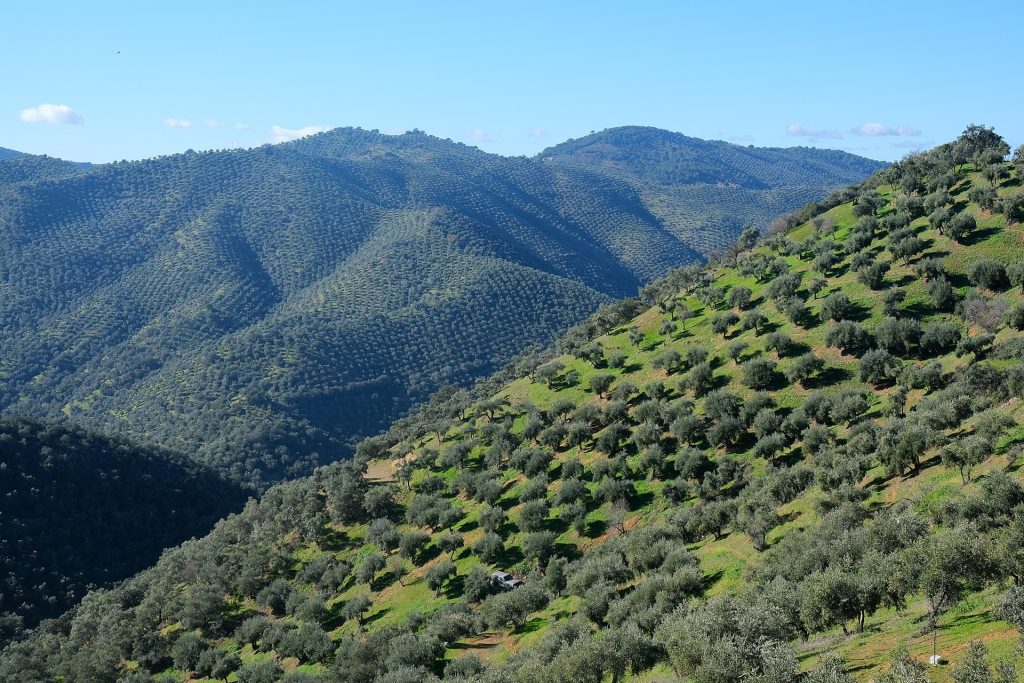
Syria mills its olives the way much of the eastern Mediterranean once did: a mix of old stone presses and modern centrifugal lines, with a strong thread of household production running through it. The country’s milling story is inseparable from one famous by-product — the laurel soap of Aleppo.
Syria is one of the old heartlands of the olive, and how it makes its oil still shows that age. The same crop that fills a family’s winter tins also feeds a centuries-old craft — the laurel soap of Aleppo — and the two have shaped each other for generations. The recent war damaged infrastructure and scattered makers, a fact worth stating plainly, but the methods themselves are far older than any modern disruption, and they survive. This is a milling tradition you can read like a layer of rock: stone underneath, steel on top.
From the grove to the press
The Syrian harvest runs from autumn into early winter, much of it still gathered by hand or by beating branches over nets on the steep northern terraces. Traditionally the fruit went to stone-mill presses — heavy granite wheels crushing olives to a paste, which was then pressed under stacked mats — and many village mills still work this way. Larger operations have shifted to continuous centrifugal systems that are faster, cleaner and gentler on the oil. The northern Sorani crop, naturally rich in polyphenols, suits both: its stability forgives the slower old methods and it shines under modern, temperature-controlled milling where growers can afford it.
That polyphenol load is the quiet technical point. A robust, stable oil resists going rancid, which is exactly what you want when your mill is slow, your storage is a clay jar in a pantry, and the oil has to last a household a year. Sorani was, in effect, selected by necessity.
The soap that shaped the trade
No account of Syrian oil is complete without Aleppo soap. For centuries, a share of the region’s olive oil was set aside not for the table but for saboun — boiled slowly with laurel-berry oil and lye, poured out to set, then cut into blocks and aged for months before sale. The trade gave local oil a guaranteed second market and reinforced the value of stable, robust Sorani. War damaged Aleppo’s historic soap quarter badly and scattered its makers, but the craft survives in the city and among those who carried it elsewhere. Where you find genuine Aleppo soap, you are, in a real sense, holding the region’s olive oil in another form.
- Base: olive oil, saponified with lye.
- Signature: laurel-berry (bay) oil — more laurel, softer and greener the bar.
- Cure: months of open-air ageing, which hardens it and forms a tan crust.
- Grade signal: laurel content sets the price and the gentleness.
- Provenance: genuine makers, in Aleppo or in exile, not mass perfumed imitations.
| Method | How it works | Best suited to |
|---|---|---|
| Stone mill + mats | Granite wheels crush; paste pressed under mats | Village scale, robust stable fruit |
| Continuous centrifuge | Crush, malax, spin to separate oil | Larger mills, fresher early-harvest oil |
| Household pressing | Family fruit milled locally, paid in kind | The everyday tins that never reach a shop |
Reading a genuine Aleppo bar
Because the war scattered production, the market filled with imitations, so here is the trade angle that actually protects you. Real Aleppo soap is graded loosely by laurel content: the more laurel-berry oil, the softer, greener and more expensive the bar, and the longer it was cured. A genuine block is heavy and dense, faintly olive-green inside under a dull tan crust, and lathers gently rather than foaming hard. If a bar is cheap, bright green all the way through, heavily perfumed and uniform, treat the word ‘Aleppo’ on the label with suspicion. The same robust, stable Syrian oil that makes a good winter cooking oil is what makes a good soap — and the same honesty test applies to both.
How Syria makes its oil: common questions
What is the main Syrian olive variety?
Sorani dominates the northern groves and is prized for a dense, stable, polyphenol-rich oil. Other local varieties grow on the coast and inland, but Sorani is the one most tied to the region’s oil-and-soap tradition.
Does Syria still use stone presses?
Yes, in many village mills, alongside modern continuous-centrifuge lines in larger operations. The two coexist — old granite-and-mat presses and new steel decanters — which is part of what makes Syrian milling so layered.
What is the link between Syrian oil and Aleppo soap?
For centuries, part of the local olive oil went into saboun — soap boiled with laurel-berry oil and lye, then cured for months. The craft gave growers a guaranteed second market and reinforced the value of stable Sorani oil.
How do I spot genuine Aleppo soap?
A real bar is heavy and dense, faintly green inside under a tan crust, gently lathering, and graded by laurel content — more laurel means softer, greener and dearer. Be wary of cheap, uniformly bright-green, heavily perfumed bars.
Did the war affect production?
It damaged infrastructure, including Aleppo’s historic soap quarter, and scattered many makers. The craft and the groves survive, both in the country and among makers who relocated, but supply and provenance became harder to verify.
Two honest things about Syrian oil. First, most of what is made never reaches a labelled bottle — it is household oil, pressed locally and poured at home, and you will rarely buy it through normal retail. Second, the soap is the part most likely to reach you, and it is where the fakes live. Real Aleppo soap is heavy, dull-green inside, gently lathering and graded by laurel content; cheap, bright-green, perfumed bars are imitations trading on the name. Judge both the oil and the soap on substance, not on a romantic label — the genuine article speaks for itself and never needs to shout.
Compiled from regional milling history and International Olive Council references.