A Grower’s Map of Argentina
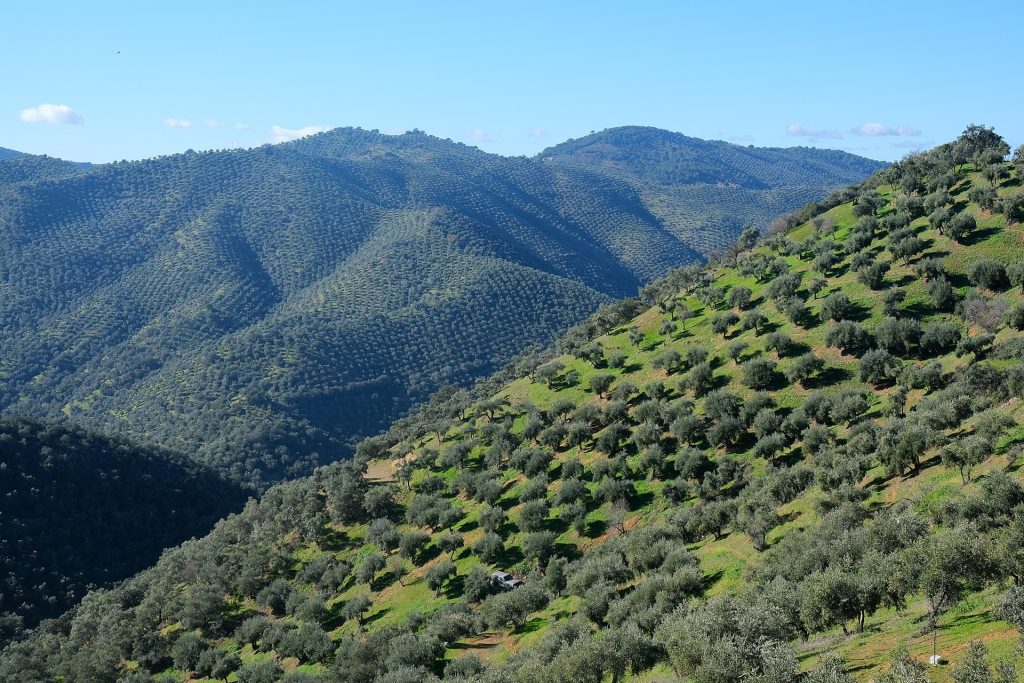
Forget the green hills of Tuscany. Argentine olives grow in high desert under the Andes, fed by snowmelt and roasted by sun. It is the New World’s quiet olive giant — and it owns a variety, the Arauco, that exists nowhere else.
Argentina is South America’s biggest olive producer, and almost all of it grows in the dry, sun-blasted west under the Andes. If you want to understand Argentine oil and olives, start with the map: a handful of high-altitude provinces doing the heavy lifting, irrigated by Andean meltwater on land that would otherwise be near-desert. This is not a thousand-year peasant landscape but a New World story — planted in waves, much of it in the last few decades, aimed squarely at export. Here’s the lay of the land.
The western heartland
The action is concentrated in the arid northwest and west: La Rioja, Catamarca, San Juan and Mendoza, with Buenos Aires province on the coast a much smaller player. These are hot, dry, high-altitude lands where olives thrive only because growers pipe in irrigation from Andean meltwater. La Rioja and Catamarca lean toward table olives — this is the home ground of the giant Arauco, Argentina’s own variety — while the cooler, wine-country reaches of Mendoza and San Juan produce a good share of the oil. Intense sun, cold nights and very low humidity give clean, healthy fruit with little of the disease pressure that plagues humid Mediterranean groves.
What ties the heartland together is water management. In a landscape this dry, the grove map is really an irrigation map: olives sit where canals and drip lines can reach, fanning out from the river valleys. The trade-off is plain — reliable sun and almost no rot or fungal trouble, balanced against total dependence on snowmelt and a long pull to the nearest port.
| Province | Mainly makes | Character |
|---|---|---|
| La Rioja | Table olives + oil | Arauco heartland; big green fruit |
| Catamarca | Table olives + oil | Hot, high desert; intense sun |
| San Juan | Oil | Cooler, wine country; balanced oils |
| Mendoza | Oil | Altitude + cold nights; fresher style |
| Buenos Aires | Some oil + table | Coastal, smaller, milder climate |
Arauco and the international cast
Argentina’s signature is the Arauco, a large green olive descended from old Spanish stock that has been grown here so long it counts as the country’s own. It does double duty for table and oil, and when you see ‘Arauco’ on a jar you are looking at something with no living European twin. Alongside it, modern estates plant the international toolkit — Arbequina, Frantoio, Picual, Manzanilla, Coratina and others — much of it on drip-irrigated, machine-harvestable blocks built for export volume rather than romance.
- Arauco — the native giant; meaty green table fruit, also pressed for a robust oil.
- Arbequina — the workhorse of the modern oil estates; soft, fruity, machine-friendly.
- Picual & Frantoio — brought in for backbone and pepper in blends.
- Manzanilla — planted where Spanish-style table olives are the goal.
The freshness angle few buyers use
Here is the non-obvious point. The harvest falls in the southern autumn, March through May, so Argentine oil is crushed exactly when northern-hemisphere oil is getting old. By late northern summer, a Spanish or Italian extra virgin on the shelf may be pushing a year from the press; a fresh Argentine crush from that same calendar can be the livelier bottle. Treat Argentina the way you would treat Chile or Australia — as a southern-hemisphere freshness play. Check the harvest date, favour the latest crush, and you have turned a long supply chain into an advantage rather than a liability.
| Region | Arid western provinces under the Andes |
|---|---|
| Signature variety | Arauco (native, dual-purpose) |
| Other varieties | Arbequina, Picual, Frantoio, Manzanilla |
| Harvest | March–May (southern autumn) |
| Irrigation | Andean meltwater, mostly drip |
| Best label cues | Named variety + recent harvest date |
Argentine olives & oil: common questions
Is Argentina a major olive producer?
Yes — it is the largest in South America and a serious global exporter of both bottled oil and bulk table olives, even if its name rarely leads a shopper’s list.
What is the Arauco olive?
A large green olive descended from Spanish stock but grown in Argentina so long it is treated as the national variety. It has no exact European equivalent today, and works for both the table and the press.
When is Argentine oil harvested?
In the southern autumn, roughly March to May. That puts a fresh crush on northern shelves in the middle of the year, when European oils are ageing.
Where do the olives actually grow?
Mostly in the dry western provinces — La Rioja, Catamarca, San Juan and Mendoza — on irrigated land fed by Andean meltwater, with a smaller coastal presence in Buenos Aires province.
Is Argentine olive oil any good?
At its best, yes. Clean desert fruit and modern milling can give excellent oil. As always, a named variety and a recent harvest date matter more than the flag.
When you see ‘Arauco’ on a jar, you are looking at Argentina’s own olive — big, green and meaty, with no European twin to compare it to. For oil, treat the country like Chile: a southern-hemisphere freshness play, not a heritage one. The estates here are modern and irrigated, the fruit is clean, and the only real enemy is time on a long supply chain. So check the harvest date, favour the latest crush, ignore the bottles that hide it, and store what you buy cool and dark. Done right, Argentine oil is a smart off-season buy that almost nobody asks for — which is exactly why it can be good value.
Drawn from Argentine industry accounts and International Olive Council figures.