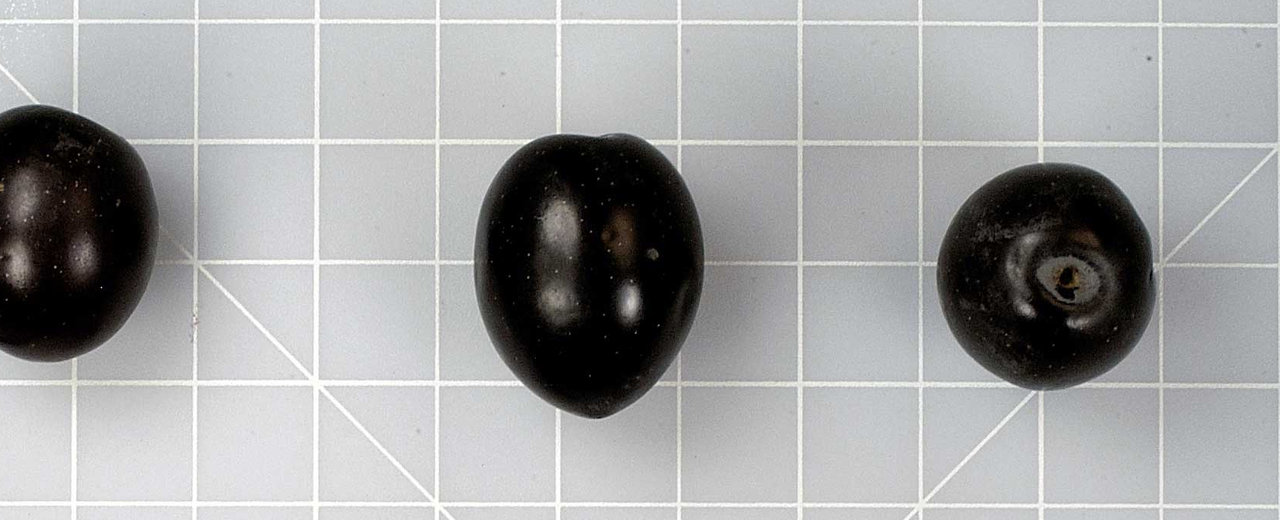
Konservolia (Amfissa) Olives
Greece’s most widely grown table olive: green or black, mild and round (Amfissa, Volos, Pelion).
The Konservolia is the workhorse table olive of Greece — the country’s most widely grown eating olive, valued for a mild, round, fruity flavour whether picked green or left to ripen black. It is usually sold under the name of its region: Amfissa, Volos, Atalanti, Pelion. Several of these are protected designations. If you have eaten a plain, pleasant Greek black olive, it was very likely a Konservolia.
- Origin
- Central Greece (Amfissa, Volos, Pelion)
- Also called
- Amfissa, Volos, Atalanti
- Type
- Table olive (some oil)
- Colour
- Green or black
- Size
- Medium-large, round
- Flavour
- Mild, round, fruity
- Best for
- Everyday table olives
Greece’s everyday olive
Not every olive needs to be a celebrity. The Konservolia is dependable and good: round, fleshy, mild and adaptable, cured green for a firmer, fresher olive or ripened to a soft purple-black for a rounder, sweeter one. Its various regional names — Amfissa olives, olives of Volos, Pelion, Atalanti — are really the same cultivar dressed in different postcodes, some of them protected.
Naturally black-ripened Konservolia (sold as “Amfissa” black olives, for instance) is soft, sweet and varied in shade. The matte, identical jet-black olives in cheap cans are usually green olives darkened by oxidation — a different, duller product. Look for the regional name and natural ripening.