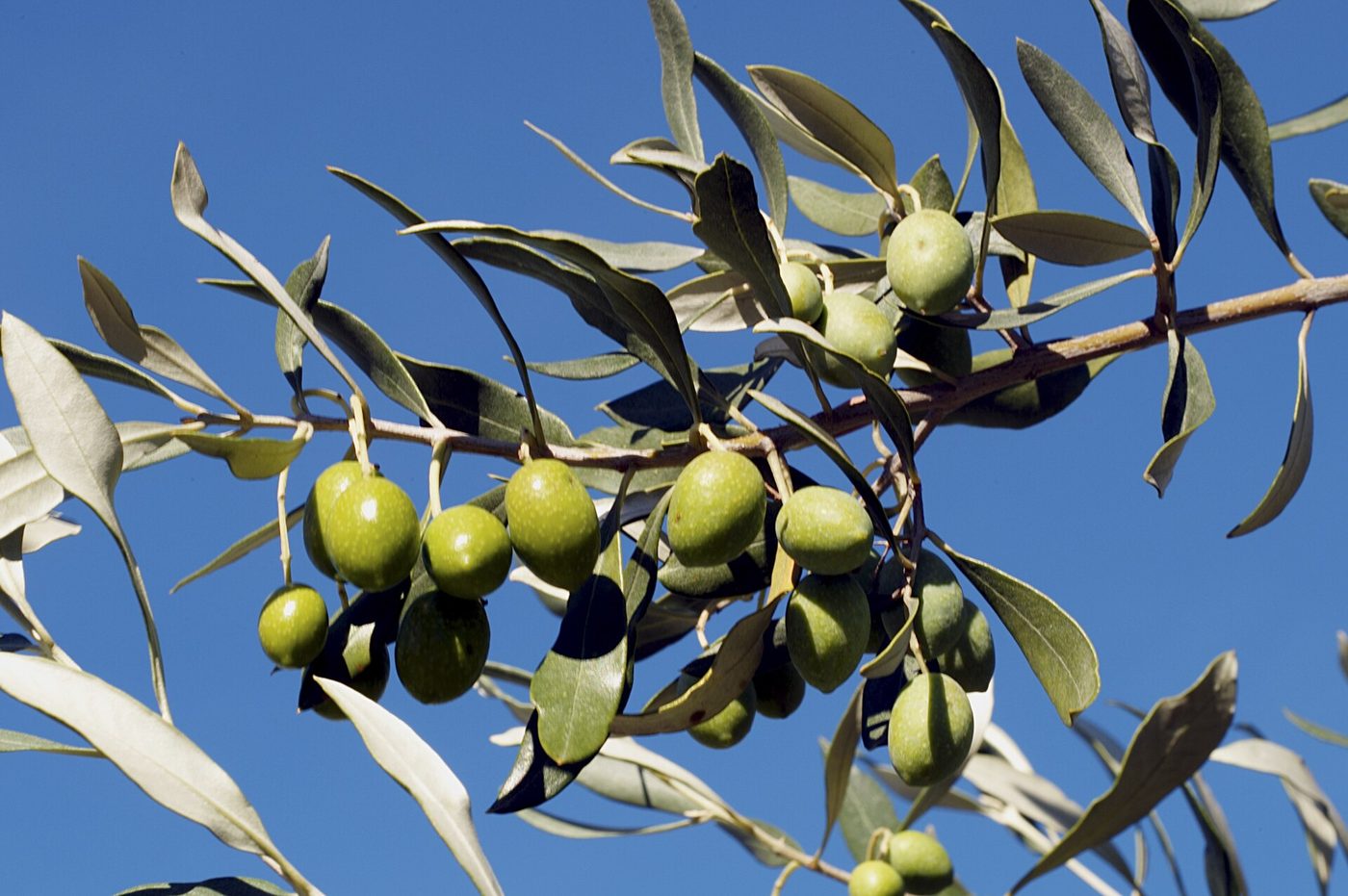
Nyons olives (Tanche)
The small, wrinkled black olive of Provence — a rare AOP delicacy, not an everyday black olive.
From the town of Nyons in the Drôme, in the north of Provence, comes the Tanche — better known simply as the olive of Nyons, the first French olive to earn an AOC/AOP appellation. Small, wrinkled and tree-ripened to black, it tastes sweet, soft and nutty with no harsh bitterness. It is made in tiny quantities, costs accordingly, and is a treat to be savoured — the opposite of the cheap black olives most people actually eat.
- Origin
- Nyons, Drôme · France
- Cultivar
- Tanche
- Type
- Table & oil
- Look
- Small, wrinkled, black
- Flavour
- Sweet, nutty, no bitterness
- Status
- AOP — France’s first olive appellation
- Production
- Tiny — a niche, premium product
The olive that waited for winter
Most table olives are picked green and made edible by curing. The Tanche is different: it stays on the tree deep into winter, ripening to black and shedding its bitterness on the branch, then takes a gentle salt or brine cure. The result is the soft, sweet, wrinkled olive noire de Nyons — and pressed, a prized, mellow Provençal oil. This is the olive of my own corner of the world, and I’ll defend it — but honestly.
A niche olive, not an everyday black
Here is the thing the shelf never tells you. Nyons is not the black olive you scatter on a pizza or buy by the kilo. It is a small-production, appellation-controlled delicacy, expensive precisely because so little is made, grown in one small pocket of the Drôme and nowhere else. Lumping it in with everyday black olives — or treating a Kalamata as a swap for it — gets both olives wrong. They are different things at different prices for different occasions.
What you actually eat on a French pizza
So if the cheap black olives on every French pizza and in every salad aren’t Nyons, what are they? Overwhelmingly Moroccan. The ubiquitous « olives noires à la grecque » — despite the “Greek” name — are the Beldi variety from around Marrakech, dry-salt-rolled for about three months and shipped in bulk. They’re honest, useful, inexpensive olives, sold openly as Moroccan. They share the look of a dry-cured black olive with the Nyons, which is exactly why the confusion persists — but they are a different product in a different league.
The clearest way to see it:
| Nyons (Tanche) | “Façon grecque” | Kalamata | |
|---|---|---|---|
| Where | Nyons, Drôme, France | Morocco (Beldi, near Marrakech) | Messenia, Greece |
| Scale / price | Tiny, AOP, expensive | Huge, cheap, everywhere | Large, mid-price |
| Cure | Tree-ripened, gentle salt/brine | Dry-salt-rolled ~3 months | Brine / vinegar |
| Taste | Small, wrinkled, sweet-nutty | Salty, chewy, plain | Soft, winey, fruity |
| Its real role | A rare delicacy | The everyday pizza/salad black olive | The Greek table classic |
How to buy a real Nyons
- Read the appellation. Look for Olive de Nyons AOP and a real French origin — not just “black olives.”
- Expect to pay. Real Nyons is dear. A cheap tub of smooth black olives is not it.
- Check the fruit. Small and wrinkled, sweet not sharp — never the uniform jet-black of oxidised canned olives.
- Use them as a delicacy. On their own, in a real tapenade — not boiled into a stew where the price is wasted.
“Black olives,” “à la grecque” and “olives de Nyons” are three different things, whatever a cheap deli implies by stacking them together. A real Nyons is naturally tree-ripened, AOP-controlled, small, wrinkled and sweet — nothing like the oxidised, ferrous-gluconate black olives that fill cheap cans, and not interchangeable with a Moroccan pizza olive or a Greek Kalamata. The appellation exists precisely because the name was worth faking.