The Classic New Orleans Muffuletta Sandwich
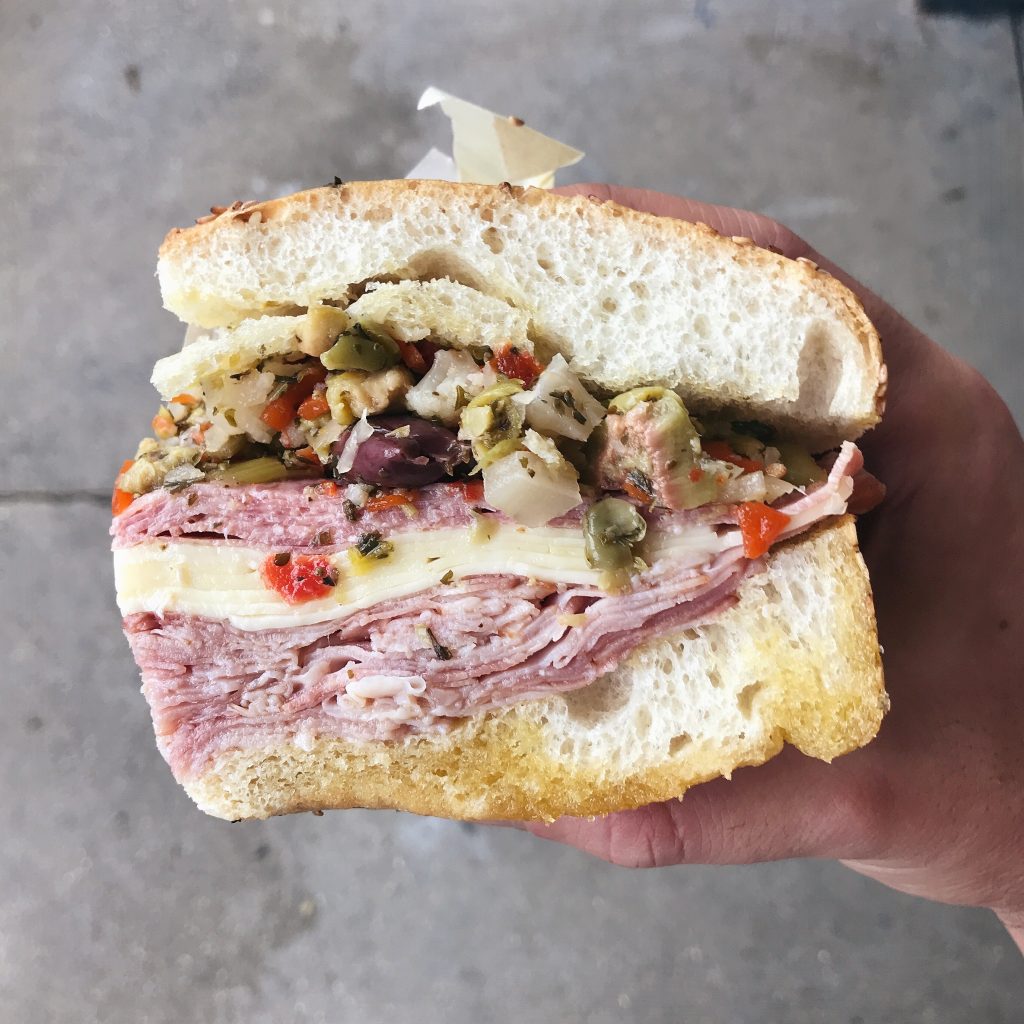
The whole sandwich, built right: a round sesame loaf, Italian cold cuts, provolone, and a flood of olive salad, pressed until the bread drinks the brine. New Orleans’ greatest sharing dish.
If the olive salad is the soul of the muffuletta, this is the body: a whole round loaf, layered with Italian cured meats and provolone, drowned in that briny salad and pressed until the bread drinks up the oil. It’s less a sandwich than a sharing dish — cut into quarters, eaten cold, argued over. Here’s how to build the real thing.
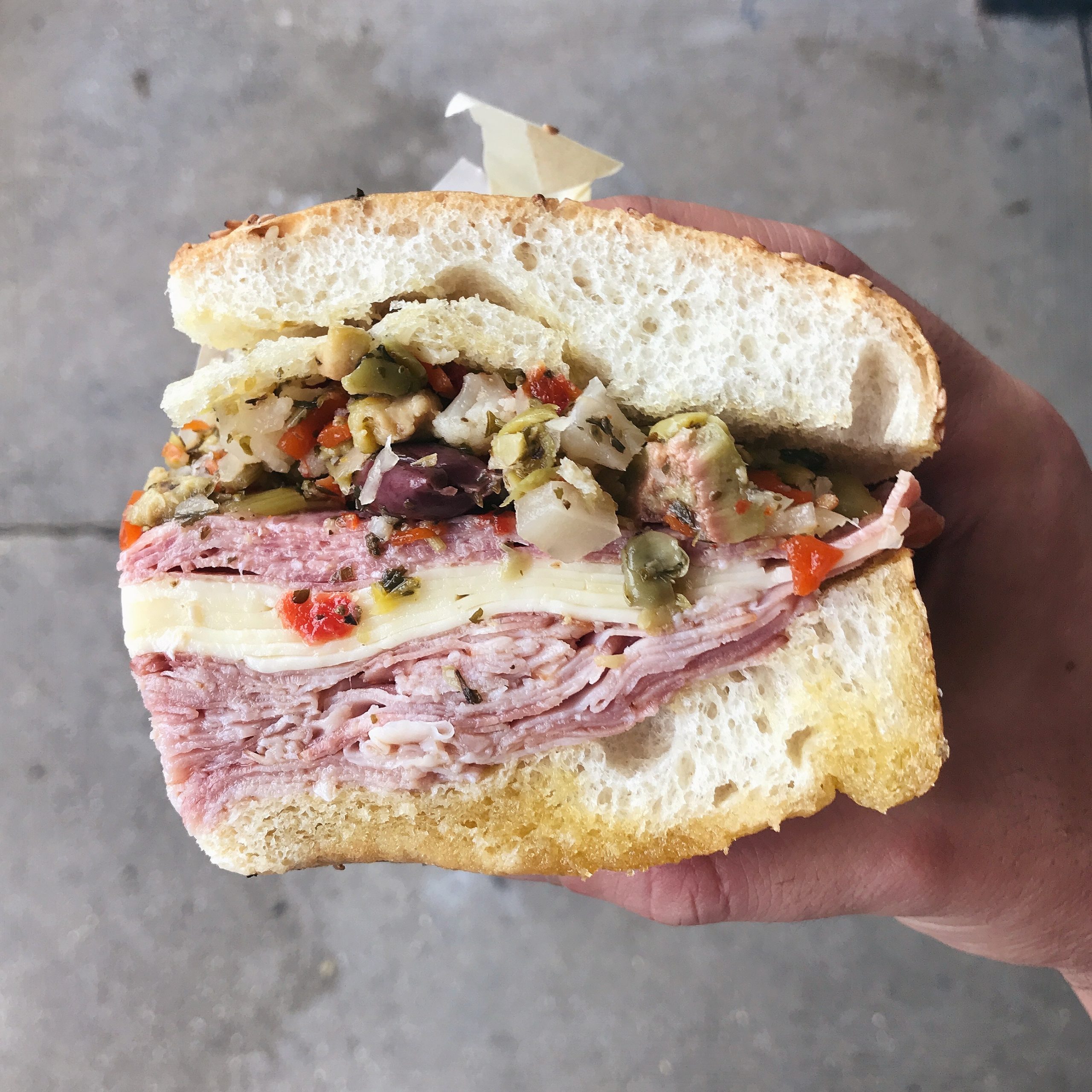
Photo: Jj saezdeo, CC BY-SA 4.0, via Wikimedia Commons.

What actually goes in it
A muffuletta is built from five things, and only one of them is negotiable. The bread must be sturdy and round; the cheese is provolone; the meats are the Italian cured trio (mortadella, Genoa salami, capicola); and the olive salad is non-negotiable, slathered on both cut sides so its oil soaks the crumb. The only real variable is which extra meat or cheese a given counter adds. Get those layers right, press it, and you have New Orleans in your hands.
| Layer | The classic | Notes |
|---|---|---|
| Bread | Round sesame muffuletta loaf | Sturdy enough to hold up to the oil; a round Italian loaf stands in |
| Olive salad | Green + Kalamata, giardiniera, capers, oil | The defining element — on both cut sides |
| Meats | Mortadella, Genoa salami, capicola | Italian cured trio; ham is a common addition |
| Cheese | Provolone | Mild and melting; sometimes mozzarella too |
Make the olive salad a day ahead — that’s the one step that decides whether the sandwich sings or just sits there — and the rest is assembly.
The recipe
The Classic New Orleans Muffuletta Sandwich
A whole round sesame loaf, layered with Italian cold cuts and provolone and flooded with olive salad, then pressed so the bread drinks up the brine. Made for sharing.
Ingredients
- 1 round muffuletta loaf (or a 10-inch round sesame/Italian loaf), split horizontally
- 1–1½ cups muffuletta olive salad, with its oil
- 4 oz mortadella, thinly sliced
- 4 oz Genoa salami, thinly sliced
- 4 oz capicola (or sopressata), thinly sliced
- 4 oz provolone, thinly sliced
- (optional) 4 oz sliced ham or extra mortadella
Method
- Split the loaf horizontally. Pull out a little of the soft inner crumb from the top half to make room for the filling.
- Spread the olive salad — oil and all — generously over both cut sides. The oil soaking into the bread is the whole point, so don’t be shy.
- Layer the meats on the bottom half: mortadella, then salami, then capicola. Lay the provolone over the top.
- Pile on more olive salad, then close with the top half and press down firmly.
- Wrap tightly, set a weight on top (a board and a few cans), and press 30 minutes to 1 hour at room temperature so the sandwich compacts and the bread drinks up the brine.
- Cut into quarters (or halves for big appetites) and serve. Traditionally cold — see our warm version for the toasted take.
The press is the secret
- Don’t skip the weight. Pressing the wrapped sandwich for half an hour compacts the layers and pushes the olive oil into the bread — it’s the difference between a muffuletta and a tall Italian sub.
- Both sides, always. Olive salad on the top crust as well as the bottom; the upper crumb needs the oil too.
- Cut it cold. A well-rested cold muffuletta slices clean into quarters; warm it later if you like the cheese melted.
The muffuletta sandwich: common questions
What meats go in a muffuletta?
Cold or warm — which is correct?
Can I make it ahead?
What can I use instead of muffuletta bread?
Is there a vegetarian muffuletta?
Here’s the trade truth: people obsess over the meats and forget the sandwich is named for the bread and built on the olives. Spend your money on a good olive salad and a sturdy loaf, buy decent (not heroic) cold cuts, and press it. A pressed, day-old muffuletta made with real olive salad beats a fresh one stacked with expensive charcuterie every time. It’s the olives, and the patience, that do the work.
Drawn from the New Orleans muffuletta tradition (Central Grocery, est. 1906) and classic assembly practice.