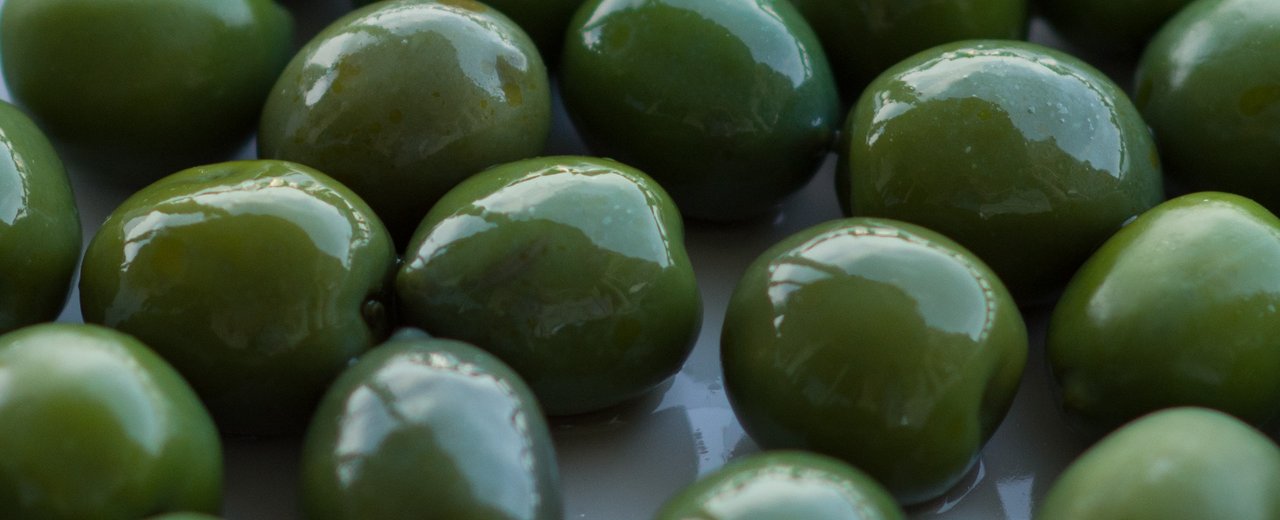

Castelvetrano olives
Sicily’s buttery bright-green olive, properly the Nocellara del Belice. The gateway olive.
That impossibly green, mild, buttery olive everyone seems to like, even people who say they hate olives, is the Castelvetrano, grown in the Belice valley of western Sicily, where the cultivar’s real name is Nocellara del Belice. Crisp, sweet, low in bitterness, with a clean snap. If you are converting a sceptic, start here.
- Origin
- Belice valley, Sicily · Italy
- Cultivar
- Nocellara del Belice
- Type
- Table & oil
- Colour
- Bright green
- Flavour
- Mild, buttery, sweet
- Cured in
- Lye and salt, unfermented
- Best for
- Snacking, boards, martinis
Castelvetrano olives are Nocellara del Belice olives from western Sicily, picked green and cured in a lye and salt solution without the usual fermentation, which is exactly what keeps them so bright and so mild. Below: what they taste like, how the cure works, the oil made from the same fruit, the real nutrition numbers, how to use them, and what the label on a good jar should say.
Read next: In Focus: the Nocellara del Belice, the olive behind Castelvetrano
What are Castelvetrano olives?
“Castelvetrano” is a town and a style, not a variety. The olive itself is the Nocellara del Belice, a big, round Sicilian cultivar grown around the towns of Castelvetrano, Campobello di Mazara and Partanna in the province of Trapani. Cured one particular way, it becomes the green olive Americans know as Castelvetrano. In Italy the protected name is the variety, not the town: table olives from that zone can carry the Nocellara del Belice DOP (protected designation of origin), registered in 1998. The DOP rules are strict in the ways that matter: the olives are picked by hand and must go into processing within 24 hours of picking.
What do Castelvetrano olives taste like? Mild, buttery and faintly sweet, with a firm, almost crunchy bite and very little bitterness. People reach for words like butter, almond and fresh olive oil. The salt is there, but it does not shout. A trace of the lye cure stays in the flavor too, and a 2018 review of table-olive processing in the Journal of Food Quality notes that consumers actually enjoy it. Nothing in the olive is aggressive, which is why it wins over people who have spent their lives picking olives off pizza.
How to say it: kah-stel-veh-TRAH-noh, with the stress on TRAH. The variety is noh-cheh-LAH-rah del beh-LEE-cheh.
Why Castelvetrano olives are so green
Fresh olives are far too bitter to eat, so every table olive is cured somehow. The Castelvetrano method is a lye cure that stops early. The 2018 review describes it plainly: only large fruit, more than 19 mm across, is used. The olives go into a 1.8 to 2.5% sodium hydroxide (lye) solution, salt is added about an hour later, and they sit in that salty alkaline bath for 10 to 15 days. Then they are washed and packed. There is no fermentation.
That missing step is the whole story. Lye breaks down oleuropein, the bitter compound in a raw olive, in days rather than months, and the chlorophyll left in an alkaline bath stays green. Spanish-style green olives are treated with lye too, but they then ferment in brine for weeks or months, and the acidity of fermentation turns them the familiar yellowish olive-green along with that tangy, savory taste. Natural cures skip the lye altogether, take longer again, and end up duller in color and more bitter.
There is a catch. An olive that never ferments never becomes acidic, so it has no built-in preservative. A 2024 study in Food Microbiology notes that the traditional method relies on long refrigeration, often up to 180 days, to stay stable. Jars sold at room temperature have to be made safe another way, typically by heat treatment or an added acid, which is why so many labels list lactic or citric acid.
The Nocellara del Belice DOP allows three cures for green olives, and they give three different olives from the same fruit:
| Cure | What happens | Color | Taste |
|---|---|---|---|
| Castelvetrano method (sweet) | Lye plus salt for 10 to 15 days, washed, no fermentation | Bright grass green | Mild, buttery, sweet, gentle salt |
| Sevillian or Spanish style (semi-sweet) | Partial lye treatment, then lactic fermentation in brine | Yellowish olive green | Tangy, savory, firmer |
| Natural (pleasantly bitter) | No lye; fermented and kept in brine, whole or cracked | Duller, more variable green | The most bitter and “olivey” of the three |
The real green comes from the cure, not from a bottle, but not every bright olive is real. The same 2018 review records that in 2012 many Italian olives cured Castelvetrano-style were found to be colored with copper chlorophyllin (E141ii), an additive not allowed in table olives in the US or the EU, and in 2016 Italian police announced a seizure of green olives brightened with copper sulfate. You cannot spot this by eye in a shop. What you can do: buy from a producer who names the variety and the origin, read the ingredients (olives, water, salt, maybe an acid, nothing else), and be wary of cheap, anonymous olives that glow an identical green from one to the next. A genuine Castelvetrano is also firm. Soft and mushy means old or badly made, whatever the color.
Castelvetrano olive oil
The same variety makes a very different oil, because oil is pressed from fresh fruit that has never seen a cure. Sicily’s Valle del Belice DOP extra virgin, registered in 2004, must be at least 70% Nocellara del Belice. The official descriptions talk of freshly crushed olives and cut grass on the nose, then a fruity oil with bitterness and pepper that run from light to fairly strong depending on the producer, and a finish often described as almond, artichoke and green tomato. It is greener and livelier than the olives would lead you to expect.
If you see “Castelvetrano olive oil” on a bottle, read it as Nocellara del Belice oil. Nobody presses the cured table olives. For the protected version, look for Valle del Belice DOP and a harvest date, and use it raw, over tomatoes, white beans or grilled fish, where that fresh green character is the point.
Nutrition: calories and salt in Castelvetrano olives
Castelvetrano nutrition labels differ more from brand to brand than from olive to olive, and the difference is mostly salt. Two entries in the USDA’s branded-foods database make the point:
- Pitted, 4 olives (15 g): 35 calories, 3.5 g fat, 130 mg sodium.
- Whole, 2 olives (12 g): 20 calories, 2 g fat, 240 mg sodium.
- Per 100 g, that works out to about 870 mg of sodium for the first and 2,000 mg for the second: more than double, for the same kind of olive.
Most of the calories come from fat, and most of that fat is the monounsaturated kind that olive oil is known for. The mild taste fools people into thinking Castelvetranos are low in salt. They are not, they just taste gentle. A handful now and then is fine for most people. If you have been told to limit sodium, go by the label on your own jar rather than any table, including mine, and ask your doctor what fits. This is general information, not medical advice.
How to eat and cook with Castelvetrano olives
Mostly, don’t cook them. Their whole appeal is freshness and texture, and heat flattens both. The best ways to use them:
- Straight from the bowl, but not fridge-cold. Twenty minutes on the counter brings the butteriness back.
- On a board with pecorino or ricotta salata, salted almonds and a glass of cold white wine.
- In a Sicilian-style salad of sliced orange, shaved fennel and red onion, dressed with good oil and a pinch of salt.
- In a martini. A Castelvetrano gives a softer, rounder drink than a sharp Spanish olive; if you like it briny, see how to make a dirty martini and go easy on the brine.
- Chopped into a relish for fish or into a milder Castelvetrano olive tapenade than the usual black-olive kind.
- In hot dishes, at the very end. Stir them into pasta or over roast chicken after the heat is off, so they warm through without going soft.
To pit them by hand, press each olive under the flat of a knife until the flesh splits, then pull out the stone.
Buying Castelvetrano olives: pitted vs whole, and what the label should say
Whole or pitted comes down to use. In my experience whole olives hold their crunch longer, so buy them for snacking and boards; pitted ones earn their place in cooking and with anyone who does not want a stone in their teeth. Jars and olive bars are both fine as long as the olives are firm and the brine is clear. At an olive bar, ask how quickly it turns over: an olive that has sat out for days has lost the very thing you are paying for. Before you buy, check:
- Ingredients: olives, water, salt, and often an acid such as lactic or citric acid. That is all a Castelvetrano needs.
- No added color: nothing mentioning copper, chlorophyllin, E141 or “color added”.
- Origin: Italy, ideally naming Sicily or the Belice valley. “Castelvetrano” on its own describes the style and does not guarantee where the olives grew.
- The protected version: “Nocellara del Belice” followed by “Denominazione di Origine Protetta” or DOP.
- Storage: deli-counter olives belong in the chilled case, and once any jar is open it goes in the fridge with the olives covered by their brine.
What to substitute
A standard jar of Spanish green olives is not a real swap: those are fermented, saltier and sharper, as our Manzanilla vs Castelvetrano comparison shows. For every other variety a recipe might name, see olive substitutes: what to use instead.
Frequently asked questions
What are Castelvetrano olives?
They are Nocellara del Belice olives from the Belice valley in western Sicily, picked green and cured in a lye and salt solution without fermentation. The name comes from the town of Castelvetrano, at the heart of the growing area.
Why are Castelvetrano olives so green?
Because they are cured with lye and salt for 10 to 15 days and never fermented. Fermentation makes other green olives acidic, which dulls them to yellowish olive-green; without it, the chlorophyll stays bright.
Are Castelvetrano olives dyed?
Genuine ones are not: the color comes from the cure. Copper-based coloring has been found in some olives on the Italian market, though, so read the ingredients and skip anything listing copper, chlorophyllin, E141 or added color.
How do you pronounce Castelvetrano?
Kah-stel-veh-TRAH-noh, with the stress on TRAH. The variety, Nocellara del Belice, is noh-cheh-LAH-rah del beh-LEE-cheh.
Do Castelvetrano olives need to be refrigerated?
Once opened, yes, like any olive, kept under their brine. Unopened, follow the label: because the olives are not fermented, the traditional product depends on refrigeration, while shelf-stable jars have been heat-treated or acidified.
Are Castelvetrano olives healthy?
They are a whole food whose fat is mostly the monounsaturated kind, but they are salty despite the mild taste, with labels showing roughly 130 to 240 mg of sodium in a small serving. Enjoy them in moderation and check the label if you watch your salt.