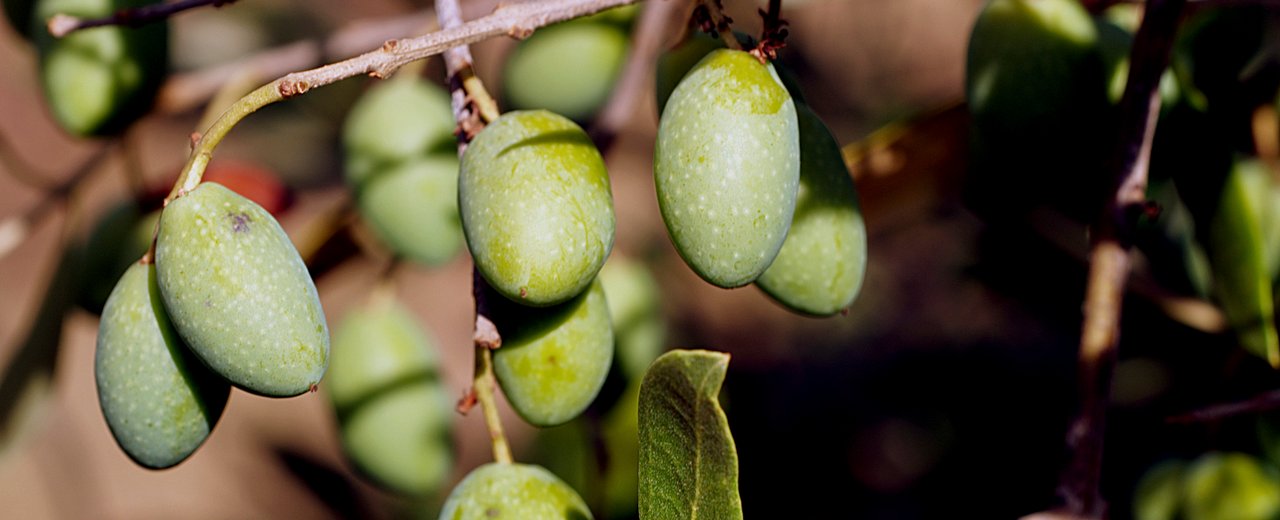
_CL._J_Weber_(2)_(22754145017).jpg)
Picholine olives
The crisp, herbaceous green olive of the south of France: the apéro olive.
Long, slender, and a clear pale green, the Picholine is the olive of the French apéritif: firm, crunchy, subtly nutty, with a clean savory snap. The French variety originates in the Gard in Languedoc; the name, however, also belongs to a distinct Moroccan olive, as explained below. This is my home olive, and the one I reach for with a glass of cold rosé.
- Origin
- Gard, Languedoc · France
- Also called
- Picholine du Languedoc, Olive de Nîmes
- Say it
- pee-shoh-LEEN
- Type
- Table & oil
- Color
- Pale green
- Shape
- Long, slender, pointed
- Flavor
- Crisp, nutty, savory
- Cured in
- Lye, then brine (often with herbs)
- Best for
- Apéritif, oil, cooking
What are Picholine olives?
Picholine is a French olive variety, and the most widely grown one in France. Its home is the Gard, around Nîmes and the village of Collias, and its hardiness and good oil have carried it across the whole French olive belt, from the Ardèche and Vaucluse down to the Bouches-du-Rhône, the Var, the Hérault and Corsica. It is also grown in other countries, including the United States, though only in small quantities.
The fruit is medium-sized, a few grams each, long and slightly lopsided with a pointed tip, which is why a bowl of Picholines looks like a pile of little green torpedoes. For the table it is picked green and firm in autumn; left on the tree it turns violet-black and goes to the mill. On a jar, “French green olives” very often means Picholine.
A dual-purpose Frenchwoman
Picholine is grown both for the table and for oil: pressed, it gives a green, peppery oil with real character. On the table it is usually cured in brine, sometimes scented with herbes de Provence, coriander, or a little fennel. The texture is the point: it should crunch. A soft Picholine has been sitting too long.
The oil deserves more attention than it gets outside France. Sold as a single-variety Picholine, it is green and grassy, often with a note of artichoke and a peppery finish. The same corner of Languedoc protects it as Huile d’olive de Nîmes AOP, the oil twin of the table olive appellation. It is a finishing oil for tomatoes, grilled vegetables and fish rather than one to fry with.
How Picholine olives are cured
The classic method is quick and clean. The green olives get a short bath in a mild lye (food-grade caustic soda) solution to strip the bitterness, a thorough rinse, and then a long rest in brine, often for months, sometimes with herbs added. That combination is what gives a Picholine its pale color, its crunch and its fresh, almost grassy taste.
The name itself is tied to that method. Tradition credits the Picholini brothers, Italians settled in Languedoc in the 18th century, with popularizing this way of preparing green olives, and the olive took the name of the cure. The full story is in In Focus: the Picholine olive. In France the best green Picholines from the Gard and eastern Hérault can carry the Olive de Nîmes AOP, a protected name reserved for this variety.
French Picholine vs Picholine Marocaine
| Picholine (French) | Picholine Marocaine | |
|---|---|---|
| Where | Southern France, from the Gard outward | All over Morocco, from mountains to dry plains |
| What it is | A single named French cultivar | A distinct Moroccan variety population, not the French tree |
| Scale | France’s leading variety, but France is a small producer | About 80 percent of Morocco’s olive orchard |
| Uses | Green table olives and oil | Oil, green and black table olives |
| Typical jar | “French green olives”, Olive de Nîmes AOP | Unlabeled “Picholine”, cracked or spiced Moroccan greens |
| Price | Higher | Lower |
The two share a name and a green, crisp style, and that is about all. The Moroccan variety has its own profile in In Focus: the Picholine Marocaine olive.
“Picholine” names a variety, or a style; it is not a promise of French origin. The same name belongs to the Picholine Marocaine, a distinct cultivar that the International Olive Council puts at about 80 percent of Morocco’s olive orchard, so a great deal of the world’s “Picholine” is Moroccan, and some sold simply as “Picholine” may never have seen France. None of this is fraud in itself, because the name follows the variety, not the place, but it means the label tells you the style, not the country. Buy on stated provenance, firm and in brine.
How do you pronounce Picholine?
In French it is pee-shoh-LEEN, with the stress falling lightly on the last syllable, and the plural, picholines, sounds the same. The “ch” is soft, as in “chef”, not hard as in “chip”.
What to substitute
For a recipe that calls for Picholines, texture matters more than exact flavor: choose any firm, lye-cured green olive and avoid soft or oil-cured ones.
Buying and serving Picholine olives
- Check the country. “Picholine” alone tells you the style; “France” or the Olive de Nîmes AOP tells you the origin.
- Press one. A good Picholine is hard and springy. If it gives, the jar is old.
- Serve them cool with rosé, pastis or a dry white, and put out a dish for stones: most are sold whole.
- Cook them briefly. They are excellent in a tagine or a Provençal stew, added in the last minutes so they stay crisp.
Frequently asked questions
What are Picholine olives?
Picholine olives are long, slender, pale green olives of a French variety from the Gard in Languedoc. They are usually lye-cured and brined, and prized for their crisp texture and fresh, nutty flavor.
Are Picholine olives French or Moroccan?
The Picholine variety is French. Morocco grows a different variety with a similar name, Picholine Marocaine, so a jar labeled only “Picholine” may come from either country. Check the label for the country of origin.
What is Picholine Marocaine?
Picholine Marocaine is Morocco’s main olive variety, making up about 80 percent of the country’s olive orchard. It is used for oil and table olives and is distinct from the French Picholine despite the name.
What can I substitute for Picholine olives?
Lucques is the best French alternative, Castelvetrano is milder but similar in freshness, and Manzanilla is the most widely available stand-in. Any firm, crisp green olive will work in cooking.
How do you pronounce Picholine?
Picholine is pronounced pee-shoh-LEEN, with a soft “ch” as in chef.
Are Picholine olives good for olive oil?
Yes. Picholine is a dual-purpose variety, and olives left to ripen are pressed into a green, peppery oil with a good reputation in southern France.