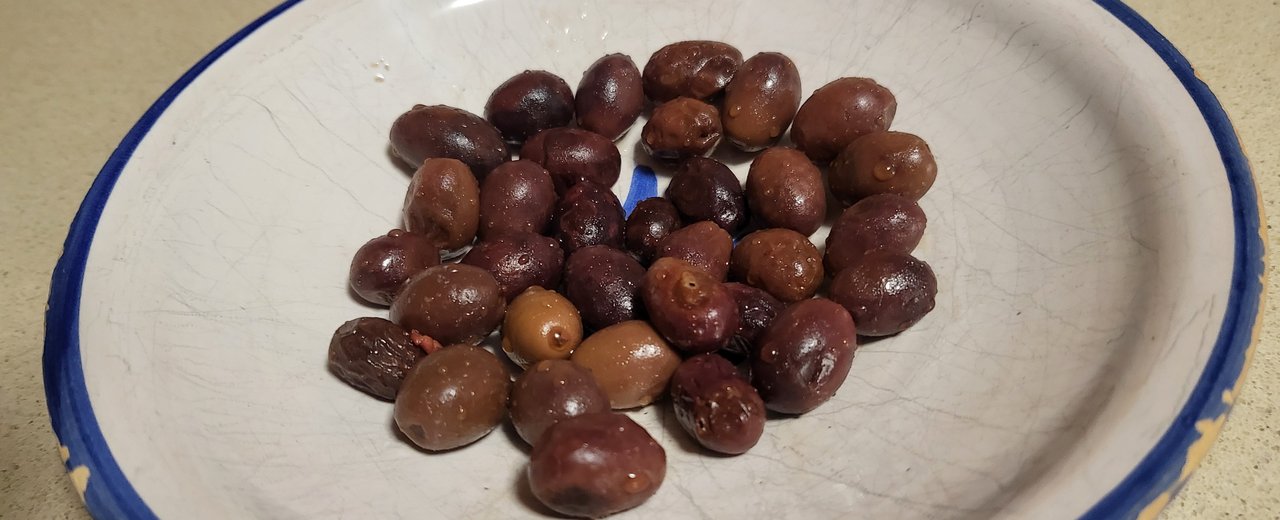

Coquillo olives
The small black olive of south-eastern Spain, and the honest stand-in for the olive of Nice.
The Coquillo (in Spain usually spelled Cuquillo) is a small, dark olive grown in the north-west of the Murcia region and the neighboring hills of northern Almería and Granada, in south-eastern Spain. Picked fully ripe and cured slowly in brine, it is sweet, mild and faintly smoky, and it has become the standard “Niçoise-style” olive on tables far from Nice. A thoroughly good olive that asks only to be called by its real name.
- Origin
- Murcia · Spain
- Also called
- Cuquillo
- Type
- Table and oil
- Color
- Purple-black
- Size
- Small, large stone
- Flavor
- Briny, mild, faintly smoky
- Harvest
- November to December, ripe
- Sold as
- “Niçoise-style”
- Best for
- Salads, eating whole
What are Coquillo olives?
Coquillo is a Spanish olive variety, and the name on the jar is the name of the tree. Spanish growers and nurseries treat it as a close relative of the Lechín de Granada, so similar that the two are often grouped together. The fruit is small and roundish, blue-black to purple-black when ripe with a dusty bloom on the skin, and the stone is large for its size. There is not much flesh, and what there is is thin and soft.
It is a dual-purpose variety. In Murcia the ripe black olives are prized for the table, and the oil is pressed too: a robust, bitter and peppery oil, unusually stable, that local mills use to give backbone to blends. The trees are awkward to harvest, which is why Spanish growers describe it as a declining variety even as the olives turn up on more and more deli counters abroad.
How Coquillo olives are cured, and how they taste
Coquillos are picked by hand, late, in November and December, once the fruit has fully colored on the tree. The traditional cure is the gentle one: water and sea salt, a natural fermentation of around three months, with no lye. Many are then packed in oil with herbs, which is where the “Niçoise-style” label usually comes in.
The result is briny, lightly bitter and faintly smoky, with a sweet finish and a soft texture that almost melts. You eat a Coquillo for flavor, not for meat: it is a small, concentrated olive to scatter rather than pile.
Coquillo vs Niçoise
| Coquillo | Niçoise | |
|---|---|---|
| Country | Spain (Murcia, Almería, Granada) | France (hills behind Nice) |
| Variety | Cuquillo | Cailletier (the Italian Taggiasca) |
| Size and color | Small, purple-black | Small, mixed shades from green-brown to violet-black |
| Cure | Slow natural brine | Slow natural brine |
| Flavor | Briny, faintly smoky, sweet finish | Fruity, slightly bitter, winey |
| Protected name | None | Olive de Nice AOP |
| Price | Moderate | High, and scarce outside France |
So they are not the same olive, and not the same tree. What they share is size, color and a slow, gentle brine, which is why one can do the other’s job in a salad. For the French original, see In Focus: the Niçoise olive.
The honest stand-in
Because true French Niçoise is scarce and dear, the Coquillo does much of its work around the world: in salads, on boards, anywhere a small sweet black olive is wanted. And there is nothing wrong with that. A Coquillo in your salade niçoise is a fair and tasty substitution.
The Coquillo is honest right up until someone hides it. Sold as “Niçoise-style Coquillo,” it is exactly what it claims. Sold as “authentic French Niçoise” at a French price, it is a swindle, not because the olive is bad, but because the label lies. One quick check: genuine Olive de Nice is small, uneven in color and often sold with bits of stem still attached, and it will say AOP. The whole tale is in the great olive name swap.
Substitutes
How to use Coquillo olives
- Salade niçoise: whole, stones in, with tuna or anchovy, egg, tomato and green beans.
- Tapenade and pissaladière: their soft flesh breaks down easily; pit them by pressing with the flat of a knife.
- Pasta and fish: scatter a few over roast fish, or toss them through pasta with tomatoes and capers at the end of cooking.
- On a board: with bread, hard cheese and a glass of something cold. Put out a dish for stones.
Most Coquillos are sold unpitted. Pitted ones exist, but the flesh is so thin that they lose much of their charm. Warn guests: the stone is big and easy to bite on hard. A longer profile is in In Focus: the Coquillo olive.
Buying Coquillo olives
- Read the whole name. “Niçoise-style” or “Niçoise type” on a Spanish jar almost always means Coquillo, and a good label says so outright.
- Loose beats vacuum-packed. From a deli counter you can see the size and color, and olives kept in their own brine stay firmer and livelier than ones pressed flat in a pouch.
- Check the oil. If they are packed in oil with herbs, it should be olive oil, not a seed oil.
- Store them submerged. Once opened, keep them in the fridge under brine or oil and eat them within a few weeks; the thin flesh goes slack faster than a big green olive.
Frequently asked questions
What are coquillo olives?
Coquillo, or Cuquillo, is a small black olive variety from north-western Murcia and neighboring parts of Almería and Granada in south-eastern Spain. It is picked ripe, cured slowly in brine, and widely sold as a Niçoise-style olive.
Are coquillo and Niçoise olives the same?
No. Coquillo is a Spanish variety; true Niçoise olives come from the Cailletier variety grown around Nice in France. They are similar in size, color and cure, which is why Coquillo is the usual stand-in.
Where do coquillo olives come from?
They come from south-eastern Spain, mainly the north-west of the Murcia region and the northern parts of Almería and Granada provinces.
What do coquillo olives taste like?
Briny and mildly bitter, with a faint smokiness and a sweet finish. The flesh is thin and soft, so each olive is a small, concentrated hit of flavor rather than a meaty bite.
What can I substitute for coquillo olives?
True Niçoise olives are the closest match, followed by Ligurian Taggiasca. Failing those, any small brine-cured black olive such as a small Kalamata or Arbequina will play a similar role.
Do coquillo olives have pits?
Yes, and a large one for such a small olive. Most are sold with the stone in, so warn anyone eating them and never assume a jar is pitted unless the label says so.