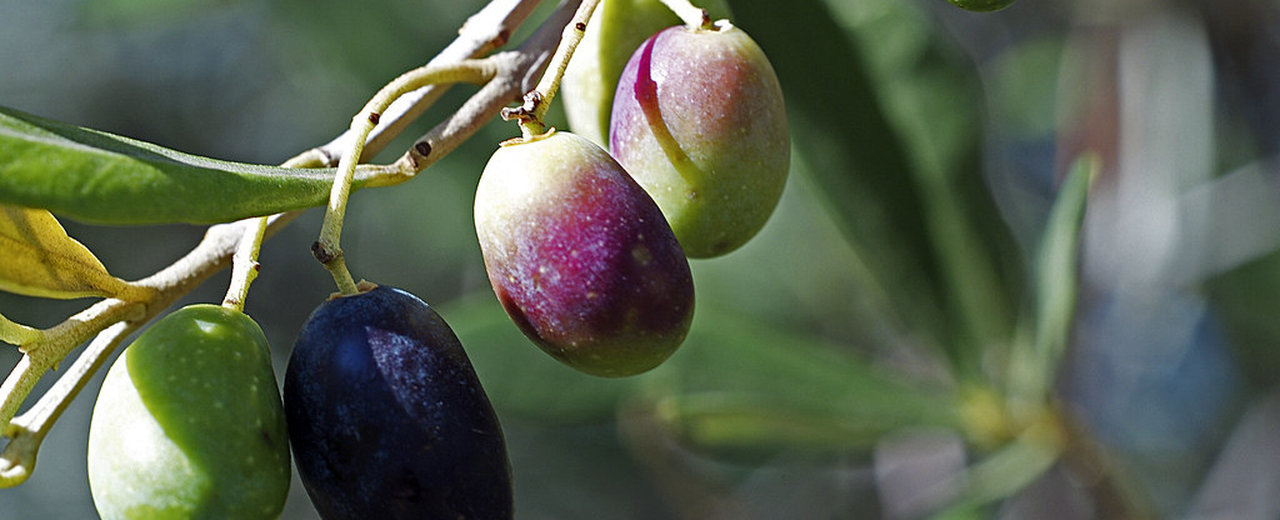
Niçoise olives (Cailletier)
The olive of Nice: small, dark and sweet, the real Niçoise, and one of France’s few olives with a protected name.
The true Niçoise is the Cailletier, a small brown-black olive grown in the hills behind Nice, in the Alpes-Maritimes. Cured whole with the stone in, it is sweet, nutty and mellow, with no harsh bitterness — the soul of a real salade niçoise and of Provençal cooking. The genuine olive of Nice carries a French protected designation.
- Origin
- Around Nice, Alpes-Maritimes · France
- Cultivar
- Cailletier
- Type
- Table & oil
- Colour
- Brown-black
- Size
- Small
- Flavour
- Sweet, nutty, mellow
- Best for
- Salade niçoise, eating whole
Small, sweet and protected
The Cailletier ripens late and is picked dark, then cured gently — the result is a soft, sweet little olive you eat whole, stone and all, with bread and rosé. It is essentially the same cultivar as the Italian Taggiasca just across the border in Liguria — one olive, two countries, two famous names.
A real Niçoise is scarce and not cheap, so a great deal of what is sold abroad as “Niçoise” is actually Spanish Coquillo — a genuine cousin, but from Murcia, not Nice. Honest sellers say “Niçoise-style.” The full story is in the great olive name swap.