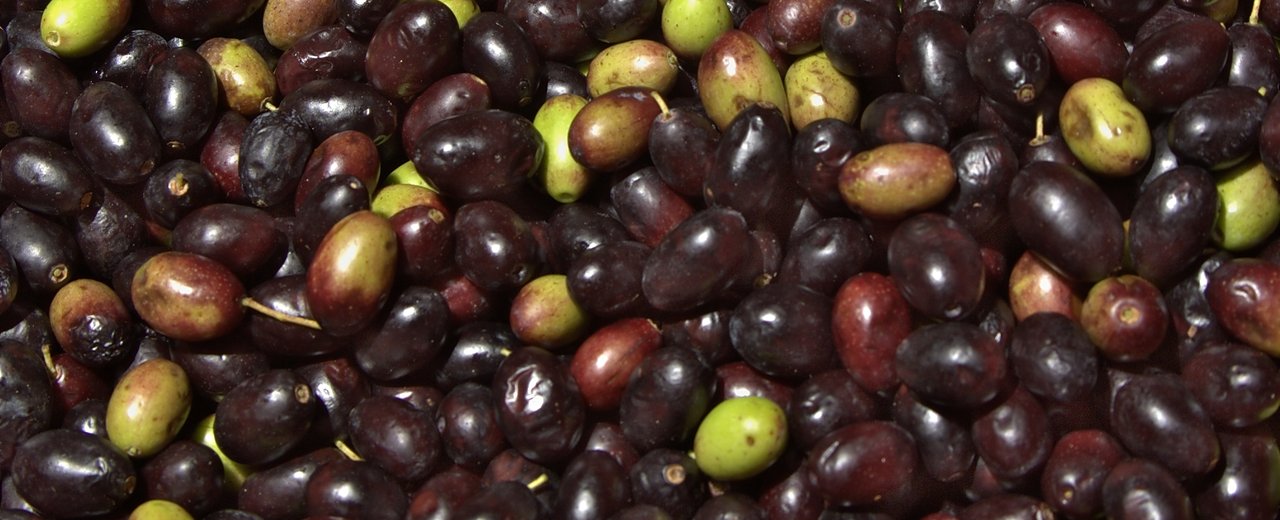

Taggiasca olives
The small, sweet olive of Liguria — prized for a delicate oil and for eating whole.
From the Riviera of Liguria, in north-west Italy, comes the Taggiasca: a small brown-purple olive that punches far above its size. It is cherished both as a table olive — sweet, nutty, often sold whole in oil — and for a famously delicate, mild Ligurian extra virgin. It is very closely related to the French Cailletier (the olive of Nice), the two being, by most accounts, essentially the same cultivar on either side of the border.
- Origin
- Liguria · Italy
- Type
- Table & oil
- Colour
- Brown-purple to black
- Size
- Small
- Flavour
- Sweet, nutty, delicate
- Best for
- Eating whole, gentle oil
Small olive, fine oil
Taggiasca oil is the opposite of a Coratina: pale, light, sweet and mild, with almond and pine-nut notes — the gentle style that defines Ligurian cooking. The olives themselves are wonderful whole, cured and packed in oil, a staple of the Riviera table and of a proper pasta alla genovese or a Ligurian rabbit.
Cross the border into the Alpes-Maritimes and the same little olive is called the Cailletier, and cured it becomes the famous olive de Nice. They are so alike that many consider Taggiasca and the Niçoise one variety with two passports — a nice illustration of how olive names follow places, not always genetics.