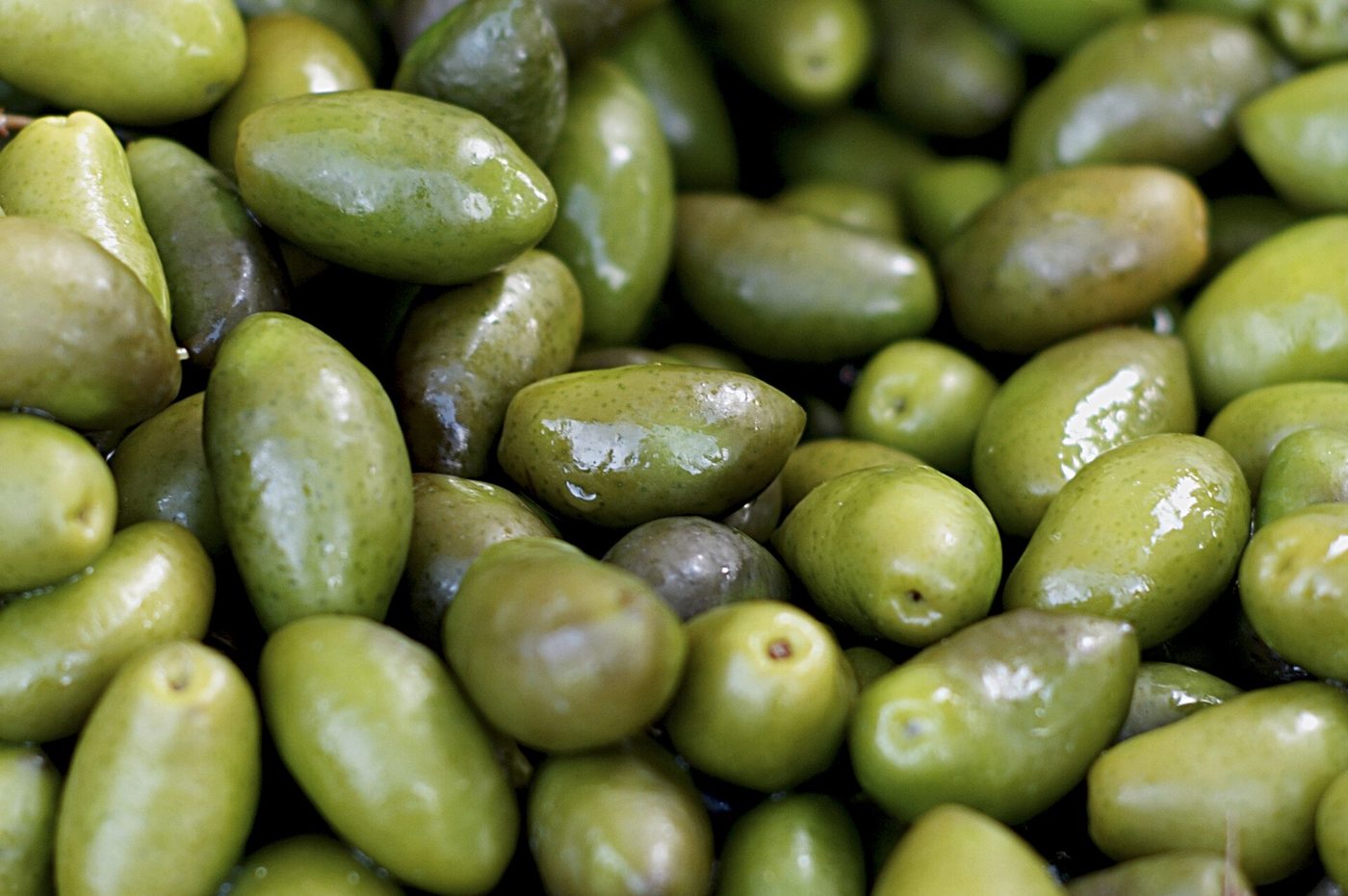
Lucques olives
The crescent-shaped green jewel of the Languedoc — France’s most elegant table olive.
Ask a French olive lover for their favourite and many will say Lucques. Grown mainly in the Hérault in the Languedoc, it is unmistakable: a long, curved, pointed green olive shaped like a little crescent moon, with crisp, sweet, buttery flesh that some compare to fresh hazelnut or even avocado. Mild, refined, and just a little hard to find — which is part of the romance.
- Origin
- Hérault, Languedoc · France
- Type
- Table olive
- Colour
- Bright green
- Shape
- Long crescent, pointed
- Flavour
- Sweet, buttery, nutty
- Cured in
- Light brine
- Best for
- Apéritif, the good plate
The connoisseur’s green olive
The Lucques is picked young and green and given a short, gentle brine cure, which preserves its delicate sweetness and that remarkable crisp-yet-buttery texture. It bruises easily and does not travel or keep as well as tougher olives, which is exactly why you rarely see it outside France — and why finding a good jar feels like a small reward. It is an olive to serve on its own and let people notice.
Because true Lucques is scarce and prized, the name gets stretched — other green olives are sometimes sold as “Lucques” on looks alone. The real one is unmistakable in the mouth: very crisp, sweet rather than salty, with a clean buttery finish and no bitterness. If it is chewy or sharply briny, it is wearing the name, not the flavour.