
Farga Olives
Spain’s thousand-year olive: the variety of the monumental trees of the Maestrat, still fruiting after two millennia.
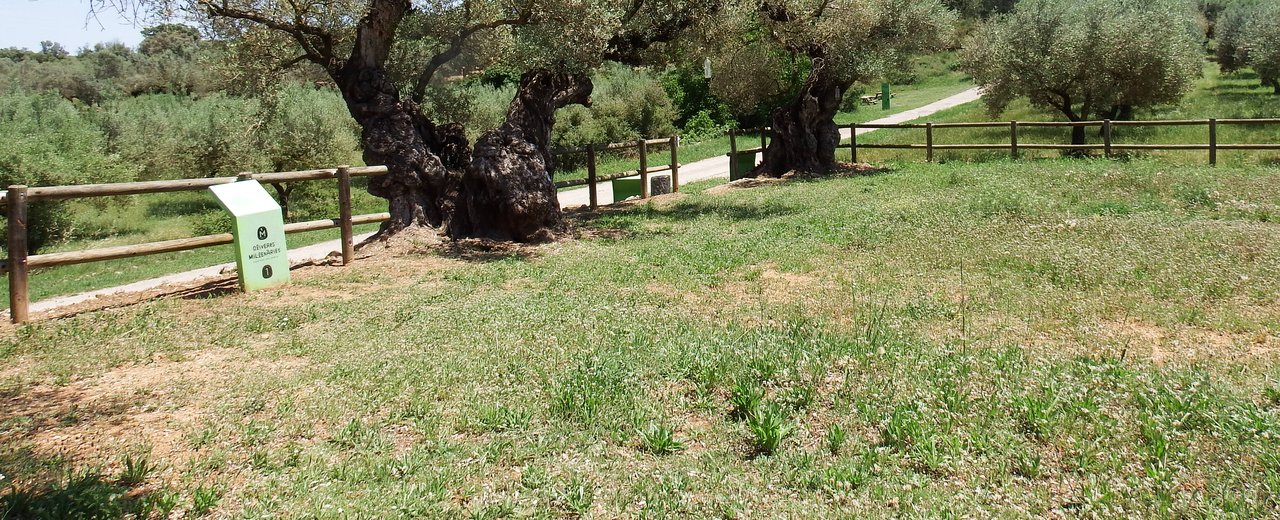
The Farga is the olive of deep time. Grown in the Maestrat, the hill country where the provinces of Castellón, Tarragona and Teruel meet in eastern Spain, it is the variety behind some of the oldest living olive trees on earth — monumental, hollow-trunked giants, many over a thousand years old, a few credibly dated to Roman times. They still fruit, and still press a delicate, sweet, fruity oil.
- Origin
- Maestrat (Castellón/Tarragona) · Spain
- Type
- Oil olive
- Colour
- Green to black
- Flavour (oil)
- Sweet, fruity, delicate, almond
- Famous for
- Millennial monumental trees
- Traits
- Extraordinarily long-lived
- Best for
- Fine, gentle oil — and wonder
Trees older than the language
The Farga grows slowly and lives almost unimaginably long. Across the Maestrat stand thousands of oliveras milenàries — millennial olive trees — with trunks the width of a small room, twisted and hollowed by centuries, some planted, it is thought, while Rome still ran the roads nearby. The famous “Farga de l’Aribela” and her sisters are protected monuments. And they are not relics: they still set fruit each year, pressed into a sweet, almond-scented oil.
Oil from certified ancient Farga trees is sold as a premium, story-rich product — and it should be genuinely good, delicate and sweet, not just a souvenir. As always, look for the cultivar named and a real producer. The wonder is real; so should be the oil.