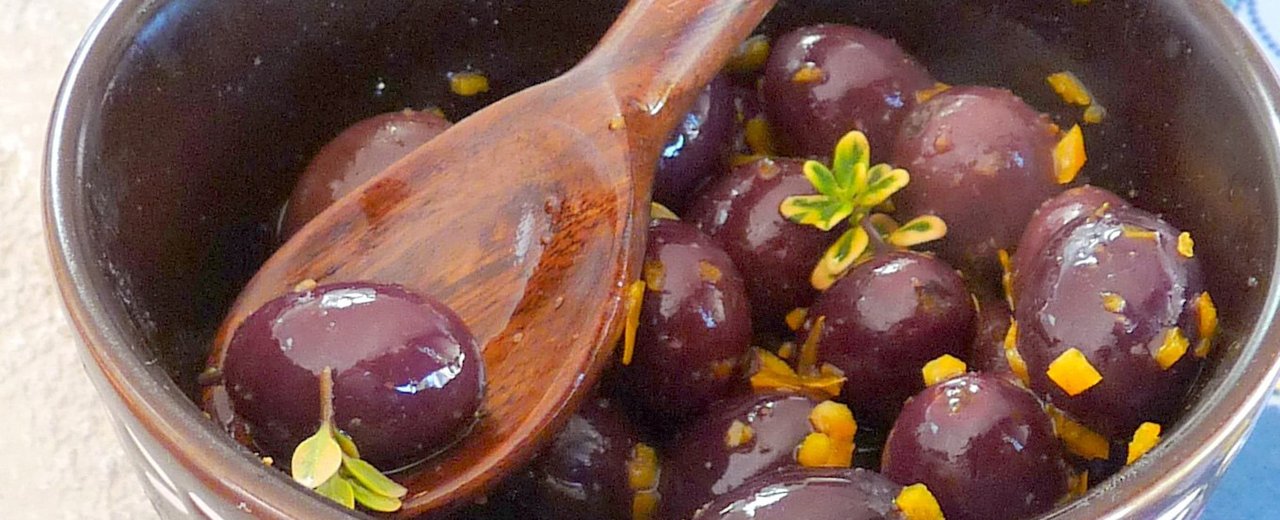

Gaeta olives
The soft, wrinkled black olive of central Italy — a curing style as much as a place.
“Gaeta” names the black olives traditionally associated with the town of Gaeta in Lazio, central Italy. Most are the Itrana cultivar, cured either dry-salt (wrinkled, intense) or in brine (plump, purple and milder). Either way the Gaeta is a soft, fruity, mildly tangy black olive — a staple of southern-Italian cooking, pasta and tapenade.
- Origin
- Gaeta, Lazio · Italy
- Cultivar
- Usually Itrana
- Type
- Table olive
- Colour
- Purple-black
- Flavour
- Soft, fruity, mild tang
- Best for
- Pasta, tapenade, eating whole
Two styles, one name
There are really two Gaetas. The brine-cured version is plump, smooth and purple-black, mild and a little winey — the everyday Italian table olive. The dry-salt-cured version is wrinkled and concentrated, chewier and more intense, like a Mediterranean raisin of an olive. Both come from the same Itrana fruit; the cure makes the difference.
Worth being precise: “Gaeta” describes olives from a region and a curing tradition more than a single botanical variety — the cultivar behind most of them is the Itrana. It is a good example of how Italian olives are often named for where and how, not just which.