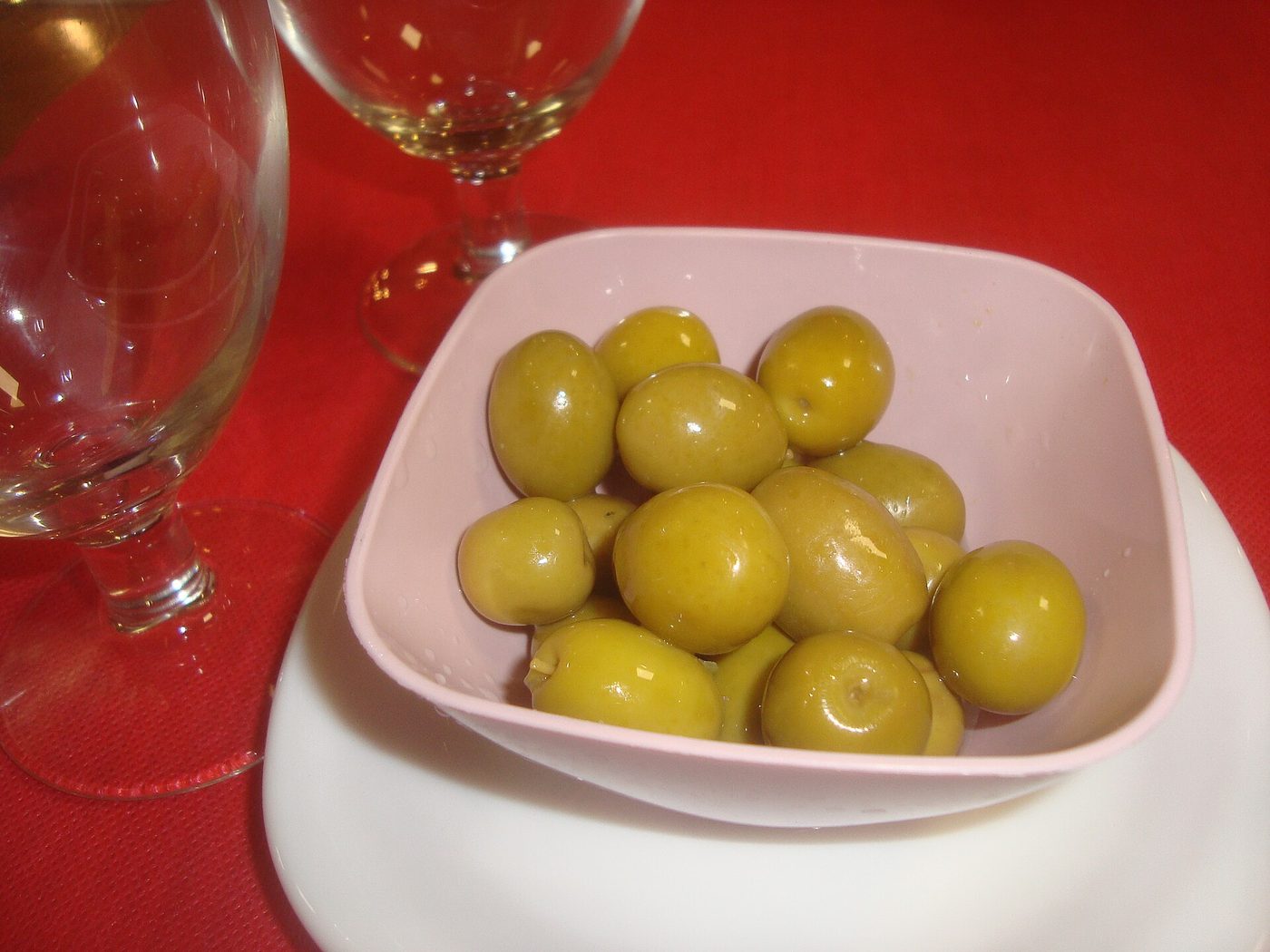
Manzanilla olives
The world’s default green olive — the small, firm, all-purpose table olive of Spain.
If you picture a generic green olive — the one in the jar, the one on the relish tray, the one stuffed with pimiento — you are picturing a Manzanilla. Grown across Andalusia and exported by the shipload, it is the most widely planted Spanish table olive: small, oval, firm, with a balanced nutty-briny flavour. The reliable everyday olive.
- Origin
- Andalusia · Spain
- Type
- Table olive
- Colour
- Green (sometimes black-ripe)
- Size
- Small–medium
- Flavour
- Nutty, briny, balanced
- Cured in
- Spanish-style lye + brine
- Best for
- Snacking, stuffing, cooking
The workhorse of the olive jar
Manzanilla means “little apple,” for the shape. It takes a Spanish-style cure — a brief lye treatment then a brine ferment — which gives it that clean, slightly nutty taste and firm bite. Its size and toughness make it the standard olive for pitting and stuffing by machine, which is why it fills most of the world’s green-olive jars.
The cheap “black ripe” olives in cans — the ones on pizzas, uniform and matte — are very often Manzanillas picked green and turned black by oxidation and ferrous gluconate, not ripened on the tree. It is a legal, century-old American process; it is just not what most people imagine “black olives” to be.