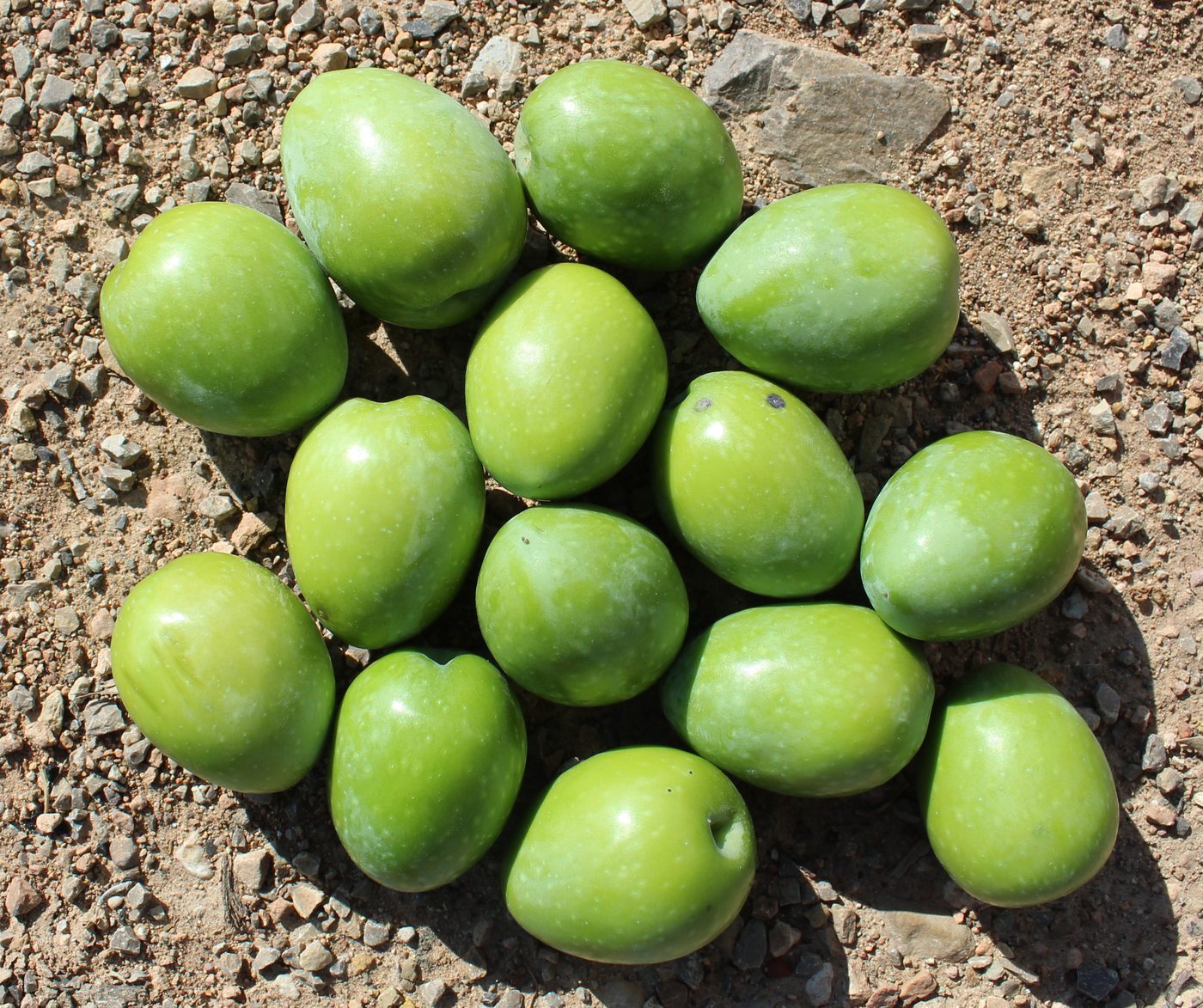
Gordal olives
Spain’s “fat one”: the big, meaty green olive of Seville, born to be stuffed.
Gordal means “the fat one” in Spanish, and the name is the whole review. Grown around Seville in Andalusia, the Gordal (or Gordal Sevillana) is one of the largest table olives in the world, with firm, meaty flesh and a clean, briny snap. If you have ever eaten a giant green olive stuffed with pepper, anchovy, or almond from a Spanish jar, it was very likely a Gordal.
- Origin
- Seville, Andalusia · Spain
- Also called
- Gordal Sevillana, Sevillano (US), Queen
- Type
- Table olive only
- Size
- Very large, around 12 g
- Color
- Green
- Flavor
- Mild, meaty, briny
- Harvest
- September to October, green
- Best for
- Stuffing, tapas, martinis
What does Gordal mean?
Gordo is Spanish for fat, and gordal is built from it: the plump one, the oversized one. Gordal Sevillana therefore means, more or less, “the fat one from Seville.” It is a descriptive name, and it tells you exactly why the olive is grown: for size. You will also see it called Bella di Spagna in Italy and Spanish Queen in older trade lists. In English-speaking shops the same fruit is often sold as the Queen olive, a trade name that simply means “very large Spanish green olive.”
Where Gordal olives come from
The Gordal is a Sevillian variety through and through. The International Olive Council’s variety catalogue puts its heartland in the province of Seville, with around 12,000 hectares there, and smaller plantings across other Spanish olive regions, including Córdoba and Huelva. It ripens early and is picked green, by hand, in September and October, before the fruit starts to soften or color.
It also traveled. The variety reached California in the 1880s and is still grown there under the name Sevillano, especially around Corning, north of Sacramento; the IOC catalogue records around 4,000 hectares of it in the United States. A jar of “Sevillano” or “Queen” olives from California is the same variety as a Spanish Gordal, grown in a different place.
The olive built for stuffing
The Gordal’s size and firm flesh make it the natural home for a filling: pimiento, anchovy, blue cheese, garlic, almond. It is a poor oil olive, with very little oil in the fruit, so it is all about the table. It is a staple of the Spanish aperitivo, where a small dish of fat green Gordals arrives beside a cold beer or a fino sherry. Mild and salty rather than complex, it is an easy, generous olive. For fillings and technique, see how to stuff olives.
How Gordal olives are cured
Almost all Gordals are prepared the Spanish way, the method the trade calls Sevillian style. The green fruit is soaked briefly in a mild lye solution to break down the bitter oleuropein, rinsed, then left to ferment in brine for weeks or months, the same lactic fermentation that gives sauerkraut its tang. That is what gives a good Gordal its clean, slightly sour, briny finish and keeps the flesh firm. Some are then pitted and stuffed; the best are left whole, cracked or marinated with garlic, thyme, fennel or orange peel.
One practical detail: the Gordal is a clingstone. The flesh holds tight to its long, pointed stone, which is why whole Gordals are hard to pit at home and why factory-pitted ones can be a little ragged.
“Queen” olives in American jars are usually Gordals: the name is marketing for the size. And a great many pitted, stuffed green olives are Gordals that were firmed up in brine and lye; perfectly fine, but if they squeak like rubber and taste mostly of salt, you are paying for size, not flavor. A good Gordal still tastes of olive.
Gordal vs Manzanilla
These are the two great Sevillian green olives, and they are often confused because both end up stuffed with pimiento in the same aisle.
| Gordal | Manzanilla | |
|---|---|---|
| Name means | “The fat one” | “Little apple” |
| Size | Very large | Medium |
| Shape | Elongated and lopsided | Round, like a tiny apple |
| Flavor | Mild, meaty | More savory and fuller |
| Oil | Almost none, table only | Mainly table, some oil |
| Typical jar | “Queen”, whole, large stuffed | Everyday pimiento-stuffed |
| Best for | Showpiece stuffing, cocktails | Snacking, salads, martinis |
If you want flavor per bite, the Manzanilla wins. If you want a mouthful that holds a whole almond or a lump of blue cheese, the Gordal does.
What to substitute
Buying and serving Gordal olives
- Judge by texture, not size. A good Gordal is firm and crunchy. Soft, wrinkled or slippery ones have been in the brine too long.
- Whole beats pitted for eating on their own; pitted and stuffed jars are for convenience and cocktails.
- Read the stuffing. “Minced pimiento” on the ingredients list means a pepper paste set with a gelling agent, not a strip of pepper. Almond, garlic and anchovy fillings are almost always the real thing, and cheese-stuffed jars need eating soonest once open.
- Serve them cool, not fridge-cold, so the flavor comes through, with a fino sherry, a vermouth or a cold beer.
- Keep them in their brine. Once opened, refrigerate the jar with the olives submerged and finish it within a few weeks.
Frequently asked questions
What does Gordal mean?
Gordal means “the fat one” in Spanish, from gordo, fat. The full name, Gordal Sevillana, means the fat olive of Seville, a reference to its very large fruit.
Where do Gordal olives come from?
Gordal olives come from Andalusia in southern Spain, above all the province of Seville. The same variety is also grown in California, where it is called Sevillano.
What is a Queen olive?
“Queen” is a trade name for very large Spanish green olives, and in practice a Queen olive is usually a Gordal. The name describes size, not a separate variety.
What is the difference between Gordal and Manzanilla olives?
Gordal is much larger, longer and milder, grown only for the table. Manzanilla is medium-sized, round and more flavorful, and it is the olive in most everyday pimiento-stuffed jars.
Are Gordal and Sevillano olives the same?
Yes. Sevillano is the name used in the United States for the Gordal Sevillana variety, which was brought to California in the late nineteenth century.
Can you make olive oil from Gordal olives?
Not usefully. The Gordal has very little oil in its fruit and it is of poor quality, so the variety is grown almost entirely as a table olive.