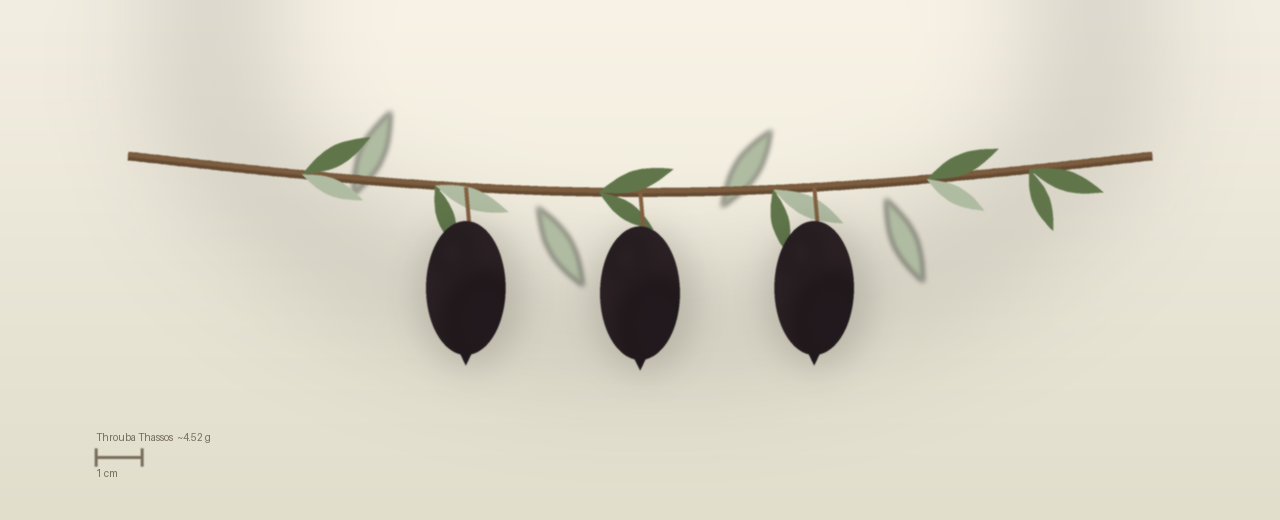
Throuba Thassos Olives
The wrinkled black olive of Thassos: ripened on the tree until its bitterness fades, then dry-cured.
The Throuba of Thassos is a remarkable thing: an olive left on the tree until it is fully ripe and over-ripe, at which point a natural process removes most of its bitterness while it still hangs on the branch. Picked wrinkled and dry, then salt-cured, it becomes an intense, meaty, slightly sweet black olive with a concentrated flavour. The Thassos island Throuba carries a protected designation.
- Origin
- Thassos island · Greece
- Type
- Table olive
- Colour
- Black, wrinkled
- Cure
- Tree-ripened, then dry salt
- Texture
- Dense, chewy
- Flavour
- Intense, sweet-savoury
- Best for
- Snacking, meze, baking
Debittered by the tree itself
Most olives are inedibly bitter off the tree and must be cured in brine or lye to be eaten. The Throuba is the rare exception: left to hang into full ripeness, it undergoes a natural fermentation on the branch that strips away the bitterness before it is even picked. The shrivelled black fruit is then dry-salt-cured, concentrating it into something dense, wrinkly and powerfully olive-y.
Throuba olives look shrivelled and “old” compared with a plump brined olive — that wrinkled look is correct and desirable, not a sign of a bad olive. They are saltier and chewier than a brined olive, with an intense flavour a little reminiscent of the Moroccan dry-cured style.