Spain’s Olive Crop Halves and Prices Start to Climb
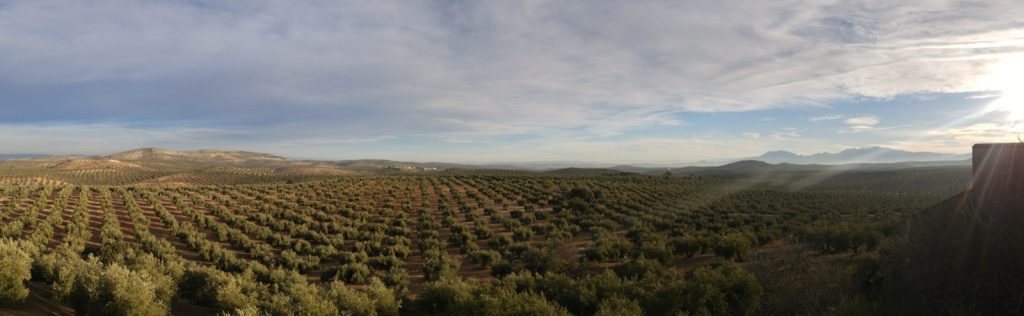
Spain’s 2012/13 olive oil crop is now forecast at about 820,000 tons, roughly half of last season, and prices paid to Spanish mills are already about 27 percent higher than a year ago. Here is what the International Olive Council and Spain’s own market data are showing this December, and what a short Spanish year usually means for the oil on your shelf.
What happened
At its advisory committee meeting in Madrid on November 14 and 15, the International Olive Council (IOC) put numbers on what growers in Andalusia had been saying since summer. World olive oil production for the 2012/13 season is expected to reach about 2,718,000 tons, a fall of 20 percent. Spain, which has been carrying the world on three big crops in a row, is forecast at 820,000 tons, down 49 percent. The IOC figures were published in its November market newsletter in early December.
Some Spanish estimates are lower still. Infaoliva, a Spanish producer organization, is working on just over 625,000 tons and reckons the country will fall about 200,000 tons short of its combined home and export demand. Spain’s Olive Oil Agency reported that in October, the first month of the season, Spanish mills produced only 6,200 tons of oil while the country imported about 6,500 tons. It is not often you see Spain buying more olive oil than it makes.
| Producer | 2012/13 IOC forecast (tons) | Note |
|---|---|---|
| World | 2,718,000 | Down 20 percent |
| Spain | 820,000 | Down 49 percent |
| Italy | 490,000 | Second in the EU |
| Greece | 350,000 | Third in the EU |
| Tunisia | 220,000 | Largest outside the EU |
| Syria | 198,000 | Member country estimate |
| Turkey | 195,000 | Member country estimate |
Why it matters
Spain normally supplies close to half the world’s olive oil, so when its trees have a bad year everyone feels it. Olive trees swing between heavy and light crops anyway, and after three large Spanish harvests the groves were due a rest. A dry year and harsh weather turned that rest into a collapse.
The IOC now expects world consumption of about 3.1 million tons this season, more than the world will produce. The gap gets filled from stocks, and the stocks are shrinking fast: the council expects world carryover to fall from 916,500 tons at the start of the season to about 387,000 tons at the end. Spain still had a comfortable 591,600 tons in stock at the end of October, including 99,500 tons held off the market under European Union private storage aid, but that cushion was built for a normal year, not a half crop.
What the prices are doing
Prices paid to producers for Spanish extra virgin started climbing in late June and reached €2.64 per kilo in September, according to the IOC. They eased back to about €2.40 by late November, which is still 27 percent above a year ago and back to where they stood in March 2008. Spain’s POOLred price system showed an average of about €2.33 per kilo on November 30, against €1.87 in late July. In Italy producer prices touched €2.90 in early October before settling around €2.62. Greek prices have risen more slowly, to €2.24.
After two crop years of very low prices in Spain, many in the trade see this as prices returning to earth rather than a bubble. For shoppers, the rise will reach supermarket shelves with a lag, as packers work through oil they bought cheaper.
- Expect fewer deep price promotions on big-brand extra virgin over the winter.
- Expect more oil from Tunisia and other non-EU origins in blends, since Tunisia is forecast to be the largest producer outside the EU this season.
- Expect the cheapest private-label bottles to change origin on the back label before they change price.
In a short year the first thing to give is not the price on the front of the bottle, it is what is inside it. Bottlers protect their shelf price by changing the blend: older stock, more oil from wherever it is cheapest, a little less of the good stuff. Read the origin line on the back label this winter and compare it with the bottle you bought last spring. If it has quietly changed, the brand has already told you how it is coping with the Spanish shortfall.