A Grower’s Map of Palestine
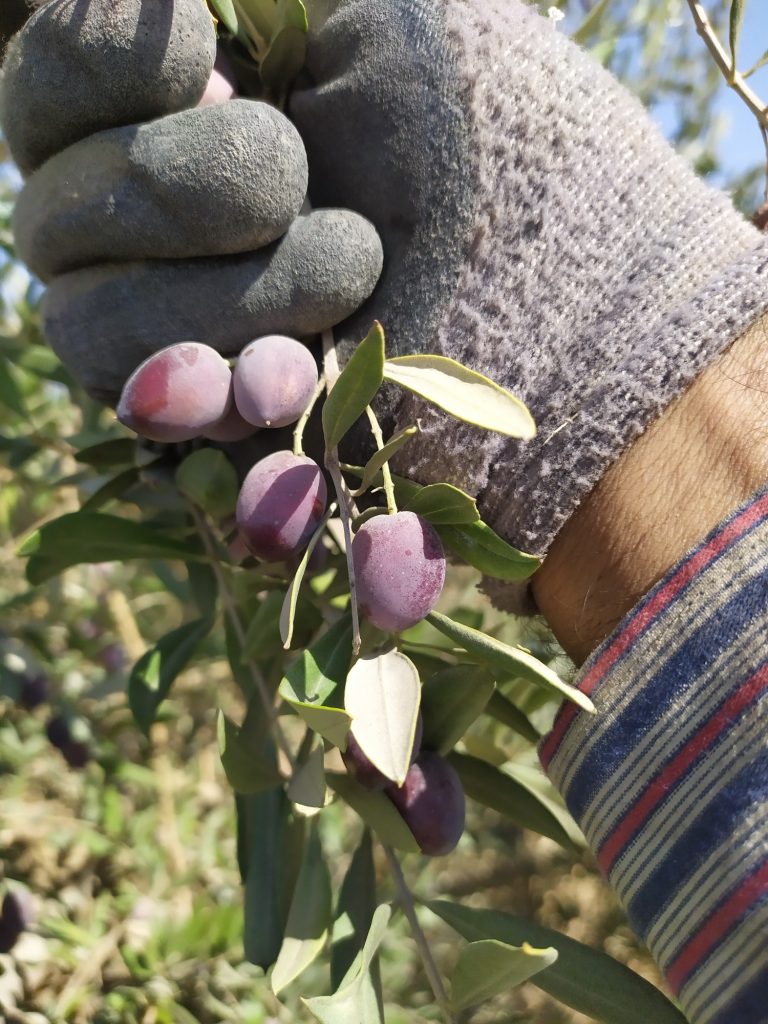
Few crops carry a people’s identity the way the olive carries Palestine’s. On the West Bank’s terraced hills the tree is food, income, inheritance and the spine of the autumn calendar — and the native Nabali olive sits at the centre of all of it.
Most country profiles in this series are about commerce — tonnage, exports, who blends whose oil. Palestine is different, and it is honest to say so plainly. Here the olive is first an identity crop and only second a traded one. Across the hills of the West Bank, families who own a few dozen trees apiece bring in a harvest each autumn that is as much a social season as an agricultural one. The dominant native variety, the Nabali, gives both a firm table olive and a respected oil. To read a Palestinian bottle, start with the terraces.
The terraced heartland
Palestinian olive growing concentrates in the hills of the West Bank — around Jenin and Nablus in the north, down through Ramallah and the Jerusalem countryside to Hebron in the south. The groves climb the slopes on dry-stone terraces, many of them old and some genuinely ancient. This is the most important agricultural crop in the territory, and it is held in countless small hands: a great many rural families own a modest stand of trees rather than a plantation. Most groves are rain-fed, not irrigated, so the trees grow slowly and the fruit concentrates what little water the hills provide.
Nabali, Souri and the family olive
The native Nabali — also called Baladi, simply ‘local’ — dominates, joined by Nabali Mohassan, the older Souri (a variety shared across the wider eastern Mediterranean) and the introduced, high-yielding K18. Nabali is a true dual-purpose olive. Its fruit is cured for the table, firm and fleshy, a staple of the kitchen; its oil ranges from gentle to nicely fruity depending on how early the fruit is picked. This is, above all, the household’s own oil — poured over za’atar and bread, cooked greens and whatever the day brings — with the surplus sold or pressed into the local economy.
| Region | West Bank hills (Jenin, Nablus, Ramallah, Hebron) |
|---|---|
| Signature variety | Nabali (Baladi), with Souri and Nabali Mohassan |
| Tree style | Old, terraced, mostly rain-fed |
| Use | Dual-purpose — table fruit and oil |
| Harvest | October into November, by hand, family-led |
| Character | Gentle to fruity oil; firm, fleshy table fruit |
An honest word on the numbers
It would be easy to drown this page in disputed figures, and we will not. What is well established and uncontroversial is enough: the olive is the single most important tree crop in the Palestinian territories; it underpins the rural economy and the livelihoods of many tens of thousands of families; and the harvest is rain-dependent, so a dry year or a hard season is felt directly in the household. Output swings from year to year — olives are famously alternate-bearing, heavy one year and light the next — which is normal for the tree and not unique to here. Where you should be cautious is with any precise tonnage or export figure quoted without a source and a year; treat those as estimates, not gospel.
What sets it apart on the map
Set Palestine beside the other entries in this series and the contrast is the point. Spain is industrial scale and a few great varieties; Italy is a mosaic of hundreds; Australia and Chile are modern, machine-harvested New-World plays. Palestine is none of those. It is a smallholder, heritage landscape where the same families have worked the same terraces for generations, where the tree is woven into the calendar and the culture, and where the oil is made first to be eaten at home and only then to be sold. The Nabali is not a marketing creation; it is the taste of a specific land and a specific autumn, repeated year after year.
- Identity before industry — the olive is heritage and livelihood first, an export second.
- One native olive at the centre — Nabali (Baladi) defines table and oil alike.
- Small hands, not big estates — ownership is spread across countless modest groves.
- Rain-fed and old — slow trees, concentrated fruit, an alternate-bearing rhythm.
- Cooperative supply chains — what reaches you abroad is usually fair-trade or co-op bottled, and traceable.
Palestinian olives: common questions
What is the main Palestinian olive variety?
The Nabali, also called Baladi (‘local’), is the dominant native variety. It is dual-purpose — cured as a firm table olive and milled for oil. The older Souri and Nabali Mohassan are also grown, along with the introduced high-yield K18.
When is the Palestinian olive harvest?
Through October and into November, picked by hand. It is a family and community season as much as an agricultural one, with whole households turning out to the groves.
Is Palestinian olive oil any good?
At its best, yes — a Nabali oil picked on the early side and milled promptly can be gentle and pleasantly fruity. Because most groves are old and rain-fed, the fruit is concentrated. The variability you see is mostly down to harvest timing and milling speed, as it is everywhere.
Why don’t I see Palestinian oil on supermarket shelves?
Volumes are small and the supply chain is smallholder-led, so most oil is consumed locally or sold within the region. What does reach export shelves abroad tends to come through fair-trade and cooperative channels, which is also why it is unusually traceable.
How do I buy genuine Palestinian olive oil abroad?
Look for fair-trade or cooperative labelling with a named village and a clear harvest year. That traceability is the whole assurance here — it tells you a real family pressed it. A vague ‘product of the region’ bottle gives you none of that.
If you buy Palestinian oil abroad, the label is doing more work than usual. Look for fair-trade or cooperative bottling with a clear village and harvest year — the supply chain here is small-grower and co-op-led, so traceability is both achievable and meaningful. It tells you a real family pressed it, in a real place, in a known season. A nameless ‘product of the region’ bottle gives you none of that, and you should price it accordingly. And taste a Nabali for what it is: a household olive, honest and fruity, not a competition trophy bred for medals.
Compiled from International Olive Council and regional agricultural sources; year-to-year figures vary and should be treated as estimates.