How Palestine Makes Its Oil
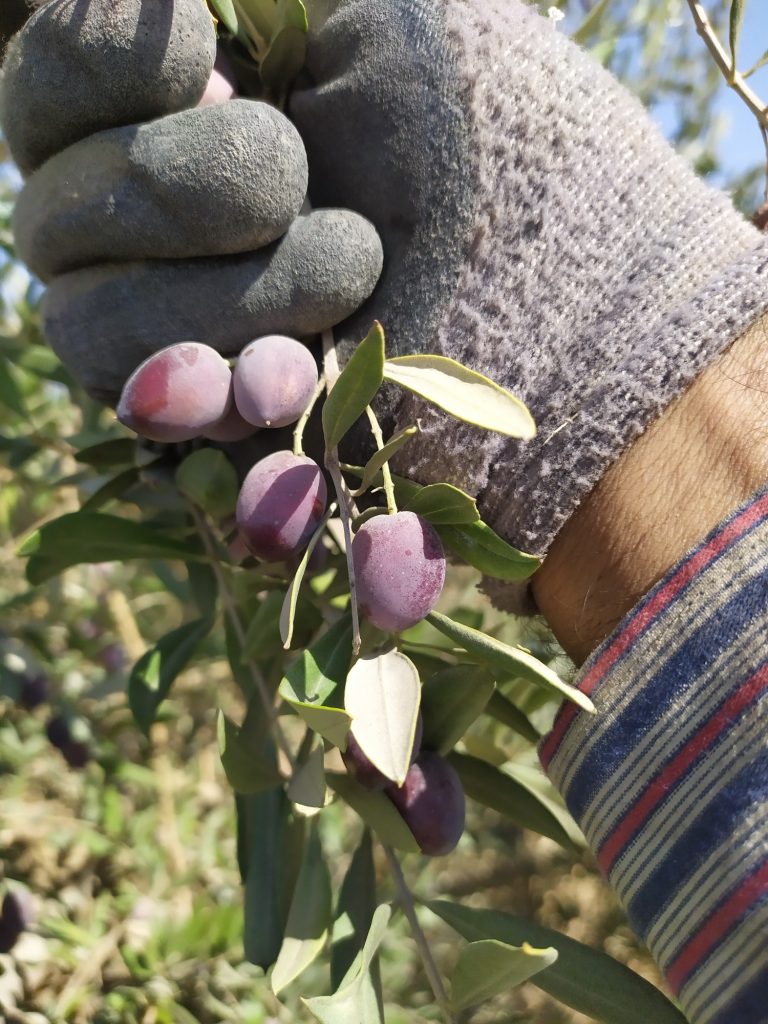
Palestinian oil is made the way most Mediterranean oil once was: small plots, hand harvesting, and local mills serving their own villages. The technology ranges from old presses to modern centrifuges, but the defining feature isn’t the machinery — it’s that the whole harvest runs on family labour and shared groves.
To understand how Palestine makes its oil, forget the machinery for a moment — it ranges from old press-and-mat setups to gleaming centrifuges, and the kit is not the story. The story is the labour. This is a system built on small family holdings, hand harvesting and shared village mills, where the autumn picking is a communal event before it is an agricultural one. The native Nabali olive, picked at the right moment and milled promptly, gives a green, peppery oil; the cooperatives that gather and bottle it are the bridge between a few dozen family trees and a buyer abroad. Here is the chain, grove to bottle.
A harvest of hands
The season opens in October, and across the West Bank it pulls families back to their trees — parents, children and grandparents picking together, beating branches over nets or stripping by hand. Holdings are small, often just a few dozen trees handed down through generations, so the work is human rather than mechanised. Speed matters: olives picked one day are best milled the next, before they warm and ferment. The harvest is as much a social and emotional event as an agricultural one, a yearly return to ancestral land that gives the resulting oil a meaning no balance sheet captures.
| Harvest | From October, hand-picked or net-beaten |
|---|---|
| Holdings | Small family plots, often inherited |
| Main cultivar | Native Nabali (green, peppery oil) |
| Milling | Old press-and-mat to modern continuous centrifuge |
| Route to market | Cooperatives, often fair-trade for export |
| Much of it | Kept for the household and shared among relatives |
From village mill to bottle
Once picked, the fruit goes to local mills, which range from older press-and-mat setups to modern continuous centrifugal lines installed by cooperatives. The native Nabali, picked at the right moment and milled promptly, gives a green, peppery oil; delays or late picking soften it. Cooperatives have been important in raising quality and opening fair-trade export routes, helping small growers reach buyers who pay for provenance. Much oil, though, never enters formal trade at all — it is kept for the household, shared among relatives, and poured at the family table, exactly as it has been for centuries.
The cooperative as the missing link
The single most important institution in Palestinian oil is not a mill or a brand — it is the cooperative, and it is worth understanding why. A grower with thirty inherited trees cannot reach an export buyer alone: the volumes are tiny, the paperwork and certification are beyond a single family, and the price of selling loose locally is low. The cooperative aggregates many such growers, runs a modern mill, handles the fair-trade and organic certification, and bottles oil with a named village and harvest year. That structure is what turns scattered family fruit into a traceable bottle on a foreign shelf — and what lets the money flow back to the growers rather than to a middleman. When you buy a co-op-labelled Palestinian oil, you are buying that whole chain.
- The grower — a few dozen trees, hand-picked, no route to export alone.
- The cooperative — aggregates fruit, mills it, certifies and bottles it.
- The buyer — gets a traceable, named-village oil; the value returns to the village.
| Co-op export bottle | Household / loose oil | |
|---|---|---|
| Traceability | Named village, harvest year | Known only locally |
| Certification | Often fair-trade / organic | None |
| Where it goes | Foreign shelves, fair-trade routes | Family table, relatives, neighbours |
| Who is paid | The growers, via the co-op | Stays within the community |
| For a buyer abroad | The one to look for | Rarely available to you |
What it means for the buyer
Because so much Palestinian oil never leaves the household, the bottles that do reach you abroad are mostly the cooperative ones — and that is genuinely good news. The fair-trade co-op route here is one of the more honest supply chains in the olive world: a named village, a harvest year, and money that returns to small growers rather than an anonymous blender. Treat it as fresh oil, because that is what it is. Keep it cool and dark, and finish it within the year while the Nabali pepper is still alive.
How Palestine makes its oil: common questions
What is the main Palestinian olive variety?
The native Nabali, the region’s main oil olive. Picked at the right moment and milled promptly it gives a green, peppery oil; left late or milled slowly it softens. It is the same broad stock found across the wider region.
When is the Palestinian olive harvest?
It opens in October across the West Bank hill country. Picking is by hand — beating branches onto nets or stripping by branch — and the fruit is best milled within a day or two, before it warms and ferments.
Why do cooperatives matter so much here?
Because the holdings are tiny — often a few dozen inherited trees — no single grower can reach an export buyer alone. The cooperative aggregates the fruit, mills it, handles certification, and bottles it with a named village and harvest year, returning the value to the growers.
How do I buy genuine Palestinian oil abroad?
Look for a cooperative label with a named village and a harvest year — that is your best signal of a real, traceable supply chain, often fair-trade. It connects you to small growers rather than an anonymous blender.
How should I store and use it?
Treat it as fresh oil: keep it cool and dark, and finish it within the year while the green Nabali pepper is still alive. It is made to be drunk young, not aged in a warm pantry.
When buying Palestinian oil abroad, a cooperative label with a named village and harvest year is your best signal of a real, traceable supply chain. The fair-trade route here genuinely connects you to small growers rather than an anonymous blender — one of the more honest chains in the whole trade, because the structure forces traceability the household oil never needs. Treat it as fresh oil: cool, dark storage, and finish it within the year while the Nabali pepper is still alive. You are buying a named village and a harvest, not a flag — which is exactly how oil should be bought everywhere.
Compiled from Palestinian cooperative and International Olive Council sources.