Palestine’s Signature Oils
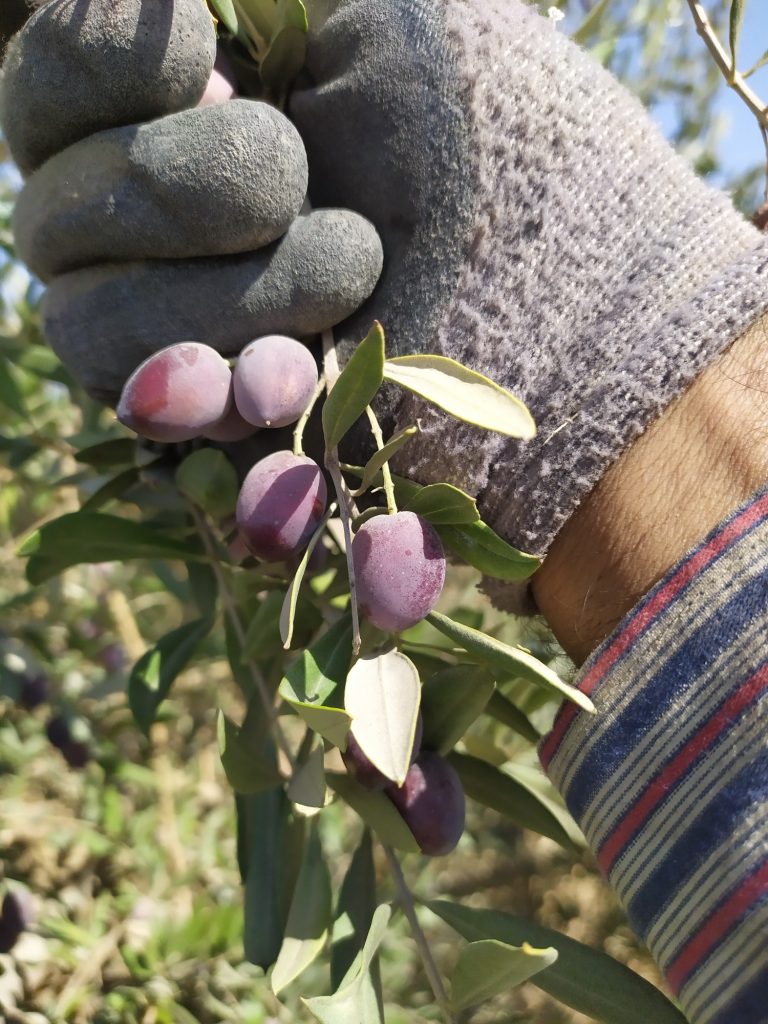
Palestinian olive oil has a single dominant voice: Nabali. Pressed from the territory’s main native variety, it is the everyday oil of the West Bank kitchen and a fixture of the diaspora table. Its profile shifts with harvest timing, but at its freshest it is green, fruity and pleasingly peppery.
If a country can have one signature oil, Palestine’s is unusually easy to name: it is Nabali, full stop. There is no spread of competing flagship cultivars to argue over, no marketing committee’s house style. The country’s oil is essentially one native variety, pressed in hundreds of small mills, expressed slightly differently in every valley. That makes Palestinian oil refreshingly legible — once you know what fresh Nabali tastes like, you know the country’s oil. What varies is not the grape, so to speak, but the care and the timing.
The Nabali style
Most Palestinian oil comes from Nabali and its relative Nabali Mohassan, so the country’s ‘signature’ oil is really this variety expressed across many small mills. Picked earlier and milled fast, Nabali gives a green, fruity oil with a fresh herbaceousness and a real peppery catch; left later, it softens into something rounder and milder. Because so much is pressed by and for families, quality varies with the care of each mill, but a well-made early-harvest Nabali stands comfortably among good eastern-Mediterranean oils. It is an oil meant to be tasted, not hidden in cooking.
Variety by variety
Palestine’s oil is not quite a one-variety country — a handful of cultivars share the hills, each pulling the blend a different way. Here is who does what.
| Variety | Role | Oil character |
|---|---|---|
| Nabali (Baladi) | The signature oil olive | Green and peppery fresh, rounding with ripeness |
| Nabali Mohassan | Selected relative | Similar profile, prized in some districts |
| Souri | Shared Levantine classic | Smaller, oil-rich; lends body |
| K18 | Introduced, higher-yield | Milder, fills out modern plantings |
More than a commodity
It is impossible to write about Palestinian oil purely as a product. The autumn olive harvest is a defining social and economic event, drawing families back to ancestral groves, and the oil that results carries that weight. Sold through cooperatives and fair-trade channels, it reaches diaspora communities and ethical importers who value the story as much as the taste. That said, the taste earns its place on merit: a fresh Nabali poured over warm bread with za’atar needs no narrative to justify it. Buy it with a village name and a harvest year and you get both the oil and its provenance.
- Buy: single-origin, named village, recent harvest year.
- Channel: cooperatives, fair-trade and diaspora importers.
- Use it: raw — bread, za’atar, salads, hummus, warm pulses.
- Store it: cool, dark, sealed; finish it within the year.
Why freshness is the whole game
One quiet truth shapes Palestinian oil more than any tasting note: most of it is unfiltered, small-mill oil with no preservative crutch, so it lives and dies by freshness. A Nabali pressed cleanly in November and used by the following summer is a bright, peppery joy; the same oil a year and a half on, kept in a warm kitchen in a clear bottle, is a tired ghost of itself. The diaspora trade complicates this further — a bottle may cross continents and sit on a shelf for months before it is opened. None of that is a flaw in the oil; it is a reason to buy the most recent harvest you can find, in a tin or dark glass, and to actually use it rather than save it for a special occasion that never comes.
Palestinian oil: common questions
What does Palestinian olive oil taste like?
At its freshest, green and fruity with a grassy herbaceousness and a genuine peppery catch — a classic eastern-Mediterranean profile. Picked later, the same Nabali oil turns rounder, milder and softer.
Which variety makes Palestinian oil?
Overwhelmingly Nabali (Baladi) and its relative Nabali Mohassan, with Souri and the introduced K18 in support. The country’s signature oil is essentially Nabali expressed across many small mills.
How should I use Palestinian olive oil?
Raw, where its character shows. The classic is warm bread, a dish of the oil and za’atar to dip through it. It also shines over salads, hummus and warm pulses. Save flatter, later-picked oil for the pan.
Why does the quality vary so much?
Because most of it is pressed in small family and cooperative mills, where the care taken at harvest and pressing makes all the difference. An early-picked, quickly milled lot is a different oil from a late, casually handled one — even from the same village.
Is buying Palestinian oil mostly about the story?
The story is real, but the taste stands on its own. Buy a single-origin Nabali with a named village and harvest year and you get a genuinely good oil and its provenance — not charity dressed as a bottle.
The classic way to meet Nabali oil is the simplest: good bread, a dish of the oil, and za’atar to dip through it. A fresh, peppery batch shines here, the herbs and sesame riding on the oil’s green fruit. If your bottle tastes flat, it’s likely an older or later-picked oil — still fine for cooking, but save the bread ritual for a livelier one. And don’t overpay for vague ‘artisan’ bottling with no village and no year : with Palestinian oil, the traceability is the quality signal, and it costs the honest seller nothing to print.
Based on International Olive Council data and Palestinian cooperative sources.