Rabobank: Olive Oil Demand Now Grows Outside the Mediterranean
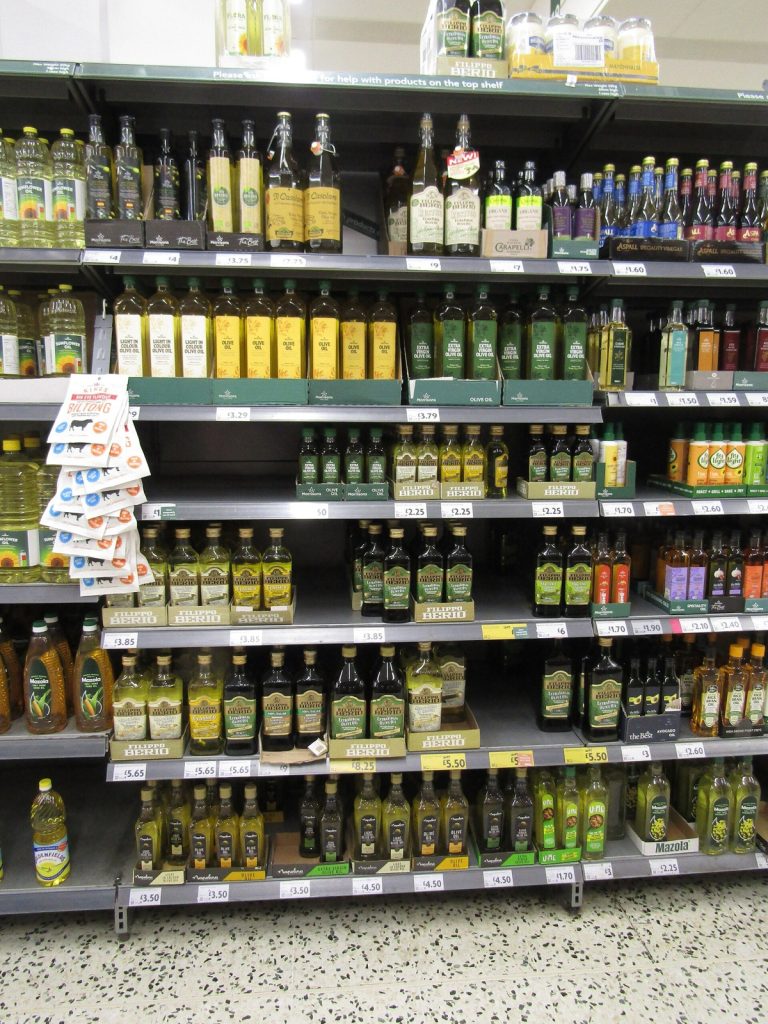
Olive oil demand is growing fastest where olives do not grow: emerging markets have expanded at about 13 percent a year since 2007, against 3 percent for the world market as a whole, according to a Rabobank report now circulating in the trade. The bank expects that to continue for at least five years. Here are the numbers, and what they mean for the people who actually make the oil.
What the report says
The Dutch bank’s food and agribusiness research unit calls the report “Globalization of Olive Oil Demand”. Its central point is that the growth has moved away from the Mediterranean. The global market grew at about 3 percent a year between 2008 and 2012. Developed markets outside the Mediterranean, led by the United States and Japan, grew at about 4 percent and now account for roughly 41 percent of the global market by value. Twenty years ago they took a tenth of world consumption; now they take a quarter.
Emerging markets, chiefly Brazil, Russia, India and China, have grown three times faster, at around 13 percent a year over the last five years, and Rabobank expects double-digit growth to continue. The Middle East and North Africa, where consumption per head is lower but the population is large, take about 19 percent of the olive oil sold.
The old markets are the flat ones. Italy, Spain and Greece still have the highest consumption per person in the world, but Rabobank describes those markets as mature and stagnating, with retail sales expected to fall back a little in Greece and to creep up in Italy and Spain.
| Market | Recent growth | Rabobank’s view |
|---|---|---|
| Northern Mediterranean | Flat | Mature, highest consumption per head |
| Developed, outside the Mediterranean | About 4 percent a year | 41 percent of global value, more of the same expected |
| Emerging (Brazil, Russia, India, China) | About 13 percent a year | Double-digit growth for at least five more years |
Who is positioned to sell into it
Rabobank splits the retail trade into three. First the global branded bottlers, the Deoleo, Salov and Borges kind of company, which it expects to do well with strong brands in emerging countries. Second the cost leaders and private label suppliers, such as Sovena and Hojiblanca, and countries with low costs such as Spain, Morocco and Tunisia. Third the high-end niche producers, selling protected designations, single varieties and flavored oils, which the bank says are growing strongly in the traditional markets.
China is the case study. It imported about 45,000 tons in 2012, and several large state-owned companies have been buying bulk oil from southern Europe to put into their own branded blends. Distribution there is fragmented and brand loyalty is weak, which is why the bank tells cost leaders to partner with local brands that already have shelf space. Analyst Vito Martielli’s practical advice to the industry is to strengthen sourcing and to invest in generic promotion that teaches people what olive oil is for.
What it means for producers
- Growth in emerging markets comes mostly as bulk oil, bottled locally under someone else’s name. Volume moves, but the value stays with the bottler.
- Store brands keep gaining. Private label already takes about a quarter of the United States olive oil market and about a fifth of Italy’s, and Rabobank sees private label doubling its share of food generally over the next decade.
- Supply is the weak link. Spain alone makes about 45 percent of world production and the Mediterranean about 97 percent, so a dry year in Andalusia, like this one, is felt on shelves in São Paulo and Shanghai.
When a report says olive oil demand in a new market is up 13 percent, ask what is in the bottle. In several fast-growing markets the product on the shelf is a blend, olive oil cut with a cheaper seed oil, sold under a local brand and priced where shoppers can reach it. That is a perfectly legal product where it is labeled honestly, and it builds the habit of cooking with olive oil. But it means the growth curve and the extra virgin curve are not the same line.
Sources
- Rabobank Food and Agribusiness Research: Emerging Markets embrace Olive Oil at a fast rate (April 12, 2013, archived)
- Olive Oil Times: Where Olive Oil Demand is Waxing and Waning (May 7, 2013)