Deoleo Takes the Hojiblanca Brand, Hojiblanca Takes 9.63% of Deoleo
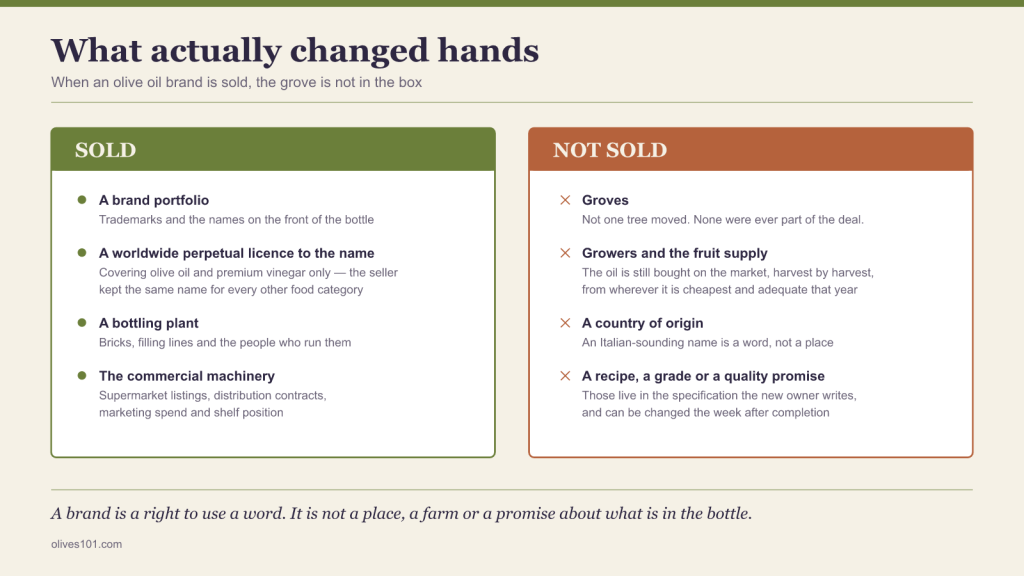
Deoleo, the world’s biggest olive oil bottler, is taking over the Hojiblanca brand and the Hojiblanca cooperative’s bottling plant at Antequera, and paying for them in shares that will give the cooperative 9.63 percent of Deoleo. The deal was announced on October 18, after weeks of rumor, once both sides’ governing boards had signed off. Here is what was agreed, why a grower-owned cooperative wants a stake in the owner of Bertolli and Carbonell, and what the Deoleo Hojiblanca deal means for the bottle on the shelf.
What was agreed
Deoleo, the Madrid-based group formerly known as Grupo SOS, will buy the Hojiblanca brand and the cooperative’s industrial plant in Antequera, in Málaga province. It will not pay in cash. Instead it will issue new shares at their face value of €0.50 to Hojiblanca, which will end up with 9.63 percent of Deoleo and become its reference industrial partner. According to El País, as reported by Olive Oil Times, Hojiblanca’s president José Moreno and managing director Antonio Luque are expected to join the Deoleo board.
Deoleo told the Spanish stock market regulator that the Hojiblanca business will add about €40 million to its annual sales. The announcement, as published by the Spanish food technology center AINIA, also puts the extra EBITDA at about €5.3 million. The deal still has to be ratified in the coming weeks by Deoleo’s shareholders and by Hojiblanca’s general assembly.
| Item | Figure |
|---|---|
| Hojiblanca’s stake in Deoleo after the deal | 9.63 percent |
| Extra annual sales for Deoleo | About €40 million |
| Deoleo turnover, 2011 | €960.8 million |
| Hojiblanca group turnover, 2011 | €535.9 million |
| Deoleo sales, first half of 2012 | €399.3 million, down 14 percent |
| Deoleo share of the world packaged olive oil market | About 22 percent, by its own account |
| Hojiblanca olive oil membership | 96 member cooperatives, about 55,000 grower families |
Why it matters
The two companies sit at opposite ends of the trade. Deoleo is the brand machine: Carbonell and Koipe in Spain, Carapelli and Sasso in Italy, and Bertolli, which it bought from Unilever in 2008 (see Unilever sells Bertolli olive oil to Grupo SOS for 630 million euros). Hojiblanca is the grower end: a Málaga-based cooperative of cooperatives whose members bring together tens of thousands of olive-growing families across Andalusia and beyond, and which calls itself the world’s leading producer of virgin olive oils.
Spanish growers have complained for years that they produce most of the world’s olive oil while the value is captured by bottlers and supermarket chains. Hojiblanca’s answer is to buy a seat at the bottler’s table, and its statement framed the deal as a way to strengthen the global position of Spanish oil. Deoleo gets the brand that leads Spain’s extra virgin segment and a closer tie to a huge supply of oil. It also gets a strategic shareholder at a time when its sales are falling and, after the upheavals at Grupo SOS in 2009 (SOS Cuetara’s top execs fired, shares suspended), it is still working down its debt.
Not everyone is cheering. Olive Oil Times reports that the deal has been hotly debated in the Spanish sector, with some fearing too much concentration in the virgin oil segment, particularly when Hojiblanca was rumored to be taking as much as 30 percent. Others see a stronger Spanish flag abroad. Hojiblanca has made alliances before; see Cargill, Spain’s Hojiblanca unite in olive oil JV.
What it means for buyers
- Nothing changes on the shelf yet. The deal still needs its votes, and brands like these usually keep their look and name.
- Hojiblanca the brand and Hojiblanca the olive variety are different things. The brand name alone tells you nothing about which olives are in the bottle.
- If a brand you like changes owner, keep reading the origin line and the harvest date, not the logo.
A brand is a label and a recipe, not a grove. Big bottlers buy oil from many mills and many countries through the year and blend to a house taste, and the blend can change with every harvest and every price swing without the front label changing at all. When a brand changes hands, the new owner can move bottling, switch suppliers and keep the same picture on the bottle. The only lines that must tell you the truth about where the oil came from are the small ones on the back.
Sources
- Olive Oil Times: Deoleo and Hojiblanca, Former Rivals, Create Global Olive Oil Giant
- AINIA: Deoleo y Hojiblanca se asocian para afianzar el liderazgo mundial del aceite de oliva español (in Spanish)
- Qcom.es: Hojiblanca y Deoleo se asocian en pro del liderazgo mundial del aceite de oliva (in Spanish)