Cold Hardy Olive Trees: Best Varieties and Winter Care
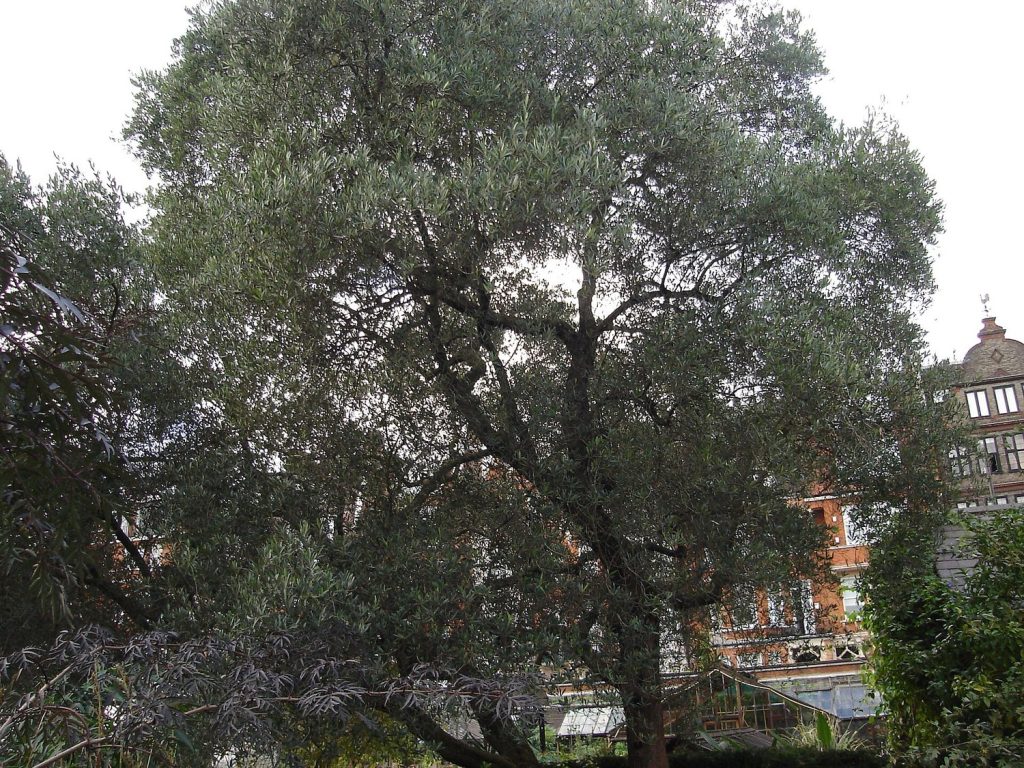
Even a cold hardy olive tree is only hardy by olive standards: mature trees start losing leaves and twigs around 17°F (-8°C) and can be killed to the ground below about 12°F (-11°C), while young trees can die below 25°F (-4°C). Variety, age and the way the cold arrives decide the rest. Below: the numbers, the hardiest varieties, the zones that make sense, winter protection, and how to judge and repair frost damage.
How cold can an olive tree go?
The clearest figures for home growers come from Texas A&M AgriLife Extension’s olive guide. Its thresholds, with a UC benchmark added:
| Low temperature | What usually happens |
|---|---|
| 28 to 32°F (-2 to 0°C), brief | Established trees shrug it off; tender new shoots may burn |
| Below 25°F (-4°C) | Young trees, especially in their first 3 years, may be killed |
| 20°F (-7°C) and below | UC researchers call this range often critical for olives |
| 17°F (-8°C) | Leaves and small stems on mature trees are damaged |
| 12°F (-11°C) | Severe damage; mature trees can be killed to the ground, though many regrow from the base |
Age matters most. Texas A&M notes that trees become more resistant once established for 3 to 5 years, as the trunk thickens. The way the cold arrives matters almost as much. A gradual slide into winter lets the tree harden off; a sudden, steep drop does far more harm, and so does a warm spell in midwinter that softens the tree before the next freeze. UC’s study of the December 1990 California freeze gives a vivid example: a Glenn County orchard badly hurt by a November 1985 freeze at only 22°F came through 11°F in late December 1990 with relatively minor damage. The difference was timing: the 1985 freeze arrived before the trees had hardened off, the 1990 one after. For the biology behind this, see frost and the olive: how cold is too cold.
The most cold hardy olive tree varieties
Variety is worth several degrees, and two sets of US evidence are the best guide. Texas A&M’s variety guide rates Arbequina’s cold hardiness very good, Mission good, Manzanillo, Arbosana, Picual and Pendolino moderate, and Frantoio low. UC’s 1990 freeze survey found Manzanillo the worst hit of California’s main varieties, with Ascolano the hardiest and Mission, Sevillano and Barouni lightly damaged. In the USDA olive collection at Winters, which saw 15°F, Mission was rated resistant, Arbequina and Picual took moderate damage and Koroneiki was badly hurt.
- Mission: the most consistent record across both sources, and it fruits alone.
- Arbequina: top-rated in Texas, though it took moderate damage at 15°F in the UC collection.
- Leccino: long valued in Italy for its cold tolerance; it needs a pollinizer.
- Ascolano: the hardiest of California’s commercial varieties in 1990, but harder to find as a garden tree.
- More tender: Manzanillo, Koroneiki and Frantoio, despite Frantoio sometimes being sold as hardy.
The name alone is no guarantee. In the same UC collection, a selection listed as Mission-Davis was badly damaged while the main Mission trees were not.
Olive trees and USDA zones
USDA zones are built on the average coldest night of the year, but olives are usually killed by the rare bad winter, not the average one. Texas A&M research found that across large parts of East, Central and South Texas, growers should expect severe freezes to kill trees to the ground about 3 years in every 10. With that in mind:
- Zones 9 to 11 (lows of 20°F and above): most varieties do well in the ground.
- Zone 8b (15 to 20°F): workable with a hardy variety, a warm, sheltered site and protection for young trees.
- Zone 8a (10 to 15°F): marginal. Hardiest varieties only, well sited and protected, and expect some losses.
- Zone 7 and colder: grow it in a container and move it into a cool, bright, frost-free shelter for winter, as covered in growing olive trees in pots.
Siting can buy you a few degrees. A south-facing wall, a gentle slope that lets cold air drain away and shelter from winter wind all help; low spots where cold air pools do the opposite.
How to protect an olive tree in winter
Most winter protection starts in summer. Stop feeding by midsummer and ease off watering in fall, because late, lush growth freezes first. Then:
- Do not prune in fall. Texas A&M advises waiting until early spring, and in the 1990 freeze UC found fall-pruned Sevillano trees badly hurt while unpruned neighbors escaped. See pruning an olive tree: why less is more.
- Bank soil around young trunks. Texas A&M suggests mounding soil around the base in late November and raking it away in March. Soil protects the crown better than straw or mulch because it conducts heat better, and it is usually unnecessary once trees are 4 or 5 years old.
- Wrap young trunks with insulating foam trunk wraps.
- Cover on the coldest nights. Drape frost cloth over the canopy all the way to the ground to trap the soil’s warmth, and remove it in the daytime.
- Move pots into shelter. Roots in a container freeze long before roots in the ground; an unheated garage or porch, or a spot against the house with the pot wrapped, makes the difference.
Frost damage: signs and recovery
UC’s freeze work lists the signs: burnt leaf tips, leaves that lose their shine and cup, leaf drop, bark splitting and branch dieback. Scratch the bark of a damaged branch with a thumbnail. Green underneath means it is alive; brown discoloration running into the wood means that part is dead. The next spring may also bring some deformed new leaves and a thin crop, because flower buds are damaged too.
The key rule is patience. Do not prune until you can see what is dead, which usually means waiting until new growth appears in late spring or early summer, then cutting back to live wood. Do not pile on water or fertilizer to “help” a leafless tree either, because it is using very little. Freeze cracks can let in olive knot bacteria, so watch for galls the following year. A mature tree killed to the ground often regrows from the base, and if it was grown on its own roots, what comes back is the same variety.
In a marginal climate, ask whether the tree is grafted or grown on its own roots before you ask anything else. Texas A&M notes that most commercial olives are grown from cuttings, which is an advantage where freezes are harsh: an own-rooted olive that freezes to the ground usually regrows true to type as long as the crown survives, while a grafted one comes back as whatever the rootstock was.
Frequently asked questions
How cold can an olive tree survive?
Mature trees usually survive brief dips into the mid-teens °F with leaf and twig damage, and can be killed to the ground below about 12°F (-11°C). Young trees can be killed below about 25°F (-4°C).
What is the most cold hardy olive tree?
Mission has the most consistent record in US trials and freeze surveys, with Arbequina and Leccino close behind. Manzanillo, Koroneiki and Frantoio are among the more tender types.
Can olive trees grow in zone 7?
Not reliably in the ground. In zone 7 and colder, grow the tree in a container and move it into a cool, bright, frost-free shelter for the coldest months.
Will an olive tree come back after a freeze?
Often, yes. Mature trees killed to the ground frequently regrow from the base, true to type if they were grown on their own roots, so wait until late spring before giving up on one.
Should I cover my olive tree during a freeze?
Yes for young trees and on the coldest nights. Drape frost cloth all the way to the ground to trap soil warmth, remove it during the day, and protect the base of the trunk or the pot.