Olive Tree Fertilizer: What to Feed, When and How Much
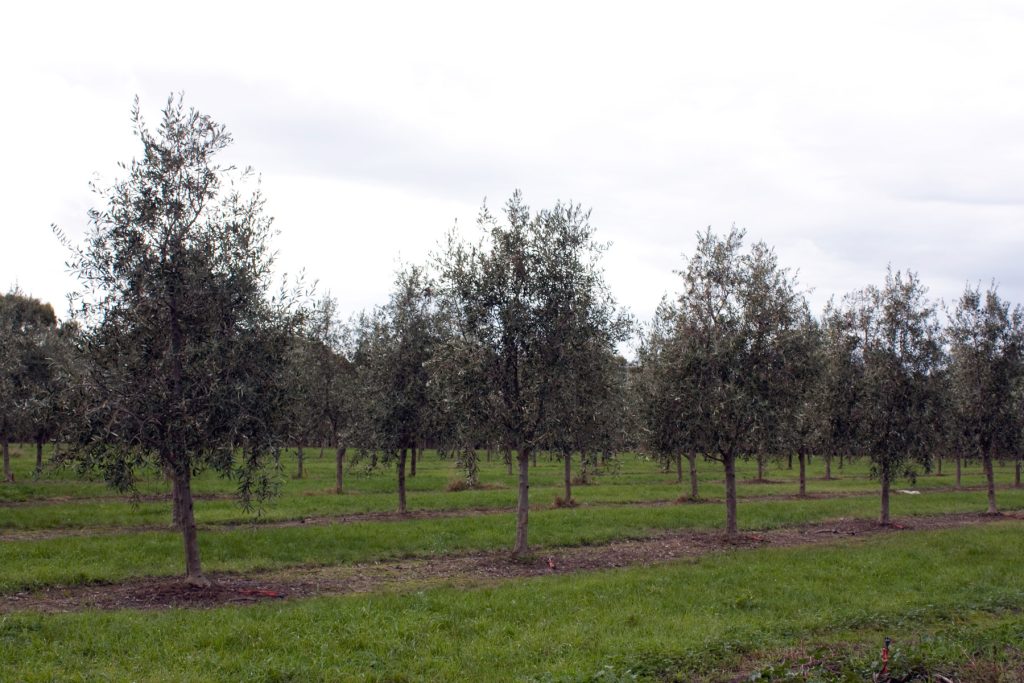
The right olive tree fertilizer is a modest dose of nitrogen in spring; most olives need little else, and they suffer more from too much feed than too little. Below: what to buy and how to read the N-P-K numbers, when to feed, how much for potted and in-ground trees, the signs of too much or too little, organic options, and what commercial groves actually do.
Choosing an olive tree fertilizer: N-P-K explained
Olives are light feeders. They evolved on thin, stony ground (see why olive trees thrive on poor, rocky soil) and respond far more to water and weed control than to fertilizer. Paul Vossen, a longtime University of California farm advisor for olives, puts it plainly: a shortage of nitrogen is the only common nutritional deficiency in olives. Potassium and boron shortages happen but are uncommon, and the rest are very rare.
The three numbers on a bag are the percentages of nitrogen (N), phosphate (P) and potash (K). For an olive, the first number is the one that matters. Any of these works:
- A balanced fruit-tree or all-purpose feed such as 10-10-10.
- A citrus or fruit-tree fertilizer that leans toward nitrogen.
- A slow-release granular feed for trees and shrubs, which is handy for pots.
- Compost or another organic nitrogen source (more below).
Olives rarely need extra phosphorus, so a “bloom booster” with a big middle number does nothing useful for most trees. It also helps to think in actual nitrogen: a 10-pound bag of 10-10-10 contains 1 pound of nitrogen.
When to feed an olive tree
Feed in spring, as new growth starts. That is the Texas A&M AgriLife Extension advice, and if growth is poor, a lighter second feed can go on in early summer. Where trees are not irrigated, UC advice is to spread nitrogen in mid to late winter just before a rain so the rain carries it in. Irrigated trees can take it in several small doses through the growing season, watered in.
Then stop. Feeding after midsummer pushes soft late growth, and Texas A&M notes that trees given too much water and fertilizer late in the season are more likely to suffer freeze damage. No feed in fall or winter. If you garden somewhere cold, frost and the olive explains why that soft growth matters.
How much: in-ground trees vs potted olives
Commercial advice is modest. UC guidance for mature orchards is about 40 to 100 pounds of actual nitrogen per acre per year, which for large, widely spaced trees works out to roughly 0.6 to 1.5 pounds of urea per tree. Texas A&M puts mature trees at 0.5 to 2 pounds of actual nitrogen a year, depending on size.
A garden tree rarely needs that much. The best gauge is the tree itself: Vossen’s target is 8 to 20 inches of new shoot growth a season. If your tree makes that, it is fed well enough. In heavy soils nitrogen can carry over for years, so skipping a year is often fine.
Pots are different. Every watering rinses nutrients out, so a potted olive needs small, regular doses: slow-release granules in spring, or a diluted liquid feed every few weeks until late summer. Flush the pot with plain water now and then to clear salts, and see growing olive trees in pots for the mix and watering routine.
| Tree | What to use | When | How much |
|---|---|---|---|
| Young tree in the ground (years 1 to 3) | Balanced or nitrogen-led slow-release feed | Spring; light top-up in early summer if growth is weak | Low end of the label rate for its size |
| Mature garden tree | Balanced or nitrogen-led feed, or compost | Once, in spring | Label rate, or skip a year if shoots grow 8 to 20 inches |
| Potted olive | Slow-release granules or diluted liquid feed | Spring to late summer only | Small, regular doses; flush the pot occasionally |
| Commercial grove (for scale) | Urea, ammonium sulfate, calcium nitrate or organic nitrogen | Late winter before rain, or through drip in season | About 40 to 100 lb actual nitrogen per acre a year, adjusted by leaf tests |
Signs of too much or too little
Water problems mimic nutrient problems, so rule those out first: yellow leaves on soggy soil mean overwatering, not hunger, as our olive tree care guide explains.
- Too little nitrogen: a yellow tinge across the leaves and weak shoot growth. Vossen notes it often shows in cold, wet, heavy soils in winter and fades by early summer, so do not panic in February.
- Low potassium (uncommon): light green leaves and, in severe cases, burnt leaf tips and dead patches. Poor drainage can cause the same look.
- Low boron (rare): misshapen fruit, short shoots, limb dieback, rough bark and small leaves with burnt tips.
- Too much nitrogen: long, lush, dark shoots, few flowers, little fruit and more damage in a freeze. A Spanish study cited by Vossen found that excess nitrogen also lowered the sensory quality of the oil.
- Too much fertilizer in a pot: crisp brown leaf edges and a white crust on the soil or the rim of the pot.
A tree that flowers and sets nothing is rarely a feeding problem. Check pollination (see self-fertile vs cross-pollinated olive varieties) and the tree’s natural on-and-off cycle (why olive trees bear heavily one year and barely the next) before you add anything.
Organic olive tree fertilizer options
An olive cannot tell organic nitrogen from the conventional kind: roots take up nitrogen only as nitrate or ammonium, and organic materials release it in those forms as they break down. The difference is speed. Organic sources work slowly and wash away less; conventional ones act fast and cost less per pound of nitrogen.
- Compost: about 2 percent nitrogen, released mostly over the first year or two. A layer spread under the canopy in spring, kept off the trunk, covers many garden trees on its own.
- Feather meal or blood meal: about 10 to 13 percent nitrogen, useful when a tree clearly needs more.
- A legume cover crop: how some organic groves supply nitrogen between the rows.
One thing to skip is foliar feeding. Vossen reviewed the trials and titled that part of his advice “Foliar Snake Oil.” Leaf sprays raise nutrient levels in the leaves for a few weeks but rarely change fruit set, yield or growth unless the tree is genuinely deficient.
What commercial groves do
Good growers test leaves, not soil, because soil tests are not accurate enough to diagnose olive fertility. In California the standard is a July sample of mature leaves from the middle of current-season shoots that are not carrying fruit. UC’s guide levels are nitrogen adequate at 1.5 to 2.0 percent (deficient below 1.4), potassium above 0.8 percent (deficient below 0.4), and boron at 19 to 150 parts per million.
Then they feed to the result, often not every year. That is the real lesson for a home grower: if the tree is growing, flowering and holding its color, the best fertilizer decision is often none at all. If something looks wrong, a university or private agricultural lab can run the same leaf test for a garden tree.
Nobody in the olive trade got rich selling fertilizer to good growers, because the good ones buy so little of it. Bags labeled for olive trees are generally ordinary balanced or citrus-style formulas sold at a premium. Compare the N-P-K numbers with a generic fruit-tree feed and you will usually find the same thing for less.
Frequently asked questions
What is the best fertilizer for olive trees?
A balanced or nitrogen-led fruit tree or citrus fertilizer applied in spring suits most olive trees. Nitrogen is the nutrient they most often need, and extra phosphorus is rarely useful.
When should I fertilize an olive tree?
In spring as new growth starts, with an optional light top-up in early summer if growth is weak. Stop by midsummer, because late feeding pushes soft growth that is more easily damaged by frost.
Is compost enough for an olive tree?
Often, yes. Compost holds about 2 percent nitrogen and releases it slowly, so a yearly layer under the canopy covers the needs of many garden trees.
How do I know if my olive tree needs fertilizer?
Look at the new shoots: 8 to 20 inches of growth a season means it is fed well enough. A yellow tinge with weak growth suggests low nitrogen, but first check that the soil is not waterlogged.
Do potted olive trees need more fertilizer?
They need lighter, more frequent feeding, because watering washes nutrients out of a pot. A slow-release feed in spring or a diluted liquid feed every few weeks through summer is enough.