Indoor Olive Tree Care: Light, Winter Chill and Watering
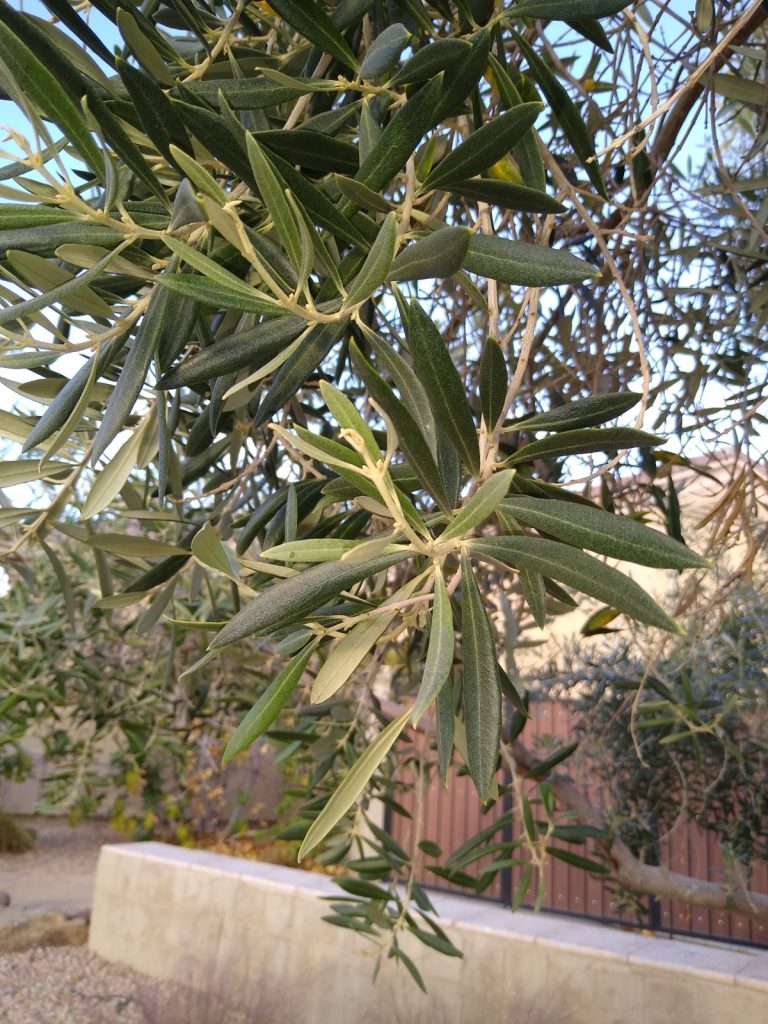
An indoor olive tree can live for years inside, but only if it gets far more light than a normal houseplant, a cool rest in winter and much less water than most owners give it. This guide covers window and grow-light setups, the winter chill olives need before they will flower, heating and dry air, watering, the summer move outdoors, and the failures that kill most indoor olives.
Light: what an indoor olive tree needs most
Olives are full-sun trees. Outdoors they want six hours or more of direct sun a day, and even the brightest living room is dim by comparison. That gap is why most indoor olives fail slowly, dropping a few leaves a week and stretching out long, thin, pale shoots.
In the Northern Hemisphere, a south-facing window is the only really good spot, with west a distant second. East and north windows are not enough on their own. Put the pot right against the glass, because light falls away fast as you step back from a window, and turn it every week or two so it does not lean.
In northern winters, when the sun is low and the days are short, a full-spectrum LED grow light closes the gap. Hang it above the canopy at the distance the maker recommends and run it on a timer for 12 to 14 hours a day. If you are still choosing a tree, Arbequina is a sensible pick because it stays fairly small and is usually sold as self-fertile, and our piece on dwarf and potted olives covers the smaller forms.
The winter chill most indoor olives never get
Here is the part the plant tag leaves out. Olives form their flower buds in winter, and they only do it after weeks of cool nights and mild days. Texas A&M AgriLife Extension puts the trigger at nights of roughly 35 to 50°F (2 to 10°C) with days below 80°F (27°C). Classic University of California research found the best flowering after about 10 to 11 weeks of nights near 35°F (2°C) and days near 60°F (15°C), and in one experiment potted trees moved into a heated greenhouse in mid-December formed noticeably fewer flower clusters.
A tree that spends the whole winter at 70°F will usually stay green and healthy, and it will not flower. If you only want the foliage, that is fine. If you want blossom and a few olives, give it a cool, bright spot from late fall to late winter: an unheated sunroom, an enclosed porch or a cold spare room with a south window. Keep it above freezing, because a potted root ball is far more exposed than roots in the ground, and water sparingly while it is cool. There is more on what the tree is doing in that season in what happens to an olive tree in winter.
Heating, dry air and drafts
Olives come from a dry climate, so ordinary indoor humidity does not bother them the way it bothers a fern, and misting raises humidity for minutes, not hours. What does hurt is moving air: a hot blast from a heating vent or radiator dries and browns the leaves, and a cold draft from an often-opened door causes sudden leaf drop. Keep the tree a few feet from both.
Warm, dry, still indoor air does favor two pests. Spider mites show up as fine pale speckling on the leaves and, in bad cases, thin webbing underneath. Scale insects look like small waxy bumps on the stems and leave the foliage sticky, sometimes with a black sooty film. Check the undersides of a few leaves every couple of weeks. A lukewarm shower every month or so knocks back mites and dust, and insecticidal soap or horticultural oil, used as the label says, handles most infestations.
Watering an indoor olive tree
An indoor olive uses far less water than one on a sunny patio, especially in winter when the light is weak and the room is cool. Overwatering kills more of them than anything else. The routine:
- Push a finger about 2 inches into the mix and water only when it is dry at that depth.
- When you do water, water thoroughly until it runs out of the drainage holes.
- Empty the saucer within half an hour, and never use a pot without drainage holes.
- In a cool winter room, expect to water every couple of weeks, or even less.
The mix matters as much as the schedule. A gritty, free-draining blend dries out properly between waterings, and our guide to growing olive trees in pots gives the recipe and pot sizes. Feed lightly in spring and summer only, as set out in our olive tree care guide, and not at all in winter.
Moving it outside for summer
An indoor olive does best if it spends the warm months outdoors. Wait until your last frost has passed and nights stay above about 40°F (4°C). Then harden it off: a week in bright shade or morning sun only, then a little more direct sun each day for another week or so. Leaves grown behind glass scorch easily in sudden full sun.
Outside, give it full sun. Rain rinses off dust and mites, and wind does the pollinating. Even self-fertile varieties (see self-fertile vs cross-pollinated olive varieties) need moving air to shift pollen, so a tree that blooms indoors benefits from a gentle shake of its branches. In fall, leave it out as long as you safely can, because every cool night counts toward next year’s flowers. Bring it in before the first hard freeze, when forecasts drop into the upper 20s°F (around -2°C), and check it for pests first. A few yellow leaves in the first weeks inside are the tree adjusting to less light, not a call for more water.
Common indoor failures and what they mean
Most indoor olive problems trace back to light, water or a sudden change. Use the symptom to find the cause before you reach for a spray or a fertilizer.
| Symptom | Likely cause | What to do |
|---|---|---|
| Steady leaf drop, long thin shoots, pale new leaves | Too little light | Move it against a south window or add a grow light |
| Yellowing leaves, soggy mix, sour smell | Overwatering or poor drainage | Let it dry out, clear the holes, repot into a gritty mix if the roots are brown and soft |
| Fine pale speckles, webbing under leaves | Spider mites | Rinse the foliage, use insecticidal soap, recheck weekly |
| Sticky leaves, black film, waxy bumps on stems | Scale insects | Wipe or scrape them off, then use soap or horticultural oil |
| Healthy and green but never flowers | No winter chill, or too little light | Give it a cool, bright spot from late fall to late winter |
An olive sold as an easy houseplant has usually been grown in a bright greenhouse or outdoors in a warm state, so it will shed leaves in its first weeks in a house whatever you do. That is the tree cutting back to the light you can give it. Extra water is the wrong answer, and it is how most of them die. Put it in your brightest window, add a grow light, and get it outside next summer.
Frequently asked questions
Can an olive tree live indoors all year?
Yes, if it gets strong direct light from a south-facing window or a grow light and careful watering. It will usually stay green, but it rarely flowers or fruits without a cool winter spell and a summer outside.
How much light does an indoor olive tree need?
As much as you can give it: ideally six or more hours of direct sun, which in practice means right against a south-facing window. In northern winters a full-spectrum LED grow light on a 12 to 14 hour timer fills the gap.
Why is my indoor olive tree dropping leaves?
The usual causes are too little light, overwatering, hot air from a nearby vent, or the shock of a recent move. Check the light and the soil moisture first, since those two explain most cases.
How often should I water an olive tree indoors?
Only when the top 2 inches of the mix are dry, then water until it drains from the bottom and empty the saucer. In a cool winter room that can mean every couple of weeks or less.
Will an indoor olive tree produce olives?
Sometimes, but only with plenty of light and a cool winter rest with nights of roughly 35 to 50°F, ideally plus a summer outdoors. A variety sold as self-fertile, such as Arbequina or Mission, gives you the best chance, and a second variety nearby helps more.