Types of Olive Trees: 9 Varieties Home Growers Can Buy
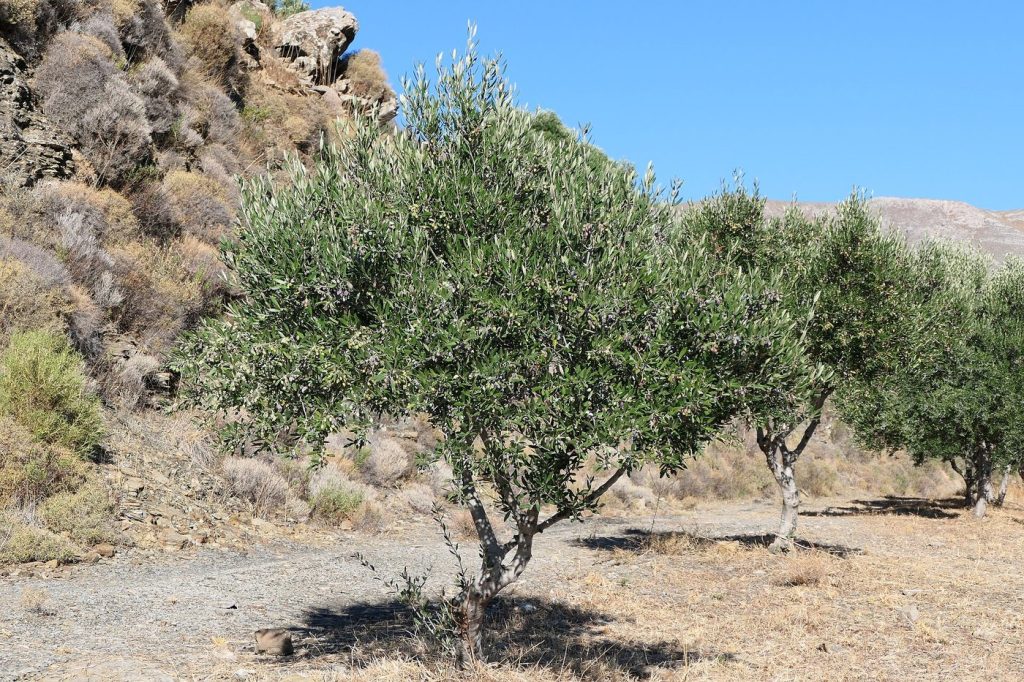
The types of olive trees you are most likely to find at a US nursery are Arbequina, Mission, Manzanillo, Koroneiki, Picual, Frantoio and Leccino for fruit, plus a few fruitless and dwarf ornamentals. They differ in size, cold tolerance, whether one tree fruits alone and what the olives are good for. The comparison table below puts all nine side by side.
How olive tree varieties differ
Every olive tree you can buy is the same species, Olea europaea, but the named varieties (cultivars) behave very differently in a garden. Four things matter most:
- Size and vigor: some stay compact, others become large trees unless you prune them.
- Cold tolerance: the gap between varieties is several degrees, which can decide whether a tree survives a bad winter.
- Self-fertility: some fruit well alone, others need a second variety nearby for pollen.
- Fruit use: oil varieties, table varieties for curing, dual-purpose ones, and fruitless ornamentals.
One caution before the table. The same variety name can cover several selections, and they do not always behave alike. In the University of California’s survey after the 1990 freeze, the Mission trees in the USDA collection came through with little damage, while a selection listed as Mission-Davis was badly hurt.
Types of olive trees compared
| Variety | Size (unpruned) | Cold tolerance | Fruits alone? | Fruit use |
|---|---|---|---|---|
| Arbequina | Small to medium, compact (about 12 to 15 ft) | Good | Usually; a pollinator helps | Oil; small olives for curing |
| Mission | Medium to large, upright | Good | Yes | Both: oil and cured olives |
| Manzanillo | Medium, spreading | Low to moderate | Partly; plant a pollinizer | Green table olives; also oil |
| Koroneiki | Medium | Low | Mostly | Oil |
| Picual | Large, vigorous (20 ft plus) | Moderate | Mostly | Oil, robust and long-keeping |
| Frantoio | Large (20 ft plus) | Low | Yes | Oil |
| Leccino | Large, vigorous | Good | No; needs a pollinizer | Oil, mild |
| Swan Hill (fruitless) | Large, slow (20 to 30 ft) | Moderate (zones 8 to 10) | Not relevant | None; ornamental |
| Little Ollie (dwarf) | Shrub, about 6 to 8 ft | Similar to other olives | Not relevant | None; ornamental |
Sizes are for unpruned trees, and any olive can be kept smaller by pruning. Cold ratings are relative among olives and draw on Texas A&M AgriLife’s variety guide, UC’s 1990 freeze survey and long European experience. Even the hardiest types lose leaves and twigs around 17°F (-8°C) once mature, and young trees of any variety can die below 25°F (-4°C).
Olive tree varieties for fruit and oil
Arbequina is the garden default for good reasons. The Catalan variety is compact, starts fruiting young, is usually sold as self-fertile (some Spanish research finds it sets far better with a pollinator) and handles cold better than most. Its small olives make mild, fruity oil and can also be cured.
Mission is California’s historic olive, named for the Spanish missions where olives were first grown in the state. It is upright, fruits alone and has one of the best cold records of any common variety. The fruit works for both oil and curing, which makes it the practical choice for a home grower who wants table olives.
Manzanillo (the Spanish Manzanilla) is the classic green table olive and, according to Texas A&M, the variety behind most canned black olives. It is a medium, spreading tree that crops better with a pollinizer nearby, and it was the worst-damaged California variety in the 1990 freeze.
Koroneiki, Greece’s main oil olive, carries tiny fruit and makes a robust, peppery oil, but it is among the more cold-tender types and best kept to mild-winter areas. Picual, Spain’s leading oil variety, is a vigorous large tree whose oil tends to be pungent and keeps well.
Frantoio and Leccino are the Tuscan pair, and they are planted together for a reason. Frantoio fruits on its own pollen but is on the tender side for cold. Leccino is hardier but largely self-sterile, and Frantoio is one of its standard pollinizers. There is more on pairing in self-fertile vs cross-pollinated olive varieties.
Fruitless and dwarf olive trees
If you want the look of an olive without the fruit, there are ornamental selections. Swan Hill is sold as fruitless with little or no pollen and grows slowly to 20 to 30 feet. Majestic Beauty and Wilsonii are similar in size and nearly fruitless, setting a few olives in some years. These are the olives you see around pools and in desert-city landscapes, where some counties restrict pollen-producing trees.
For small spaces, Little Ollie is a fruitless dwarf shrub that stays around 6 to 8 feet and suits hedges and big containers. If you want fruit in a small space, the usual answer is an Arbequina kept small by pruning or grown in a pot, since any olive tolerates being kept compact.
Which olive tree should you buy?
- One tree, and you want olives: Mission, which is reliably self-fertile, or Arbequina, which usually sets some fruit alone but does better with a pollinator nearby.
- Olives to cure at home: Mission, or Manzanillo with a pollinizer.
- Oil with character: Picual, Frantoio with Leccino, or Koroneiki where winters are mild.
- Cold winters (USDA zone 8): Mission, Arbequina or Leccino, planted in your warmest spot.
- No fruit and less pollen: Swan Hill or another fruitless type.
- Patio or pot: Arbequina for fruit, Little Ollie for looks.
Whichever you choose, every fruiting olive needs a spell of cool winter weather to flower, so none of them fruit well where winters stay warm all the way through.
A tag that says only olive tree or European olive is not a variety. Every property in the table above, from cold tolerance to whether one tree fruits alone, depends on the cultivar, and it can even vary between selections sold under the same name. Buy from a seller who names the cultivar and tells you whether the tree is grafted or growing on its own roots.
Frequently asked questions
What is the best type of olive tree for a home garden?
For most gardens, Arbequina: it stays fairly compact and fruits young, though it sets more olives with a pollinator nearby. Mission is a strong alternative where winters are colder or you want olives for curing.
Which olive trees are self-fertile?
Mission and Frantoio fruit well on their own. Arbequina, Koroneiki and Picual usually set some fruit alone but crop better with a second variety nearby. Leccino needs a different variety nearby, and Manzanillo crops better with one.
What is the most cold tolerant olive tree variety?
Among common garden types, Mission, Arbequina and Leccino have the best reputations. Even these lose leaves and twigs around 17°F once mature, and young trees of any variety are at risk below about 25°F.
Is there a dwarf olive tree?
Yes. Little Ollie is a fruitless dwarf shrub that stays around 6 to 8 feet. For fruit in a small space, an Arbequina kept small by pruning or grown in a pot is the usual choice.
Which olive trees are best for curing olives at home?
Mission and Manzanillo are the classic table-olive varieties in the US, and Arbequina’s small fruit can also be cured. Koroneiki’s tiny fruit is grown mainly for oil.