Brussels Sees Spain Making 1.68 Million Tons of Olive Oil by 2020
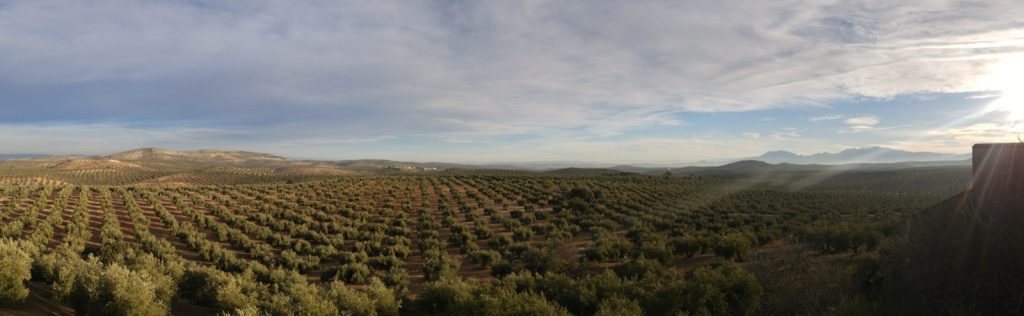
A short European Commission brief, now getting attention in the trade press, projects that Spain will make about 1.68 million tons of olive oil a year by 2020 while Italy and Greece slowly make less. It lands in a week when Spanish bulk prices are jumping on fears of a half-size harvest. Here is what Brussels projects for the big three producers, what the numbers assume, and why a forecast of plenty and a summer of scarcity can both be right.
What the Commission projects
The paper is Agricultural Markets Brief No 2, dated July 2012, from the Commission’s agriculture directorate. It covers Spain, Italy and Greece, which between them make most of the world’s olive oil, and it projects each country to 2020 from past trends. The authors say plainly that it is a statistical exercise, not a full market model, and that it does not necessarily represent the Commission’s official view. Olive Oil Times reported it on August 27.
| Country | Production, 2020 | Consumption, 2020 | Exports, 2020 |
|---|---|---|---|
| Spain | 1.68 million tons (range 1.43 to 1.86) | 632,000 tons | About 1.05 million tons |
| Italy | 477,000 tons (538,000 in 2011) | About 620,000 tons | About 360,000 tons |
| Greece | 270,000 tons (310,000 in 2011) | 202,000 tons | 82,000 tons |
Spain grows because it irrigates. The brief expects irrigated groves to spread from 681,000 hectares in 2011 to 771,000 in 2020, while dry-farmed groves shrink by almost 20,000 hectares. Irrigated trees yield more than twice as much oil per hectare. Spaniards are assumed to keep eating about 13 kilos a head a year, and exports rise from 840,000 tons in 2011 to about 1.05 million tons, with the faster growth outside the EU.
Italy keeps its 1.14 million hectares but gets less from them: yields slip from 459 to 418 kilos of oil per hectare. Consumption keeps sliding too, from 660,000 tons to about 620,000. Italy stays a big net importer, bringing in a little under 500,000 tons a year, while its exports climb to about 360,000 tons.
Greece plants a little more, from 738,000 hectares in 2007 to 767,000, but yields fall to 351 kilos per hectare. Greeks eat less, 228,000 tons falling to 202,000, and exports drift down to 82,000 tons.
The number that matters: Spain’s stocks
The most telling line is a simulation. The authors ran Spain through nine seasons with three big crops, three average and three poor ones. Even with the bad years in, production plus imports beat consumption plus exports, and Spanish stocks build up by about 27,000 tons a year, from 635,000 tons at the end of this season to about 881,000 tons by 2020/21. Italy’s stocks barely move and Greece runs a small deficit of about 11,000 tons a year.
In plain words, Brussels expects Spain to keep making more oil than it can sell for most of the decade. That is the backdrop to three rounds of private storage aid, the most recent in the spring (Brussels Opens a Third Round of Olive Oil Storage Aid), and to growers’ long complaint that prices sit below their costs (Spain Sells a Record, Yet Olive Oil Prices Stay Below Cost).
Meanwhile, this summer
Out in the market, nobody is talking about surplus. After the dry winter we wrote about in March (Spain Drought Puts the Next Olive Harvest at Risk), the coming Spanish crop is widely tipped to be about half of last season’s. Olive Oil Times, citing Spain’s POOLred price system, puts the average bulk price for extra virgin at nearly €2.34 a kilo in the week to August 29, up from a July average of €1.82. Some 203,000 tons of Spanish virgin oil are also parked under EU storage aid. Producer groups say even these prices are still below break-even, which some put at €2.40.
- A trend projection smooths out exactly the kind of year Spain is having now.
- The simulation itself treats 2012 as one of its poor harvests, and still ends the decade with more oil in the tanks.
- If the short crop pushes shelf prices up this winter, the projection suggests it will not last.
Every short crop brings the same speech from somebody: the era of cheap olive oil is over. Then the new irrigated groves come into bearing, a big year follows, and the tanks fill again. Irrigation does not remove the swing between good and bad years, but it makes the good years much bigger, and that is what keeps the price of ordinary oil low over a decade.
Sources
- European Commission: Agricultural Markets Brief No 2, Prospects for the olive oil sector in Spain, Italy and Greece 2012-2020 (PDF)
- Olive Oil Times: Report Forecasts Olive Oil Prospects for Spain, Italy, Greece
- Olive Oil Times: Olive Oil Prices Soaring in Spain