Andalusia’s Olive Harvest Collapses by Half
When the heart of the olive world skips a beat, the whole planet feels it. After record heat and a deep rainfall shortfall, Andalusia — the single biggest source of olive oil on earth — forecast a harvest cut roughly in half. This one region’s weather is everyone’s price.
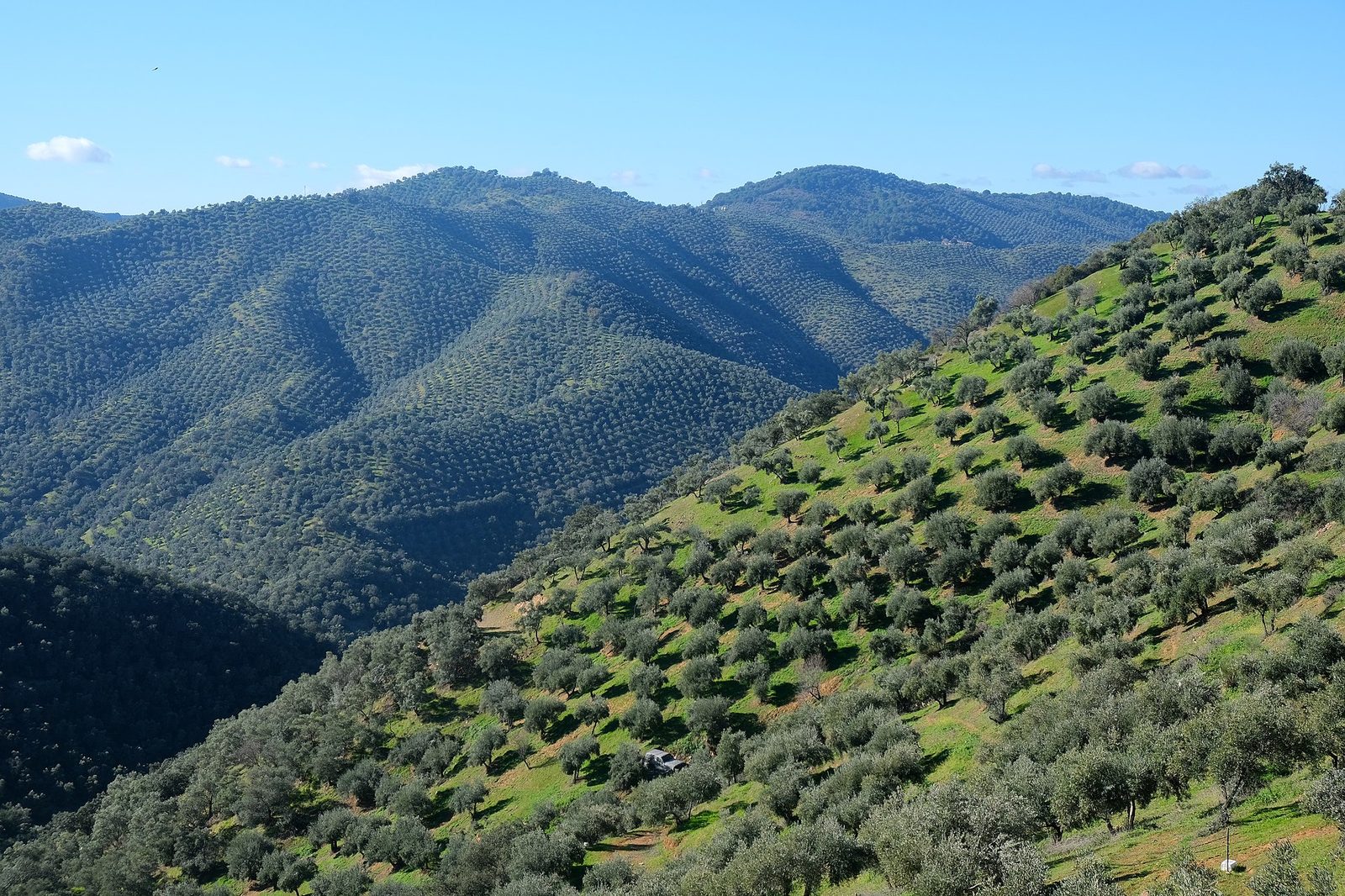
After a summer of record heat and a deep rainfall shortfall, Spain’s olive crop was forecast to fall sharply — with Andalusia, the world’s largest olive-oil producing region, expected to drop by around half year on year. The press called it the worst drought in living memory for Spain’s olives. This single forecast, more than any other, foretold the record prices that followed.
Not just a producer — the producer
Andalusia isn’t one olive region among many; it is the inland sea of Picual that fills bottles worldwide. The province of Jaén alone is the densest concentration of olive trees on the planet — a landscape that is olives to the horizon in every direction. Halve a harvest like that and you don’t get a regional dip you can shrug off; you remove a slice of world supply that no other region can replace in a single season.
How a regional drought becomes a global shock
The mechanism is concentration. Because so much of the world’s oil comes from this one place, its rainfall is effectively the world’s price signal. When Jaén is well-watered, the shelves are full and prices are calm; when Jaén is thirsty, there is no quiet second source large enough to cover the gap, and the shortfall ripples out through reserves and into every supermarket on earth. A local weather map, in other words, doubles as a global price forecast.
Why spreading the crop matters
That concentration is precisely why the olive’s spread to new lands — the Americas, Australia, North Africa, the wider Mediterranean — matters so much. A crop grown in many climates across both hemispheres is a more resilient crop: a drought in one place is cushioned by a good year in another. For now, though, the arithmetic is stark. When one Spanish region is parched, the world pays, and that fragility is the strongest possible argument for a wider olive map and a fair, steady price.
| Because Andalusia is so dominant… | The consequence |
|---|---|
| It presses a huge share of world oil | Its weather sets the global price |
| No region can quickly replace it | A local drought becomes a world shortage |
| The crop is geographically concentrated | One bad season ripples everywhere |
| New origins are still smaller | Spreading the map is the long-term fix |
What to take from it
- Spanish — especially Andalusian — weather is the single biggest driver of world olive-oil prices.
- A halved Andalusian crop means a global price shock, not a local one.
- The crop’s concentration is its core vulnerability; a wider map is the real fix.
- Watch Spain’s spring and summer weather to see next year’s prices coming.
Andalusia’s harvest collapse: common questions
Why does Andalusia matter so much for olive oil?
It is the world’s largest olive-oil producing region, dominated by the Picual olive, and the province of Jaén alone is the densest olive landscape on earth. It presses a huge share of global supply.
How can one region’s drought raise world prices?
Because so much of the world’s oil comes from there, no other region can quickly cover a big Andalusian shortfall. The gap ripples through reserves into prices everywhere.
What caused the collapse?
Record summer heat combined with a deep rainfall shortfall — described as the worst drought in living memory for Spain’s olives.
Did this forecast predict the record prices?
Effectively yes. A roughly halved Andalusian crop was the clearest early signal of the record global prices that arrived soon after.
What would make the world less exposed?
A wider geographic spread of production — the Americas, Australia, North Africa and beyond — so a drought in one place is cushioned by a good year elsewhere.
It’s worth grasping how concentrated this crop is: a huge share of the world’s oil comes from one Spanish region, so its weather is everyone’s price. That concentration is also why the olive’s spread to new lands — the Americas, Australia, North Africa — matters: a more spread-out crop is a more resilient one. For now, when Jaén is thirsty, the world pays. If you want to see next year’s olive-oil prices, don’t watch the markets — watch the rain over Andalusia.
Drawn from autumn 2022 Andalusian harvest forecasts and trade reporting on the Spanish drought.