UCDAVIS: Olive-Growing Short Course Offers International Perspectives
Sit through a serious olive-growing short course and you notice something quickly. The agronomy is largely settled. What is not settled — and what decides whether a grove makes money — is the density decision and what happens in the first two hours after picking.
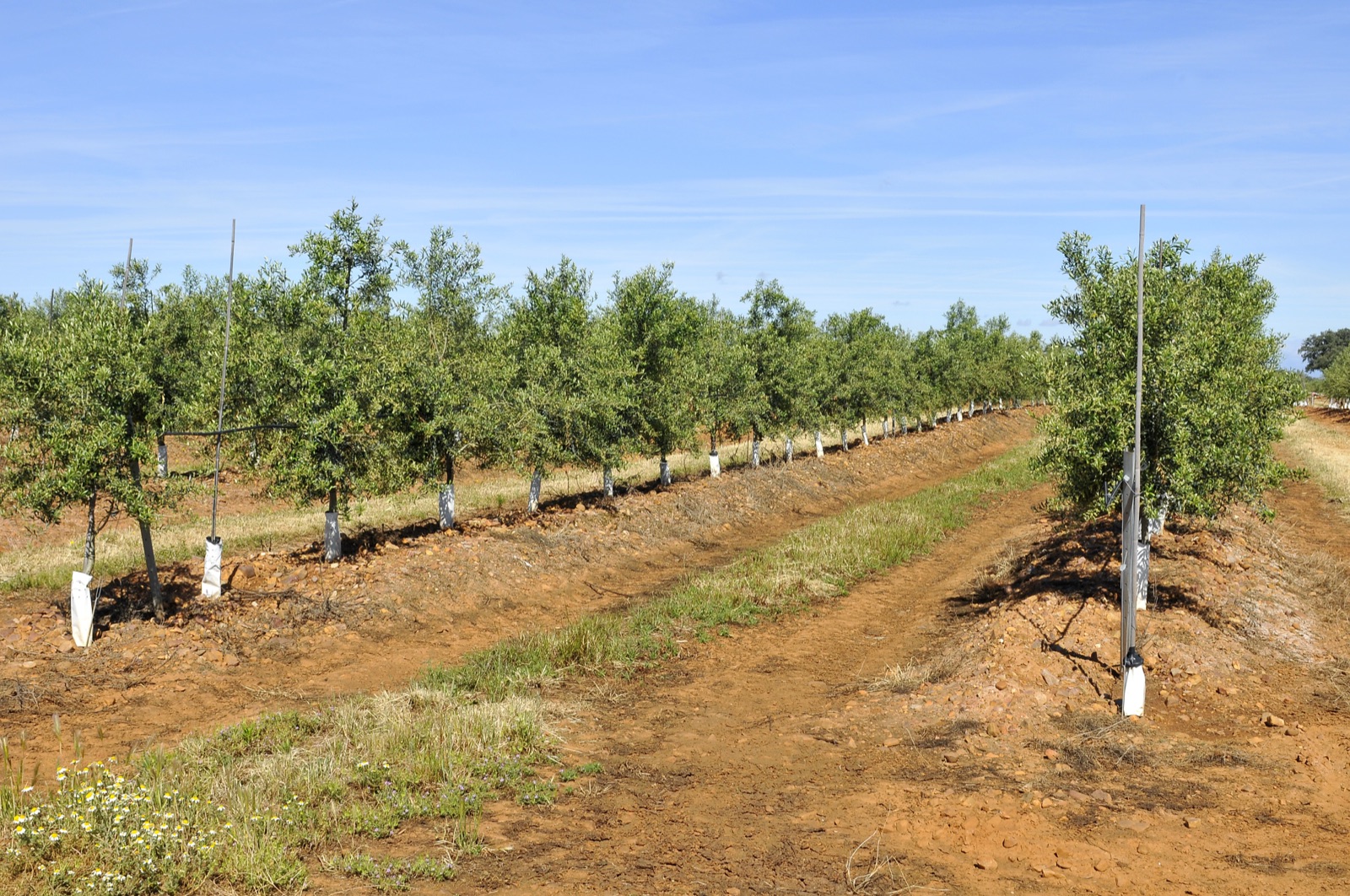
Olive-growing courses run by universities and extension services have quietly done more for the modern industry than any marketing campaign. They take growers, would-be growers, mill operators and the occasional investor, and compress a discipline into two days: orchard establishment, cultivar selection, irrigation and fertility, pest control, orchard floor management, harvesting equipment, milling, and the economics that sit under all of it. Nobody leaves an expert. Everybody leaves knowing which questions cost money.
The density decision, which comes before everything
The first substantive question in any modern olive course is how close together to plant, and almost every other decision follows from the answer. Density determines which cultivars are possible, how the trees will be pruned, what harvesting equipment can be used, how many years before a real crop, how long the orchard will last, and what a litre of oil will cost to produce. Get it wrong and no amount of good agronomy afterwards will rescue the economics.
| System | Trees per hectare | Harvest method | First real crop | Trade-offs |
|---|---|---|---|---|
| Traditional | Roughly 60 to 150, widely spaced | Hand, combs, or trunk shaker where accessible | Around 7 to 10 years | Very long-lived, low yield per hectare, high labour cost, wide cultivar choice |
| Intensive | Roughly 200 to 600 | Trunk shaker with catch frame | Around 4 to 6 years | Balanced compromise; suits most established cultivars |
| Super-high-density hedgerow | Well over 1,000, often 1,500 to 2,000 | Over-the-row straddle harvester | Around 3 to 4 years | Lowest harvest cost, shorter orchard life, very limited cultivar list |
| Ancient or heritage groves | Sometimes fewer than 50 | Hand and combs | Already bearing | Low yield, high value story, real cultural and genetic worth |
The subjects that surprise people
Two topics tend to occupy more course time than newcomers expect. The first is the olive fruit fly, which in many regions dictates the entire management calendar — monitoring traps, bait sprays, sanitation, and above all the decision to harvest earlier than you would like because damaged fruit raises free acidity and brings defects into the oil.
The second is milling. Growers arrive wanting to talk about their trees and leave realising that most of the quality difference between a good oil and a mediocre one is created in a few hours at the mill: how quickly the fruit arrives, whether it is washed and milled cool, how long and at what temperature the paste is malaxed, and how fast the oil is separated, settled and put into clean, full, sealed tanks away from light and air. A perfect grove feeding a careless mill produces ordinary oil. It happens constantly.
The third subject, the one nobody enjoys, is the money. Land, water rights, machinery, and the years between planting and cash flow are the real constraints, and they are the reason most olive projects that fail do so for financial rather than agricultural reasons.
Why the extension services mattered so much
In older producing countries, olive knowledge passed down families and stayed local. In newer ones it had to be built from scratch, and university extension programmes did the building — running trials, publishing variety evaluations, training sensory panels, and bringing in specialists from Spain and Italy to teach growers who had no inherited tradition to draw on.
That work had a consequence beyond agronomy. When a research centre with no commercial stake starts testing supermarket oil against international standards and publishing the results, the conversation about quality changes for everybody. The most consequential piece of Californian olive research was not about pruning — it was the testing that found a large share of imported extra virgin samples failing international sensory standards, and the argument that followed. That is what an extension service is for: producing inconvenient, checkable information.
What a grower should walk away with
- Decide density first, then choose cultivars, machinery and pruning to match. Not the other way round.
- Budget for the milling end. The best grove in the county cannot fix a slow, hot, dirty mill.
- Plan the fruit fly calendar before planting, not in your first infested September.
- Model cash flow to year eight, not year three; the trees do not care about your loan schedule.
- Learn to taste properly. A grower who cannot recognise fusty, winey or rancid defects cannot judge their own product.
- Go and see three mills at work during harvest before you build or contract with one.
Learning to grow olives: common questions
How long before an olive orchard produces?
Roughly three to four years in a super-high-density hedgerow, four to six in an intensive planting, and seven to ten in a traditional widely spaced grove. Full production comes later in every case.
What is super-high-density olive growing?
Planting olives as a narrow hedgerow at well over a thousand trees per hectare so a straddle harvester can drive over the row. It slashes harvest cost but shortens orchard life and works with only a few compact cultivars.
Does the mill matter more than the grove?
Not more, but it is where quality is most easily destroyed. Delay, heat, dirty equipment and careless storage can ruin excellent fruit in a single afternoon.
What is the biggest cause of failure in new olive projects?
Usually finance rather than agronomy: underestimating the years to cash flow, the cost of water and machinery, and the difficulty of finding a market for the oil once it exists.
Why do courses spend so much time on the olive fruit fly?
Because in affected regions it dictates the whole management calendar and the harvest date. Infested fruit raises free acidity and introduces defects, which can push an oil out of the extra virgin grade.
The most valuable session in any olive course is not on the timetable. It is the coffee break where a grower who has been doing this for twenty years tells a newcomer what their orchard actually cost, and how many years passed before it paid for itself. The formal syllabus is honest about agronomy and vague about money, because the money answer depends on land you have not bought and water you may not get. If you are considering planting, find that grower, buy them lunch, and ask for the real numbers. It is the cheapest consultancy in the industry.
Drawn from published university extension curricula and research on olive orchard systems, planting density, olive fruit fly management and milling practice.