Spain’s Olive Harvest Forecasts Keep Shrinking
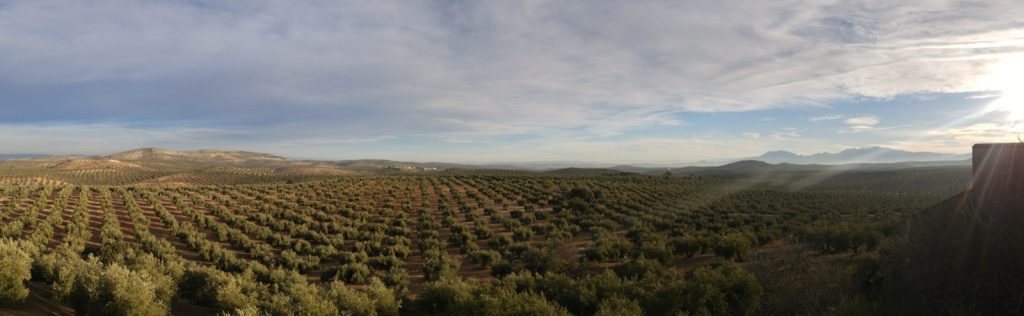
Every time Spanish growers recount the crop it gets smaller: Cordoba is now seen at about 180,000 tons of oil, down roughly 27 percent, with Andalusia under 800,000 tons and Spain around 950,000. The strange part is that a short crop is arriving with prices at the bottom, which is not how this market is supposed to work.
The forecasts keep falling
ASAJA in Cordoba published a fresh estimate this week, and it follows the pattern of the whole campaign: the further the harvest goes, the less oil there turns out to be. The province closed last season with 245,000 tons of oil. The new estimate is about 180,000 tons, a fall of roughly 27 percent, with 75 to 80 percent of the fruit already picked and milled.
The technicians blame yields rather than fruit numbers. Rain arrived in the spring, but it pushed the tree into leaf and shoot rather than into fruit, so the olives that formed carry too much stone for their flesh. That is exactly the error that flattered the first estimates of the season: the trees looked loaded, and the fruit was not there in oil terms.
ASAJA extends the same picture outward, to below 800,000 tons for Andalusia and about 950,000 tons for Spain as a whole.
What it looks like from a small province
Cuenca, far from the Andalusian heartland, shows the other end of the range. Growers there are finishing the harvest with 75 percent picked in La Alcarria and about half around Tarancon, and the provincial crop down some 50 percent on the year. In parts of La Alcarria the harvest was simply nil; in other groves the loss ran to 90 percent; around Tarancon it was 70 percent below 2007. The province expects about 4,000 tons of oil.
The causes are the usual trio. The trees are in the off year of their natural alternation after a heavy crop, there was drought before flowering, and recent snow finished the job. That rhythm is not a failure of farming, it is what olive trees do, and it is the reason a serious grower plans two seasons at a time rather than one, as we set out in the way a harvest year actually works.
Short crop, low prices
Here is the part that has growers furious. Prices paid for olives in Cuenca are running at 24 to 30 cents a kilo. In 2005 the same fruit fetched 90 cents and in places a euro; in 2006 it was around 50 cents; in 2007 about 40. Meanwhile the price of a liter of olive oil on the shelf has barely moved: 3.27 euros in 2005, 4.30 in 2006, 3.45 in 2007 and 3.29 in the most recent ministry figures.
- A small crop used to mean a strong price, which is what kept growers solvent through the off year.
- This season the crop is small and the price at origin is under the cost of production.
- The gap between what the grower is paid and what the shopper pays has not narrowed at all.
Spain has spent years trying to build tools for exactly this situation, from cooperative concentration to a futures market that never attracted enough speculators to work as intended. That experiment is worth remembering now: a futures market only protects growers if somebody is willing to take the other side of the trade.
Yield, not tonnage, is the number that decides the year. Two groves can carry the same weight of fruit and give completely different amounts of oil, depending on how the season built the flesh. When you hear that a harvest is down by a quarter, ask whether that is fruit or oil, because the trade quotes whichever of the two makes its case, and the answer changes what the next twelve months will cost you.