Olive Growers March in Jaén as Brussels Weighs Storage Aid
Thousands of olive growers marched through Jaén today against farm-gate prices below the cost of production, one day after EU agriculture commissioner Dacian Cioloş agreed to have Spain’s request for private storage aid examined by experts in April. The farmers’ union COAG put the turnout at more than 12,000. Below: what happened in Brussels and Jaén, the numbers behind the anger, and what storage aid would and would not fix.
What happened
At Thursday’s meeting of EU agriculture ministers, Spain’s minister Rosa Aguilar asked for the “immediate” activation of private storage aid for olive oil, telling her colleagues that the sector could not take any more. This time she did not ask alone. Greece, Italy, Portugal, Poland, Cyprus and France backed the request, and no country spoke against it.
Cioloş did not say yes. According to Commission sources quoted by Europa Press, he repeated that the conditions in EU rules are not met: Spanish prices are still above the trigger levels, and there is no proof of a serious market disturbance. By the Commission’s figures, Spanish prices in 2010 ran between 6 and 13 percent above the thresholds. He has already turned Spain down twice. But he agreed that the request will be examined at expert level in April, at a management committee meeting expected on 13 April. Aguilar called that “the first step”.
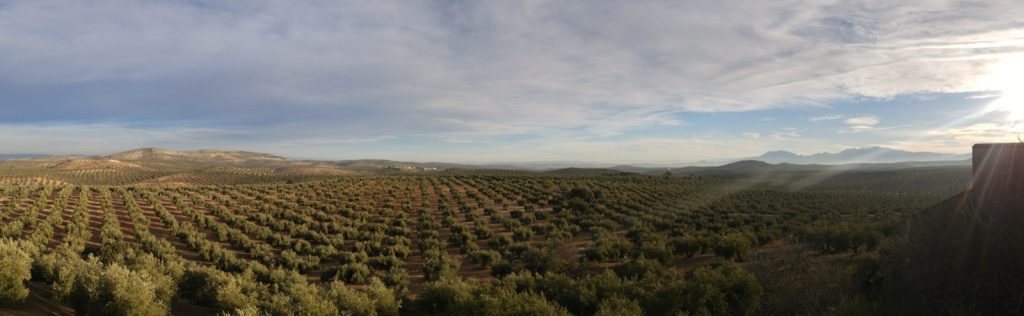
Today the olive sector took its case to the street. Growers, cooperatives and unions from across Andalusia gathered in Jaén, the province that makes more olive oil than most countries. COAG estimated that more than 12,000 people took part, and the organizers have already announced the next marches: Córdoba on 1 April, Toledo on 15 April and Mérida on 29 April.
The numbers behind the anger
| Figure | Value | Source |
|---|---|---|
| Average farm-gate price, last month | About €1.84 per kg | Fundación del Olivar price system |
| Cost of oil at the mill door | €2.49 per kg | Ministry food price observatory |
| Storage aid trigger, extra virgin | €1.77 per kg | EU rules, set in the 1997/98 season |
| Storage aid trigger, virgin | €1.71 per kg | EU rules |
| Storage aid trigger, lampante | €1.52 per kg | EU rules |
| Stocks held by producers | More than 30% above the average of past seasons | Minister Aguilar |
Read the table from the top and the problem is plain. Growers are selling for less than the oil costs to make, for the third season running, and the sector says average prices this campaign are back at 2001/02 levels, the lowest of the decade. Yet the prices are still a few cents above the triggers that would release EU help, because those triggers were fixed in the 1997/98 season and are, as the sector puts it, far removed from today’s costs. That is why Spain is now leaning on the other door in the rules: the clause that allows storage aid in case of a clear disturbance of the market.
What storage aid would and would not fix
Private storage aid pays producers to lock oil away for months and keep it off the market, in the hope that prices recover when supply tightens. Brussels last opened it in 2009, and Aguilar points out that stocks are higher now than they were then. As a short-term measure it can work, because taking enough oil off the market gives buyers less to play with.
What it does not touch is the structure of the trade. Cioloş has argued that Spain’s problem is the bargaining power of the big distributors, not a temporary glut. Not everyone in Spain disagrees. Francisco Reyes, head of the ruling PSOE in Jaén, said it was untenable to have a situation in Andalusia “where there are 300 selling oil and only three buying.” A storage scheme can lift the price for a season. It cannot give 300 sellers the negotiating muscle of three buyers.
What it means for buyers
- Spanish extra virgin is cheap right now because the people who grow it are losing money on it. That is worth knowing the next time a supermarket promotion looks too good.
- If Brussels does open storage aid in April, expect prices at origin to rise quickly. Government sources in Madrid believe even the promise of a study will help.
- For the best value, look past the brands. Jaén is Picual country, and many of its cooperatives bottle their own oil at prices a supermarket label cannot match for freshness.
The price in a Jaén cooperative and the price on your shelf live in two different worlds. Bulk oil changes hands by the tanker, a handful of big packers set the tone, and a weak week at origin shows up in promotions abroad long before it shows up in anybody’s wages. When growers march, it is usually because the shelf has been cheap for longer than the grove can afford.
Sources
- Europa Press: Bruselas estudiará en abril las ayudas al almacenamiento de aceite de oliva que reclama España, 17 March 2011
- El País: El Gobierno presiona de nuevo a la UE para que autorice almacenar aceite, 18 March 2011
- Olive Oil Times: Commissioner Says He Will Analyze Spain’s Call for Private Storage Aid, March 2011 (archived copy)