How Long Do Olives Last? Storage and Shelf Life
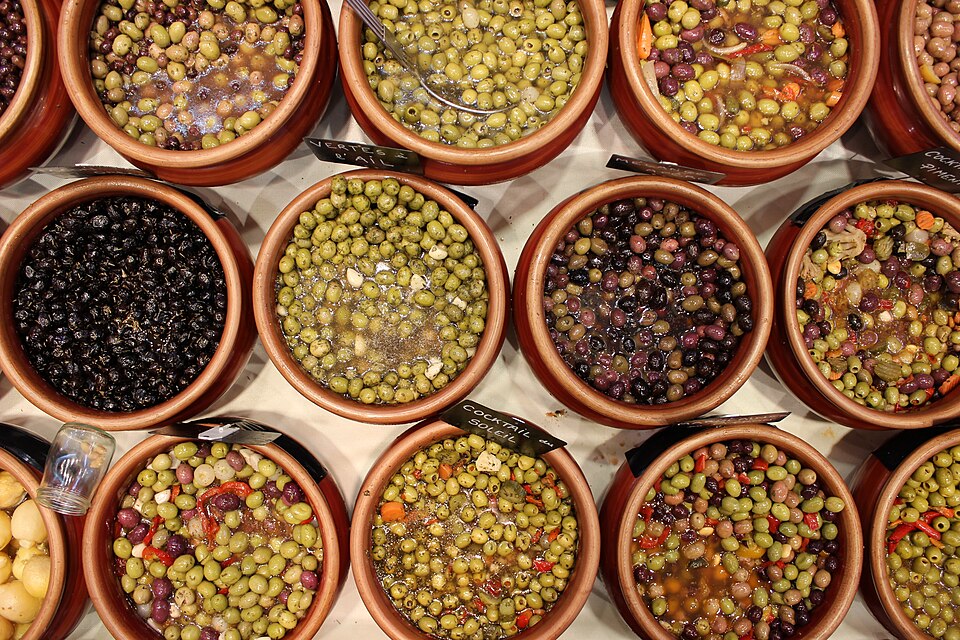
An unopened jar or tin of olives keeps for a year or two in the cupboard; once opened, refrigerate them submerged in their brine and use within about one to three weeks. Olives are a cured, preserved food, so they last far longer than most things in your kitchen. The salt, brine, vinegar or oil they sit in does the heavy lifting. But the moment you break the seal, air and stray bacteria get in, and the clock starts ticking a good deal faster. Keep them cold, keep them covered in their liquid, and always use a clean spoon.
The single most important habit is this: keep the olives under the surface of their brine. Any olive left poking up into the air is the first to soften, discolour or grow a bloom of mould. Everything below the liquid line stays protected for far longer.
Shelf life at a glance
How long olives keep depends on two things: how they were preserved, and whether the container is still sealed. The table below gives sensible general ranges — treat them as guides, not guarantees, and always trust your senses over any date.
| Type & situation | Where to keep it | Roughly how long |
|---|---|---|
| Jarred or tinned olives, unopened | Cool, dark cupboard | Up to the best-before date, typically 1–2 years; often fine a while beyond |
| Olives in brine, opened | Fridge, submerged in brine | About 2–3 weeks |
| Olives in oil, opened | Fridge, covered in oil | About 1–2 weeks (oil may cloud when cold — harmless) |
| Deli / olive-bar olives (loose) | Fridge, in their liquid | About 1–2 weeks; they turn over faster than sealed jars |
| Dry salt-cured (oil-cured) olives | Cupboard or fridge | Several weeks to a few months; the low moisture helps them keep |
| Pitted or sliced olives, opened | Fridge, in liquid | A little shorter — roughly 1 week, as more surface is exposed |
These are broad, everyday estimates. Actual life depends on the salt level of the brine, how clean your handling is, and how cold your fridge runs. Saltier, more acidic brines protect for longer; mild, low-salt ones spoil sooner.
Why olives keep so well (and what changes once you open them)
A fresh olive straight off the tree is inedibly bitter and won’t last. What sits in your jar has already been cured — soaked in brine, packed in salt, fermented, or steeped in lye and then brined — to draw out that bitterness and make the fruit safe and stable. Curing is preservation, which is why olives have been a storecupboard staple around the Mediterranean for thousands of years, long before refrigeration existed. If you’re curious how that transformation works, our guide to brining olives at home walks through it step by step.
The salt and acidity in the brine create conditions most spoilage microbes can’t tolerate, and a sealed commercial jar has also been heat-treated, so it’s stable in the cupboard until you open it. Once the seal is broken, air reaches the surface and every spoon or splash introduces new microbes. From then on the fridge is your friend and the brine is your shield.
A few habits that genuinely extend an opened jar’s life:
- Keep them submerged. If the level drops, top up with a little brine made from roughly one teaspoon of salt dissolved in a cup of cooled boiled water. In a pinch, a splash of water plus a squeeze of lemon or a little vinegar helps.
- Always use a clean, dry utensil. Fishing olives out by hand or with a used fork is the fastest way to spoil a jar.
- Refrigerate after opening, even if the label seems relaxed about it — cold buys you time.
- Don’t tip leftovers back in. Olives that have sat out on a cheeseboard for hours shouldn’t rejoin the jar.
- Decant tins. Once opened, move tinned olives into a clean glass or plastic tub with their liquid; olives left in an open tin can pick up a metallic taste.
Can you freeze olives? You can, though it’s rarely worth it: freezing softens the flesh and dulls the flavour, so thawed olives are best chopped into a cooked dish rather than eaten whole.
How to tell if olives have gone off
Cured olives rarely spoil dramatically, but they do turn, and your senses will tell you before any date does. Throw them out if you notice any of the following:
- Fuzzy or coloured mould on the olives or around the rim of the jar. A note on this: a whitish film or haze on the surface of a fermented brine can sometimes be harmless kahm yeast rather than mould, but unless you’re an experienced home-curer, the safe call is to discard.
- An off smell — sour in a sharp, rotten way, yeasty, or plain unpleasant rather than the clean, salty, tangy scent you expect.
- Slimy or mushy texture, or a brine that’s gone cloudy, ropey or fizzing when it shouldn’t be.
- A bulging lid or a lid that hisses forcefully on an unopened jar — a sign of unwanted microbial activity inside. Don’t taste to check; bin it.
When something’s genuinely wrong, it’s usually obvious. A jar that looks and smells perfectly fine but is a week past some note you scribbled is almost certainly still good — taste one. If you’re ever truly unsure, the sensible course is to throw it out.
For more on the different curing styles and how each one behaves in storage, browse the olive encyclopedia.
How long do olives last: common questions
How long do opened olives last in the fridge?
Roughly two to three weeks for olives in brine, and about one to two weeks for olives packed in oil or bought loose from a deli counter. Keep them cold and submerged in their liquid, and always use a clean spoon.
Do olives need to be refrigerated after opening?
Yes. An unopened jar or tin is shelf-stable in the cupboard, but once the seal is broken you should keep olives in the fridge. Cold dramatically slows spoilage and helps them hold their texture and flavour.
Can you eat olives past the best-before date?
Often, yes. A best-before date is a quality guide, not a safety cut-off, and an unopened jar is usually fine for a good while beyond it. Check the lid isn’t bulging, then look, smell and taste one. If anything seems off — mould, a foul smell, sliminess — discard it.
How can you make opened olives last longer?
Keep them fully covered in brine (top up with a light salt-water solution if the level drops), store them cold, and never introduce a dirty utensil. Decanting tinned olives into a clean tub also helps, as does not returning leftovers to the jar.
This article is general food and storage guidance, not medical advice. When in doubt, throw it out.