A Short History of the Olive
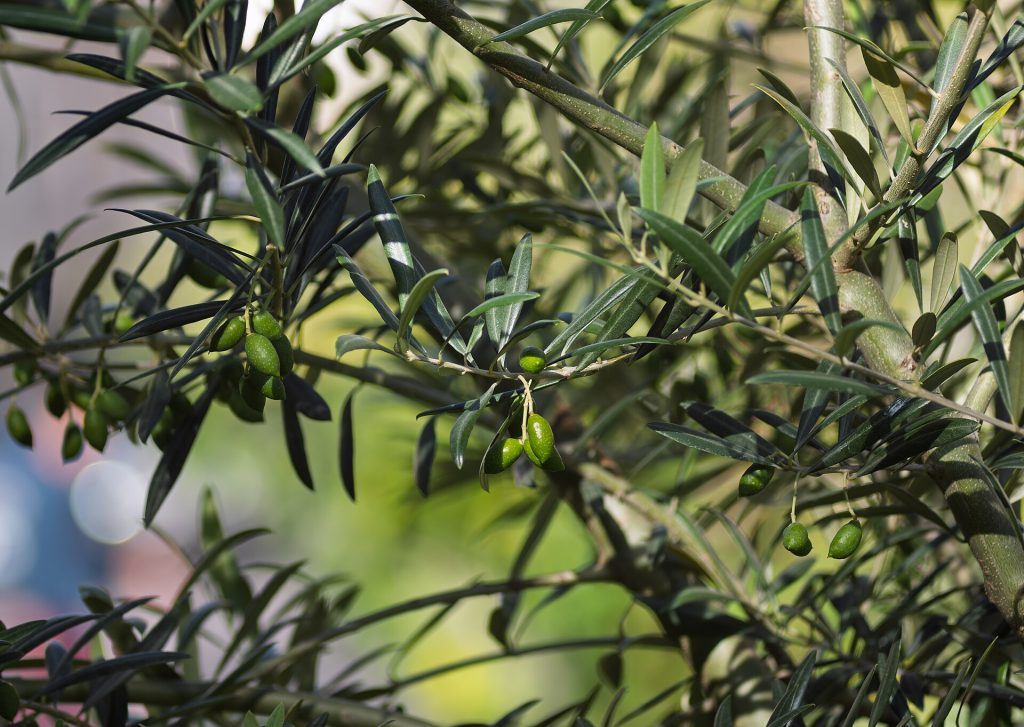
The short version: the olive was first domesticated in the eastern Mediterranean, most likely the Levant, somewhere around 6,000 to 8,000 years ago, and it spread across the sea over the following millennia on the ships of the Phoenicians, Greeks and Romans. From a scrappy wild shrub with small, bitter fruit, careful selection turned it into the fatty, oil-rich tree that fed, lit and anointed the ancient world. Everything after that is really a story of trade routes and patient grafting.
It helps to separate two things that often get blurred. The wild olive, Olea europaea subspecies sylvestris (the thorny “oleaster”), grew across the Mediterranean basin long before anyone farmed it. Domestication is the moment people began propagating the useful trees deliberately, chiefly by cuttings and grafting rather than seed, so that a prized tree’s traits carried forward. That shift is what the history of the olive is really about.
Domestication in the Levant
Most researchers place the earliest domestication of the olive in the eastern Mediterranean, with the Levant, roughly today’s Israel, Palestine, Lebanon, Syria and Jordan, as the strongest candidate for the primary heartland. Archaeological finds of olive stones, wood and the stone-lined pits and presses used to crush fruit point to olive use deep into the Neolithic and Chalcolithic, with clear signs of oil production by around 6,000 years ago in the southern Levant. Some genetic work suggests there may have been more than one centre of early cultivation around the basin, so it is fairer to talk about a Levantine heartland with secondary hotspots than a single tidy birthplace.
What the early farmers actually did was clever and quietly revolutionary. Because olives grown from seed rarely resemble the parent tree, and often revert to small, bitter wild fruit, growers learned to reproduce their best trees vegetatively, taking cuttings and grafting good branches onto tough wild rootstock. That is why an olive grove can be so astonishingly old: the tree resprouts from its base almost endlessly, and some living trees in the Mediterranean are plausibly many centuries, even over a thousand years, old. If you want the botany in more depth, our olive encyclopedia goes tree by tree.
Two uses drove all this effort. First, oil, pressed from the fruit and prized for cooking, lamp fuel, soap, cosmetics and ritual anointing. Second, the table olive, though the raw fruit is inedibly bitter until cured, which is a craft in itself; we cover the methods in our guide to curing olives.
Carried across the sea: Phoenicians, Greeks and Romans
Once the tree was reliably domesticated, its history becomes a shipping story. The Phoenicians, master traders working out of the Levantine coast, are generally credited with carrying olive cultivation west, seeding it around their trading posts in North Africa, Iberia and the islands from roughly the early first millennium BCE. The Greeks pushed it further still through their colonies across the central and western Mediterranean, and wove the olive deep into their culture, from the sacred trees of Athens to the oil poured over victorious athletes.
The Romans then industrialised it. With better presses, organised estates and the reach of empire, olive oil became a bulk commodity shipped in great quantities, and the tree was planted across Iberia, Gaul, North Africa and beyond. A striking relic survives in Rome itself: Monte Testaccio, a small hill made almost entirely of broken amphorae, much of it from oil shipped in from Spain. By the end of antiquity the olive’s Mediterranean map looked much as it does today.
A note on provenance, because it matters and is often muddled: a variety’s name is not the same as a nation’s claim on the olive. Kalamata is a place in Greece and a famous variety, but that does not make Greece “the origin” of the olive, any more than the Spanish Arbequina or Italian Frantoio settle the question. The domestication story sits earlier and further east than any single modern producing country. Treat sweeping “invented here” claims with a little friendly scepticism.
A rough timeline
Dates for something this ancient are ranges, not fixtures. The table below uses widely accepted approximations; read every figure as “roughly”.
| Period (approximate) | What happened |
|---|---|
| Deep prehistory | Wild olive (oleaster) grows across the Mediterranean basin; fruit gathered, not farmed. |
| c. 6,000–8,000 years ago | Domestication in the eastern Mediterranean, most likely the Levant; propagation by cuttings and grafting. |
| c. 6,000 years ago | Clear evidence of organised olive-oil production in the southern Levant. |
| c. 2000–1200 BCE | Olive central to Bronze Age economies (Minoan and Mycenaean palaces store and trade oil). |
| Early 1st millennium BCE | Phoenician traders carry cultivation west across North Africa and Iberia. |
| c. 8th–4th centuries BCE | Greek colonies spread the tree; olive becomes cultural and religious emblem. |
| c. 200 BCE–400 CE | Rome scales up olive-oil production and trade to industrial volumes across the empire. |
From there the tree simply stayed put and got better tended. Medieval monasteries kept groves going, the Spanish and Portuguese later carried olives to the Americas, and today the plant grows in Mediterranean-climate pockets worldwide, from California to Australia. But the deep roots, quite literally, remain in that eastern corner of the sea where someone first decided a particular wild tree was worth keeping.
A short history of the olive: common questions
Where did the olive tree originate?
The best evidence points to the eastern Mediterranean, most likely the Levant, as the primary heartland of olive domestication, roughly 6,000 to 8,000 years ago. Wild olives grew across the whole basin long before that; domestication is about people choosing and propagating the useful trees.
Who spread olives around the Mediterranean?
Chiefly the Phoenicians, Greeks and Romans. Phoenician traders carried cultivation west, the Greeks spread it further through their colonies, and the Romans turned olive oil into a bulk commodity shipped across the empire.
How old can an olive tree get?
Very old. Because the tree resprouts from its base and is grown from cuttings, groves persist for centuries, and some individual trees are plausibly many hundreds of years old, with a few claimed to be over a thousand. Exact ages are hard to verify, so treat headline figures as estimates.
Does an olive variety’s name tell you its country of origin?
Not reliably. A name like Kalamata or Arbequina marks a place and a cultivar, not the origin of the olive itself. The domestication story sits earlier and further east than any single modern producing nation, so be wary of sweeping “born here” claims.