25 Facts About Olives That Are Actually True
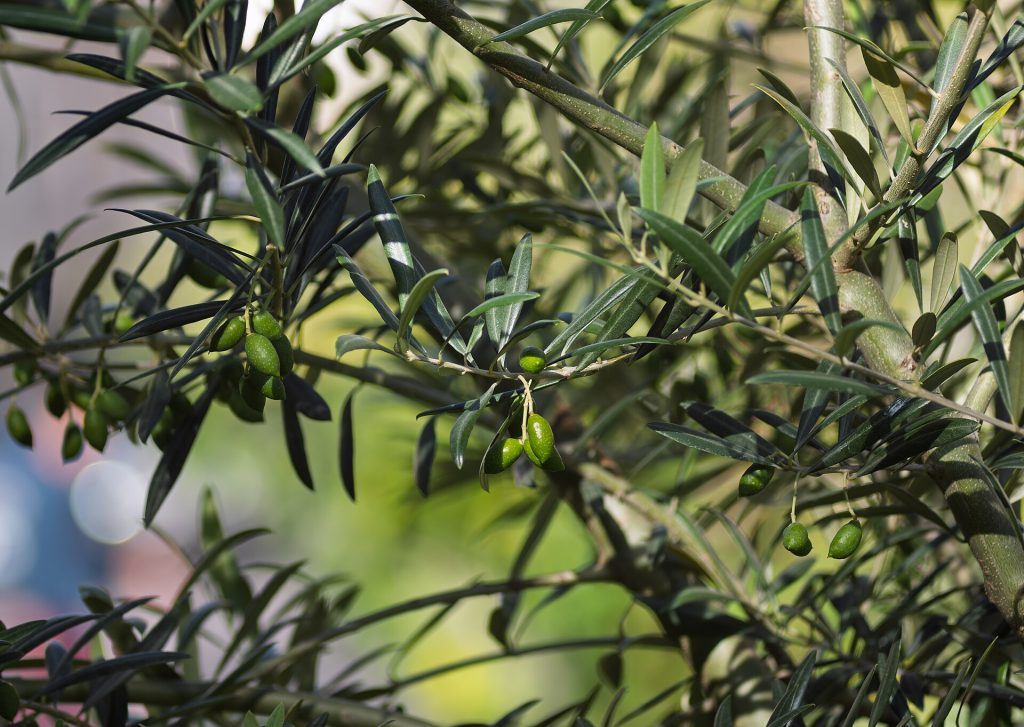
Most olive “facts” circulating online are wrong, including the two most repeated ones: that green and black olives come from different trees, and that a raw olive off the branch is edible. Here are twenty-five that hold up, grouped so you can find the one you came for.
The tree
- The olive is Olea europaea, in the family Oleaceae, which also contains ash, lilac, jasmine and privet.
- Olive trees routinely live several hundred years, and a few verified specimens are over two thousand. The tree regenerates from its base, so an “olive tree” is often a colony of trunks from one root system.
- They can fruit for well over a century. Commercial groves are usually replanted long before the trees stop producing, for yield rather than age.
- Olive wood is dense enough to sink in water and is prized for carving and utensils.
- The flowers are small, cream-coloured and wind-pollinated, which is why olive pollen is a significant seasonal allergen around the Mediterranean.
- A tree produces enormous quantities of flowers and sets fruit on only a small fraction of them.
- Most cultivars alternate: a heavy crop one year, a light one the next. Growers call it biennial bearing.
The fruit
- An olive is botanically a drupe, a stone fruit, making it a relative of the peach, cherry and almond rather than a vegetable.
- Green and black olives usually come from the same tree. Green means picked unripe, black means left to ripen.
- Except in a tin. Most tinned black olives are picked green and turned black by oxidation, then fixed with ferrous gluconate.
- A raw olive straight off the branch is intensely, mouth-drying bitter and effectively inedible.
- The bitterness is a compound called oleuropein, and every curing method on earth exists to remove it.
- Curing takes anywhere from a few days with lye to over a year in dry salt.
- Roughly 90 per cent of the world olive crop goes to oil, not to the table.
- It takes somewhere around 5 to 7 kilograms of olives to produce one litre of oil, depending on the variety and the season.
- There are well over a thousand named cultivars, but all of them are the same species. Kalamata and Arbequina differ less botanically than two breeds of dog.
Oil
- Extra virgin olive oil is a fruit juice. It is mechanically extracted with no heat above set limits and no solvents, which is unusual among cooking oils.
- “Cold pressed” is largely a legacy term. Almost all modern extra virgin is produced by centrifuge, not by pressing.
- The acidity figure on a bottle is free fatty acids, not how acidic it tastes. Extra virgin must be at or below 0.8 per cent.
- The peppery catch at the back of your throat is a compound called oleocanthal, and it is a sign of freshness rather than a fault.
- Olive oil is mostly oleic acid, a monounsaturated fat, which is why it is more stable in a pan than most seed oils.
- Light exposure degrades oil faster than heat does. A clear bottle on a windowsill is the worst thing you can do to it.
History and culture
- Olives were domesticated in the eastern Mediterranean several thousand years ago, and olive oil served as fuel, medicine, cosmetic and currency long before it was mainly food.
- Olympic victors in ancient Greece were crowned with wild olive, not laurel.
- The olive branch as a peace symbol runs from Greek and Roman usage through the dove in the Genesis flood story into the seal of the United Nations.
The three myths worth killing
| Claim | Reality |
|---|---|
| Green and black olives grow on different trees | Same tree, different ripeness and processing |
| You cannot cook with extra virgin olive oil | You can. It smokes around 190 to 210°C, above most home cooking |
| “Light” olive oil has fewer calories | Light in colour and flavour. Same calories as any oil |
More on the ripeness question in black olives versus green olives, and on the tinned ones in why canned black olives are black.
Frequently asked questions
Is an olive a fruit or a vegetable?
A fruit, specifically a drupe or stone fruit, which puts it in the same broad group as peaches, cherries and almonds.
Can you eat olives straight from the tree?
No. Raw olives contain oleuropein and are overwhelmingly bitter. Every curing method exists to remove it.
Do green and black olives come from different trees?
Usually not. Green olives are picked unripe and black ones are left to ripen, generally from the same tree and often the same variety.
How many olives does it take to make a litre of olive oil?
Roughly 5 to 7 kilograms of olives per litre, varying with the cultivar, ripeness and the season.
How long do olive trees live?
Commonly several hundred years, with some verified specimens over two thousand years old. The tree regenerates from its base, which is why age is hard to fix precisely.