The Best Olives for Pizza: Which Varieties Actually Work
Black for a classic pizza, green if you want it to taste of olive. Which varieties hold up under heat, which turn bitter, and how many to use.
The Best Olives for Pizza
The short answer: for a classic, crowd-pleasing pizza, sliced California black olives are the safe, mellow choice, but if you want real depth of flavour, reach for pitted Kalamata or a firm green Castelvetrano instead. The “best” olive genuinely depends on the pizza you’re building. A mild American-style pie wants something soft and unobtrusive; a punchy Mediterranean or Greek-inspired pizza wants brine, bite and a bit of fruitiness. Below is how to choose, plus a comparison table to settle the great California-black-versus-Kalamata question once and for all.
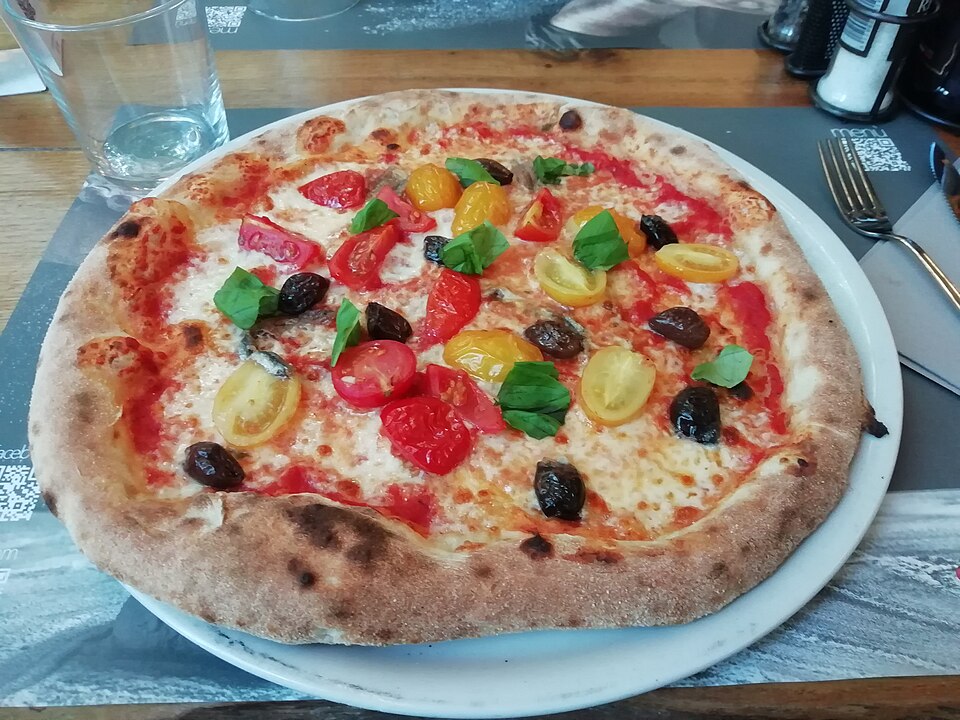
Which olives suit which pizza
Think of pizza olives in three broad camps, and match the camp to the mood of the pie.
Mild black olives (California-style “black ripe”). These are the familiar tinned rings, smooth, soft, faintly salty and low on bitterness. They’re picked green, then oxidised and darkened with the help of ferrous gluconate, which is why they’re so uniformly jet-black. They practically disappear into a cheesy pizza, adding gentle savouriness without stealing the show. If you’re feeding children or fussy eaters, or building a straightforward pepperoni or supreme, this is your olive. The trade-off is that they taste of relatively little on their own.
Kalamata and other brine-cured black olives. Kalamata is a Greek variety, almond-shaped and deep purple-black, cured in brine and often a splash of red-wine vinegar. It brings a real wallop of savoury, tangy, slightly fruity flavour, the taste most people picture when they imagine a proper Greek or Mediterranean pizza. Kalamata stands up beautifully to feta, red onion, oregano and roasted vegetables. Pit them and tear or halve them rather than slicing thin, so each bite keeps its punch. Other brine-cured options like Gaeta (Italian) or plain oil-cured black olives work on the same principle: bolder, saltier, more grown-up.
Firm green olives (Castelvetrano, Nocellara, Manzanilla). Green olives are picked before they ripen, so they’re firmer, meatier and often more buttery or bitter depending on the variety. Castelvetrano, a bright-green Sicilian olive from the Nocellara del Belice cultivar, is mild, buttery and crisp, and it’s a lovely modern choice on a white pizza with garlic and mozzarella. Spanish Manzanilla brings more of a classic olive-bar tang. Green olives add colour contrast and a snappier texture than the soft black kinds.
California black vs Kalamata: the honest comparison
This is the decision most home cooks are really asking about, so here it is side by side. Neither is “better” outright, they’re built for different jobs.
| Feature | California black (“black ripe”) | Kalamata |
|---|---|---|
| Flavour | Mild, soft, faintly salty | Bold, tangy, fruity, briny |
| Colour & texture | Uniform black, tender | Purple-black, firmer, meaty |
| How it’s cured | Picked green, oxidised & darkened, tinned | Brine-cured, often with wine vinegar |
| Best on | Pepperoni, supreme, kid-friendly pies | Greek, feta & veg, Mediterranean pies |
| Prep for topping | Pre-sliced rings, scatter straight on | Pit & halve; pat dry first |
| Saltiness | Low to moderate | Higher, season the pizza accordingly |
The practical takeaway: if you want the olive to blend in, go California black. If you want the olive to be a flavour you actually notice, go Kalamata. Plenty of good pizzerias hedge by using both, soft black rings for coverage, a few torn Kalamata for accent.
How to prep and top like a pro
A few small habits make a big difference. Always pit your olives unless the tin says otherwise, a stray stone under melted cheese is a dental hazard nobody enjoys. Pat brined olives dry before they go on; excess brine turns to steam and can make the crust soggy in that patch. Add olives before baking so they warm through and their oils mingle with the cheese, rather than sitting cold on top. And go easy: olives are salty and rich, so a scattering reads as generous, while a heavy blanket overwhelms the other toppings. If you’re using strongly brined varieties, taste before you add extra salt anywhere else on the pizza.
Curious how these varieties are made and where they come from? Our olive varieties encyclopedia breaks down cultivars in detail, and the guide to curing olives explains why brine-cured and oxidised black olives taste so different from one another.
Best olives for pizza: common questions
Are black or green olives better on pizza? It comes down to flavour intensity. Soft black olives (California-style) are mild and blend in, ideal for classic pies. Firm green olives like Castelvetrano are meatier and more assertive, better on white or garlic-forward pizzas. There’s no wrong answer, it’s about the effect you want.
Do you put olives on before or after baking? Before, in almost all cases. Baking lets the olives warm through, soften slightly and release a little of their oil into the cheese. Adding them raw at the end leaves them cold and slightly out of place against the hot pizza.
Should I use pitted or whole olives? Pitted, for safety and ease of eating. If you only have whole olives, pit and halve them yourself, press each with the flat of a knife and the stone pops out. Halving also helps them sit flat and cover more surface.
Why are tinned black olives so uniformly dark? Because most are “black ripe” olives: picked while still green, then treated with air and a stabiliser (ferrous gluconate) that oxidises and fixes the colour to a consistent jet black. Naturally ripened olives like Kalamata vary far more in shade.