Kalamata Olives on Pizza: Use a Third as Many, and Dry Them
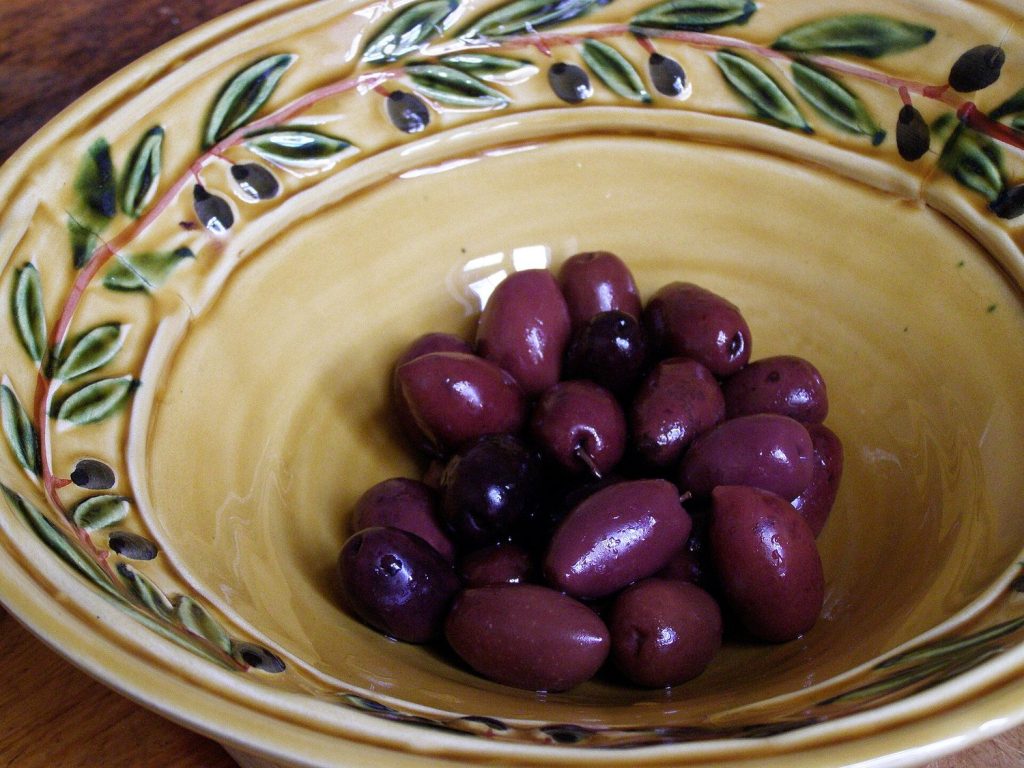
Kalamata olives are excellent on pizza, and they ruin more pizzas than any other olive. Both statements are true, and the difference between them comes down to two things almost nobody does: using far fewer than feels right, and drying them properly. Get those wrong and a Kalamata will salt-bomb the pizza and leave purple puddles under the cheese. Get them right and it is the best olive you can put on a simple pie.
Why they are different from pizza olives
A Kalamata is a genuinely ripe olive, harvested purple-black and brine-fermented, often finished with red wine vinegar. That fermentation is what produces the winey, tangy, faintly fruity flavour. The tinned black rings on a takeaway pizza never ferment at all, which is why they taste of so little by comparison. We set out the full contrast in Kalamata versus black olives.
On a pizza this means a Kalamata brings three things a tinned ring does not: real salt, real acid, and a soft flesh that collapses into the cheese rather than sitting on it.
The two adjustments
1. Use roughly a third as many
A standard 12-inch pizza that would take 20 to 25 tinned rings wants about 8 to 10 Kalamata halves. They are saltier, they are larger, and the flavour carries much further. Most people transfer the tinned-olive quantity straight across and wonder why the pizza tastes of brine.
2. Dry them, and tear rather than slice
Kalamatas are wet. Drain, blot on kitchen paper, then leave them in air for ten minutes. Tear them in half by hand instead of slicing: a torn edge grips the cheese and the ragged surface catches heat, where a clean-cut disc slides and steams.
Which pizzas suit them
| Pizza | Kalamata? | Why |
|---|---|---|
| Greek, feta and red onion | Ideal | Built around exactly this flavour |
| Margherita | Very good | Nothing else competing, so quality shows |
| White pizza, ricotta base | Very good | Acid cuts the dairy fat |
| Pepperoni, sausage, meat feast | Avoid | Salt on salt. Use tinned black instead |
| Anchovy or caper pizza | Careful | Three salty elements is one too many |
Pit them yourself
Buy Kalamatas with the stones in and remove them at home. Pre-pitted ones sit longer in brine, absorb more salt and go soft, which is the opposite of what you want under a grill. Press each olive with the flat of a knife and the stone lifts out in a second.
The bitterness trap
If your Kalamata pizza tastes bitter rather than salty, the olives caught direct heat. Ripe olives scorch at the edges well before a tinned ring does, and scorched olive is genuinely acrid.
Two fixes. Push them slightly into the cheese so they sit below the surface, and on a very hot oven or a grill, add them in the last third of the bake rather than at the start.
If you cannot find them
Gaeta olives are the closest match in sharpness and firmness. Greek Amfissa works well. Full alternatives are in the olive substitutes guide, and for the wider pizza question see the best olives for pizza.
Frequently asked questions
Are Kalamata olives good on pizza?
Yes, particularly on simple pizzas such as margherita, white pizza or Greek-style. Use about a third as many as you would tinned black olives, and dry them first.
How many Kalamata olives go on a pizza?
About 8 to 10 halves on a 12-inch pizza. Roughly a third of the quantity you would use of tinned black rings, because they are much saltier.
Why do my Kalamata olives taste bitter on pizza?
They scorched. Ripe olives burn at the edges faster than tinned ones. Push them into the cheese, or add them for the last third of the bake only.
Should Kalamata olives be sliced or whole on pizza?
Torn in half by hand. A ragged edge grips the cheese and takes heat well, whereas a cleanly sliced disc tends to slide and steam.
Can I use Kalamata olives on a pepperoni pizza?
You can, but it is usually too much salt. Tinned black olives suit heavily loaded meat pizzas better.