Kalamata vs Black Olives: What’s the Difference?
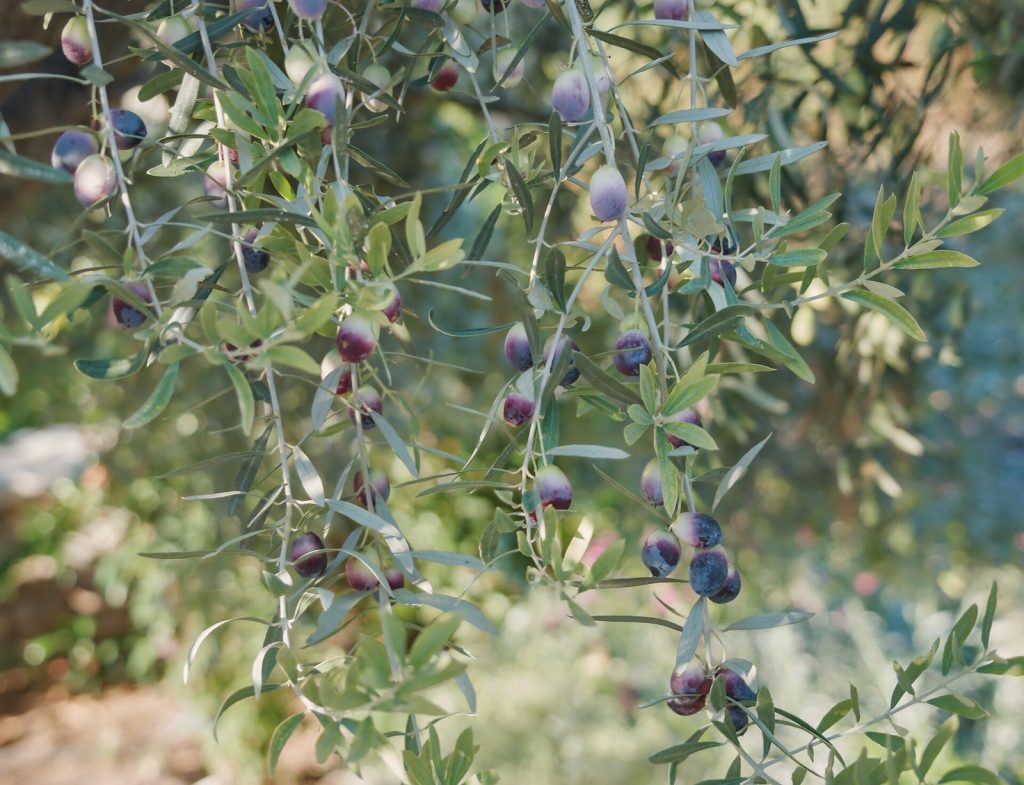
The short answer: a Kalamata is a specific variety of olive — a large, almond-shaped, purple-black fruit tied to the Kalamata region of southern Greece — while “black olives” is a generic catch-all for any dark olive, most often the mild, uniformly black canned olives you find on pizza. Put simply, Kalamata names a grape-like variety with a protected pedigree; “black olive” just names a colour. Nearly all Kalamatas are black olives, but very few black olives are Kalamatas.
If you’ve ever wondered why the glossy purple-black olives glistening in brine at the deli taste worlds apart from the soft, jet-black rings in a can, this is why. They’re different fruit, cured in different ways, for different purposes.
What actually makes a Kalamata a Kalamata
The Kalamata (or Kalamon) is a cultivar — a named variety of the olive tree, Olea europaea — grown widely across Greece and, increasingly, in olive-growing regions worldwide. Under EU rules, “Kalamata” olives carry a PDO (Protected Designation of Origin) when they come from the Kalamata area of Messenia in the Peloponnese. That said, the same variety is grown elsewhere and often sold under the cultivar name “Kalamon” to respect the protected label. So the word tells you about the variety and, at its strictest, the place — not simply the colour.
Kalamatas are picked ripe, which is why they’re naturally that deep aubergine-to-black shade. They’re firm, meaty, and almond-shaped, with a distinctly fruity, winey, faintly bitter flavour. Crucially, they’re almost always sold with the stone in and cured in a slow brine, frequently finished with red wine vinegar and a slick of olive oil. That traditional wet cure is a big part of their character. If you want to go deeper on how different cures shape flavour, our olive curing guide walks through brine, dry-salt, and lye methods.
What “black olives” usually means
“Black olives” is a supermarket term, not a botanical one. Most often it refers to the soft, mild, evenly coloured olives sold pitted in cans and jars — commonly the “California ripe” style. Here’s the surprising part: many of those uniformly black canned olives aren’t ripe at all. They’re typically picked green or semi-ripe, then cured with lye and treated with a tiny amount of an iron compound (ferrous gluconate) and aeration, which turns them that consistent matte black. It’s an efficient, industrial process that produces a gentle, almost buttery olive with very little bitterness — ideal for pizzas, salads, and tacos, but a long way from the punch of a Kalamata.
Of course, “black olive” can also honestly describe any naturally ripe dark olive — a properly ripe Gaeta, a Beldi, a dry-cured wrinkled black olive, or indeed a Kalamata. So the term is broad. But when a recipe says “a handful of black olives” and pictures the can, that’s the mild California-style fruit it usually means. For the full family tree of varieties, our olive varieties encyclopedia is a good place to browse.
Kalamata vs generic black olives, side by side
| Feature | Kalamata | Generic canned “black” olives |
|---|---|---|
| What it is | A specific cultivar (Kalamon), PDO-protected when from Kalamata, Greece | A colour category, not a single variety |
| When picked | Fully ripe (naturally dark) | Often green/semi-ripe, then darkened |
| Colour | Deep purple-black, glossy, variable | Uniform matte black (often from added iron compound) |
| Shape & texture | Almond-shaped, firm, meaty | Round, soft, tender |
| Typical cure | Slow brine, often with wine vinegar & oil | Lye cure with aeration |
| Flavour | Bold, fruity, winey, pleasantly bitter | Mild, mellow, faintly buttery |
| Usually sold | Stone-in, in brine or oil | Pitted, whole or sliced, in cans |
| Best for | Greek salad, meze, tapenade, roasting | Pizza, tacos, easy salads, garnish |
Nutritionally the two are broadly similar — both are mostly water and healthy monounsaturated fat, with useful fibre and antioxidants. Both tend to be salty, as most cured olives are, so treat the brine with respect if you’re watching your sodium. (That’s general information, not medical or dietary advice; check with a professional for your own needs.)
Which should you buy?
It comes down to the job. Reach for Kalamatas when the olive is a star of the plate — a proper Greek salad, a meze board, a rustic tapenade, or scattered over roast lamb. Reach for mild canned black olives when you want gentle background flavour and even slices — pizza night, a quick pasta, nachos, or feeding a crowd that finds Kalamatas too intense. Neither is “better”; they simply do different things. And if you love the ripe, natural style but find canned olives a touch bland, look for naturally ripe brine-cured dark olives, which sit somewhere between the two.
Kalamata vs black olives: common questions
Are Kalamata olives just black olives?
Not quite. A Kalamata is one particular variety that happens to be dark, so it counts as a black olive in colour — but “black olives” as a category also includes the mild canned kind and many other ripe varieties. All Kalamatas are black; not all black olives are Kalamatas.
Why are canned black olives so uniform and mild?
Most are picked before they’re ripe, then lye-cured with aeration and a small amount of an iron compound (ferrous gluconate) that fixes the colour to an even black. The process also strips out most of the bitterness, giving that soft, mellow taste.
Can I swap one for the other in a recipe?
You can, but expect a shift. Kalamatas bring far more punch, saltiness, and bite, so use a little less. Canned black olives are milder and softer, so you may want more to register any olive flavour at all. For a Greek salad, though, Kalamatas are hard to beat.
Do Kalamata olives have to come from Greece?
The PDO name “Kalamata” is protected for olives from the Kalamata area of Greece. The same variety grown elsewhere is real Kalamata-type fruit but is usually labelled “Kalamon” to respect that protected designation. So the variety travels; the strict place-name does not.