Olive Oil for Dogs: Safe Amounts, Real Benefits and Risks
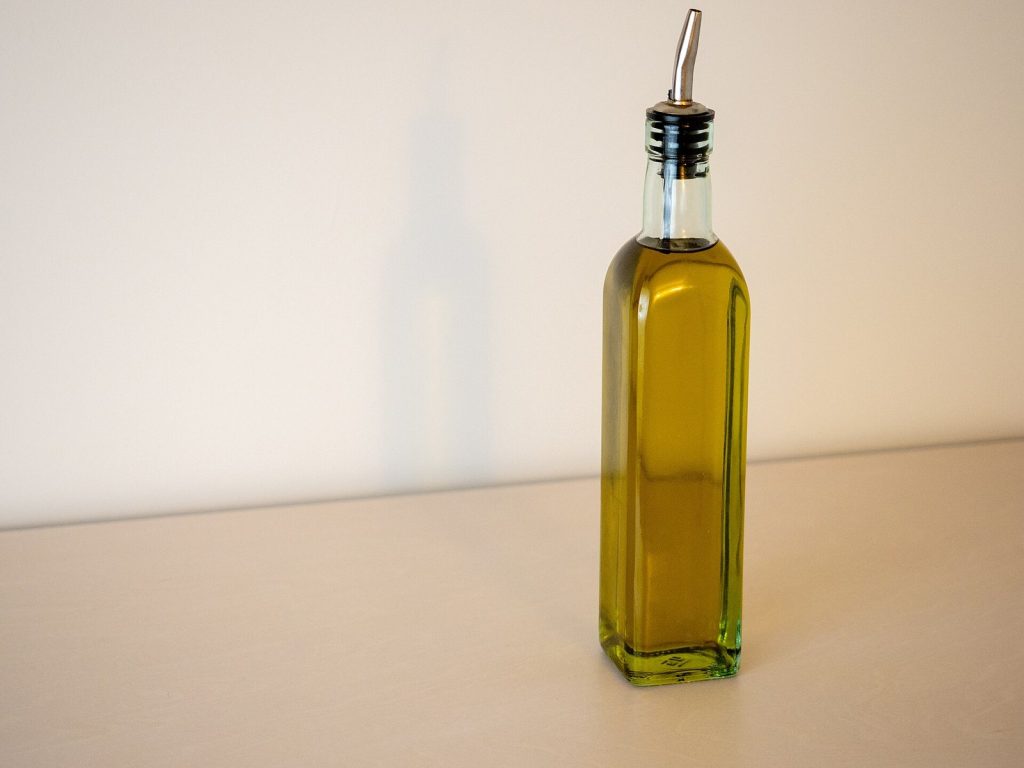
Olive oil for dogs is safe in small amounts for most healthy adult dogs: it is not toxic, and a little mixed into food now and then is unlikely to cause harm. It is also pure fat, at about 40 calories a teaspoon, and too much can bring loose stools, weight gain and, in susceptible dogs, pancreatitis. This article is about the oil only; the fruit, pits and brine are covered in our separate guide on whether dogs can eat olives. Below: the amounts people commonly cite and what they mean in calories, which claimed benefits hold up, the risks, and which dogs should skip it.
Is olive oil safe for dogs?
For a healthy adult dog, yes, in small amounts. Olive oil is a food fat, and complete dog foods already contain added fats and oils. Vet-reviewed guides agree on the shape of the answer: fine as an occasional extra, with the amount kept small, introduced slowly and cleared with your vet.
The catch is that “safe” and “useful” are different questions. A spoonful of olive oil adds calories and fat. It does not add anything a dog on a complete and balanced diet is missing. Dr. Julie Churchill, a board-certified veterinary nutritionist quoted by the AKC, has warned that owners making homemade diets tend to pick oils that seem healthy for people, olive oil among them, even though those oils do not meet a dog’s nutritional needs.
Some dogs should not get added oil without a vet’s go-ahead:
- Dogs that have had pancreatitis, or breeds your vet has flagged as prone to it.
- Dogs on a low-fat or prescription diet.
- Overweight dogs.
- Puppies on a growth diet.
- Dogs with sensitive stomachs or ongoing diarrhea.
How much olive oil for dogs, by weight
The figure repeated most often online is about 1 teaspoon per 20 pounds of body weight a day. It does not trace back to any veterinary nutrition body, and the more careful vet-reviewed sources suggest starting with a fraction of that. What the rule of thumb hides is the calories. Veterinary nutritionists at Tufts University advise that treats and extras make up no more than 10 percent of a dog’s daily calories, and olive oil carries about 119 calories per tablespoon (USDA), or roughly 40 per teaspoon.
| Dog’s weight | Commonly cited daily amount | Calories in it | Rough daily needs* | Share of the day |
|---|---|---|---|---|
| 10 lb | 1/2 teaspoon | About 20 | About 350 | About 6% |
| 20 lb | 1 teaspoon | About 40 | About 590 | About 7% |
| 40 lb | 2 teaspoons | About 80 | About 985 | About 8% |
| 60 lb | 1 tablespoon | About 120 | About 1,335 | About 9% |
| 80 lb | 4 teaspoons | About 160 | About 1,655 | About 10% |
*Estimated maintenance calories for a neutered adult dog using the standard veterinary formula (70 times body weight in kilograms to the power 0.75, multiplied by 1.6). Real needs vary widely, by up to half in either direction, so ask your vet for your dog’s figure.
In other words, the commonly quoted amount uses up between half and all of a dog’s treat allowance on its own. If your vet agrees to olive oil at all, start well below the table, around a quarter teaspoon for a small dog or half a teaspoon for a large one, mixed into food, and watch the stool for a few days before going any higher.
The benefits people claim, and what is supported
- A shinier coat and less dry skin. Fat does help coat condition when a diet is short of it. But the essential fat for skin in dogs is linoleic acid, and olive oil is a poor source: Tufts veterinary nutritionists put it at 1.1 grams per 100 calories of fat, against 5.9 grams for corn oil. For itchy, flaky skin, vets more often look for a cause, such as allergies, parasites or infection, and may suggest fish oil.
- Constipation. A little oil can soften stool, which is exactly why too much causes diarrhea. It works much the same way in people, as covered in olive oil for constipation. In a dog it is a stopgap at best. Straining with nothing produced, or constipation lasting more than a day or two, needs a vet.
- Heart, brain and anti-inflammatory benefits. These claims are borrowed from human research on the Mediterranean diet. There is no good evidence that adding olive oil to a dog’s balanced diet delivers them.
- Weight loss. The opposite. Olive oil is pure fat at about 120 calories a tablespoon, the same as any other cooking oil, so it only adds to the daily total.
- Tempting a picky eater. Fat makes food taste better to most dogs, so a small drizzle can help. But a dog that suddenly stops eating needs a vet, not a topping.
The risks
- Pancreatitis. VCA Animal Hospitals notes that pancreatitis may be triggered in some cases by a fatty meal. Vomiting, belly pain, a hunched “praying” posture, lethargy or refusing food after a fatty meal means an urgent vet visit.
- Diarrhea and vomiting, especially when oil is introduced suddenly or given in large amounts.
- Weight gain, which is its own long-term health problem for a dog.
- Flavored oils. Garlic, onion and chili oils are a firm no; garlic and onion are toxic to dogs. See flavored olive oils for how those infusions are made.
- Stale oil. Use a fresh bottle you would happily eat from yourself. Our guide to spotting rancid olive oil shows what to smell for.
- Giving it by mouth. Mix oil into food. Squirting it into a dog’s mouth with a syringe or spoon risks it going down the wrong way.
Which olive oil, and how to give it
Plain extra virgin olive oil, the same bottle you cook with, is the right choice. Drizzle it over the food and stir it in. Skip it on days when your dog has had other fatty extras, and do not make it a daily habit unless your vet has suggested it.
Above all, do not use olive oil in place of vet care. A dull coat, itchy skin, weight loss or constipation are symptoms with causes, and a spoonful of oil can hide a problem for weeks that a vet could find in one visit.
There is no such thing as a special olive oil for dogs. If a pet product lists olive oil, it comes from the same trade as the bottle in your kitchen, usually with less on the label about grade and age. If your vet approves a little oil, use the fresh extra virgin you cook with. The one bottle to keep away from the dog bowl is anything flavored, because in a garlic oil it is the garlic, not the olive, that does the harm.
Frequently asked questions
How much olive oil can I give my dog?
The figure most often cited is about 1 teaspoon per 20 pounds of body weight a day, but that can use up most of a dog’s daily treat allowance. Start with a quarter to half a teaspoon mixed into food, and ask your vet what suits your dog.
Is olive oil good for a dog’s coat?
It can add shine when a diet is short of fat, but it is a poor source of linoleic acid, the essential fat dogs need for healthy skin. For dry or itchy skin, ask your vet about the cause and about fish oil.
Can olive oil help a constipated dog?
A small amount may soften stool, but it is not a treatment. If your dog strains without passing anything, or is constipated for more than a day or two, call your vet.
Can olive oil cause pancreatitis in dogs?
A fatty meal can trigger pancreatitis in some dogs, and olive oil is pure fat. Dogs with a history of pancreatitis should not have added oil unless the vet approves.
Is olive oil the same as feeding my dog olives?
No. The oil is pure fat with no pit or salt. Olives bring pits, which can choke a dog or block its gut, and brine, which is very salty. Our Can Dogs Eat Olives? guide covers the fruit.
This is general information, not veterinary advice. Check with your vet before adding olive oil to your dog’s diet, and see them promptly for vomiting, belly pain, diarrhea that lasts more than a day, or a change in appetite.