Are Olives Vegan? Yes, Except for Three Things on the Label
Olives themselves are always vegan. The exceptions are anchovy or cheese stuffings, certain marinades, and one rare colouring. What to check before you buy.
Are Olives Vegan?
Yes, olives are vegan. An olive is the fruit of the olive tree (Olea europaea), and the cured olives you buy in a jar, a tin or from a deli counter are simply that fruit, brined or dry-cured and often bathed in olive oil. There is no animal ingredient in a plain olive, and there never has been. If you eat plants, you can eat olives with a clear conscience.
That said, olives rarely reach your plate entirely plain. It is the stuffing, the marinade and, very occasionally, a colouring agent that can nudge a particular jar out of vegan territory. So the honest answer is: the olive itself is always vegan, but a handful of prepared products around it are not. Below is what to actually look for.
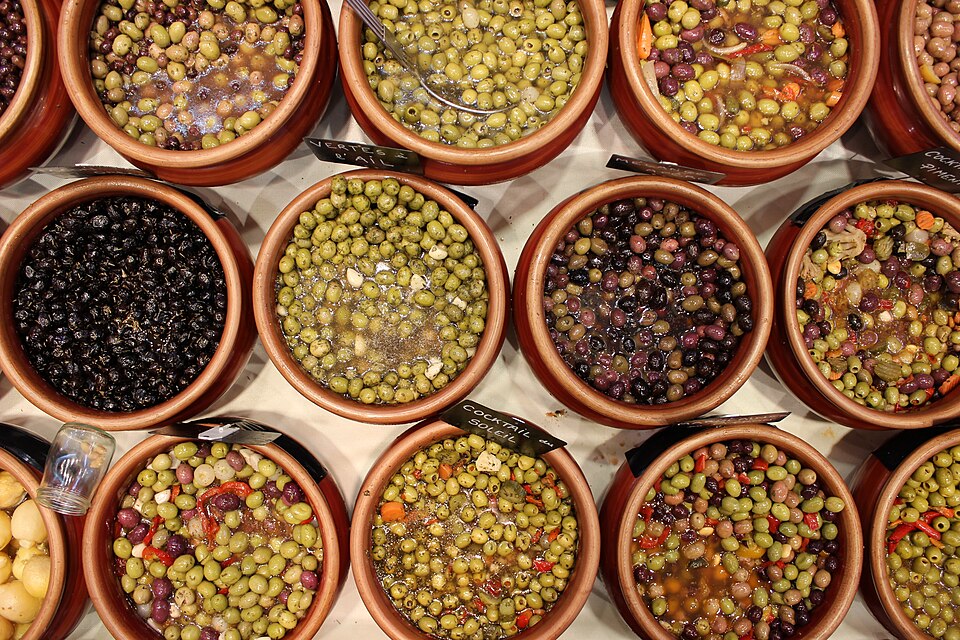
Why the olive itself is always plant-based
Olives grow on trees across the Mediterranean and well beyond it, and the fruit comes off the branch far too bitter to eat. That bitterness is a compound called oleuropein, and every traditional curing method exists to draw it out. None of those methods involves anything from an animal. The classics are:
- Brine-curing — olives sit in salt water for weeks or months while natural fermentation mellows them. Just olives, water and salt.
- Dry-curing — olives are packed in salt, which pulls out moisture and bitterness, leaving those wrinkled, intense black olives.
- Water-curing — repeated soaking and changing of fresh water, a gentler traditional approach.
- Lye-curing — a food-grade alkaline solution speeds the process; it is rinsed away thoroughly before packing.
After curing, olives are usually packed in brine or in olive oil, sometimes with herbs, garlic, chilli, lemon or vinegar. All of that is plant-based. If you want the full picture of how the fruit becomes food, our guide to curing olives walks through each method in detail, and the olive encyclopedia covers the main varieties by name.
One small point on provenance, because people often muddle it: an olive variety’s name is not the same as its country of origin. Kalamata is a Greek town, but Kalamata-style olives are grown in several countries; Manzanilla is a Spanish name you will also see on olives from elsewhere. The name tells you the style, not necessarily where your particular jar was grown. It has nothing to do with whether the olive is vegan — it is always is — but it is worth knowing.
The rare cases where a prepared olive is not vegan
Here is where a little label-reading pays off. The olive is innocent; the additions are where a non-vegan ingredient can sneak in. In practice there are three things to watch.
1. Stuffings. Green olives are commonly stuffed, and most stuffings — pimento (sweet red pepper), garlic, almond, jalapeño, sun-dried tomato — are entirely plant-based. The exceptions are the ones stuffed with anchovy or with a blue cheese, feta or cream-cheese filling. These are common enough at deli counters and in tapas selections, so it is worth a glance.
2. Marinades and dressings. A marinade is usually oil, herbs and acid, all fine. Occasionally you will find olives marinated with anchovy, fish sauce or a cheese element, or a deli mix that has had feta crumbled through it. Again, the flag is the added ingredient, not the olive.
3. Colouring (uncommon, but real). Some black olives, particularly ripened-by-oxidation “California black” style olives, may be labelled with the additive ferrous gluconate (E579), used to fix and even out the black colour. Ferrous gluconate is an iron salt and is itself synthetic/mineral, not animal-derived — so it is not the problem people sometimes assume. The colouring agent to actually watch for on any food label is cochineal / carmine (E120), which is made from insects; it is vanishingly rare on olives but is the one dye that would make a product non-vegan. If in doubt, the ingredient list settles it.
None of this is cause for anxiety. The overwhelming majority of olives on a shelf are vegan by default. You are really only checking stuffed and cheese-marinated products.
Quick reference: which olives are vegan?
| Olive product | Vegan? | What to check |
|---|---|---|
| Plain brined or dry-cured olives | Yes | Nothing — just olives, salt, water/oil |
| Pimento-stuffed (red pepper) | Yes | Pimento is plant-based |
| Garlic-, almond- or chilli-stuffed | Yes | All plant-based fillings |
| Herb- or oil-marinated | Usually | Check for anchovy or cheese in the mix |
| Anchovy-stuffed | No | Contains fish |
| Cheese-stuffed (blue, feta, cream) | No | Contains dairy |
| Black olives with E579 (ferrous gluconate) | Yes | Iron salt, not animal-derived |
| Any product listing E120 (carmine) | No | Insect-derived dye (very rare on olives) |
A good habit: with loose deli olives, just ask what is in the stuffing or marinade; with packaged olives, the ingredient list tells you everything in a few seconds.
Are olives vegan? Common questions
Are black olives vegan?
Yes. Black olives are simply riper (or ripened-by-oxidation) olives. Even the ones darkened with ferrous gluconate (E579) are vegan, as that additive is an iron salt rather than anything animal-derived.
Are stuffed olives vegan?
Most are. Pimento, garlic, almond, chilli and sun-dried-tomato stuffings are all plant-based. The two to avoid are anchovy-stuffed and cheese-stuffed olives (blue cheese, feta or cream cheese).
Is the oil or brine olives are packed in vegan?
Yes. Olives are packed in olive oil or in a simple salt brine, sometimes with herbs, vinegar or garlic — all plant-based. Just scan for any added anchovy or cheese in flavoured deli mixes.
Are green and black olives different for vegans?
No difference at all. Colour reflects ripeness and curing, not diet. Both green and black plain olives are vegan; the only thing that ever changes the answer is a non-vegan stuffing, marinade or dye.
This article is general food information, not dietary or medical advice. If you follow a strict diet for health or allergy reasons, always read the full ingredient list on the pack.