Kalamata vs Green Olives: One Is a Variety, One Is a Ripeness
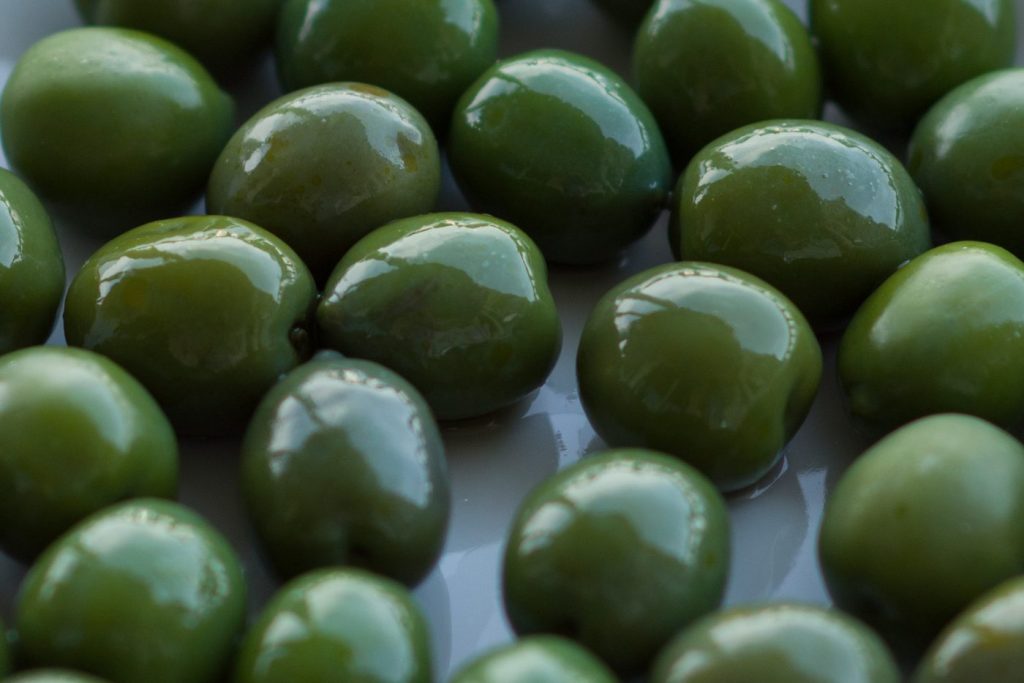
Here is the short version: “green olives” describes a stage of ripeness, while “Kalamata” describes a particular variety of olive — so you are not really comparing like with like. Green olives are simply olives picked before they ripen, from any number of varieties, and they come out firm, bright and often briny. Kalamata olives are a specific cultivar grown chiefly in the southern Peloponnese in Greece, picked when fully ripe, which is why they are that deep purple-black colour with a rich, almost winey flavour. Once you understand that one word is about timing and the other is about type, everything else falls into place.
Ripeness is the real story
All olives start out green and hard, then slowly turn straw-coloured, then reddish, then purple, and finally a deep blackish-purple as they ripen on the tree. Picking time decides almost everything about the finished olive — its colour, its firmness, its oil content and its taste. Pick early and you get a firm, grassy, sometimes slightly bitter green olive. Leave the fruit to hang and it softens, sweetens a little, gains oil and darkens.
So a “green olive” can come from dozens of varieties — Spanish Manzanilla and Gordal, Greek Halkidiki and Nafplion, French Picholine, and plenty more. What they share is that they were harvested young. Kalamata olives, by contrast, are almost always allowed to ripen fully before picking, which is why you rarely see a genuinely green Kalamata on a shop shelf. The variety and the ripeness happen to line up: Kalamata is a black-when-ripe table olive, and that is how it is traditionally sold.
The curing matters just as much as the picking. Green olives are usually treated to remove their natural bitterness — either a slow brine soak or, in industrial production, a lye treatment followed by brining and often a lactic fermentation (the classic “Spanish-style” method). Kalamatas are typically cured in brine and wine vinegar, sometimes with a little olive oil, which gives them that signature tangy, fruity edge. If you want the full picture on how bitterness is drawn out, our olive curing guide walks through each method.
How they compare in the kitchen
Because green olives are firmer and often saltier and sharper, they hold their shape well and stand up to bold company — think a dry martini, a tapas spread, or chopped through a salad where you want a crisp, briny pop. Many are sold pitted and stuffed (pimento, almond, garlic, anchovy), which tells you how versatile that firmer flesh is.
Kalamatas are softer, meatier and more mellow, with a fruity, wine-like depth rather than a sharp bite. That makes them the natural choice for a Greek salad, for scattering over roast lamb or baked feta, for tapenade, or simply eating from the bowl with bread and good oil. They tend to be sold with the stone in, since the flesh clings to it, though pitted versions are common too.
Neither is “better” — they simply do different jobs. If a recipe calls for one and you only have the other, you can usually swap them, but expect the dish to shift: greens will make it brighter and saltier, Kalamatas richer and rounder.
| Feature | Green olives | Kalamata olives |
|---|---|---|
| What the name means | A ripeness stage (picked unripe) | A specific variety, picked ripe |
| Colour | Bright to yellow-green | Deep purple to blackish |
| Texture | Firm, crisp | Soft, meaty |
| Flavour | Sharp, briny, sometimes grassy or bitter | Rich, fruity, winey, mellow |
| Typical curing | Brine or lye, often fermented | Brine with wine vinegar |
| Oil content | Lower (picked early) | Higher (fully ripe) |
| Best for | Martinis, tapas, stuffing, brightening salads | Greek salad, tapenade, roasts, snacking |
| Usual origin | Spain, Greece, France, and beyond | Greece (Peloponnese heartland; now grown elsewhere too) |
A quick word on provenance and nutrition
The Kalamata olive takes its name from the city and region of Kalamata in the southern Peloponnese, and traditional Greek Kalamatas carry a protected designation. That said, the cultivar is now grown in other countries too — you will find Kalamata-type olives from places well outside Greece — so the label tells you the variety, not always a single country of origin. If you want the guaranteed Greek article, look for the protected-origin wording on the jar. For more on how varieties spread and get renamed around the Mediterranean, browse our olive varieties encyclopedia.
On nutrition, all table olives are broadly similar: a good source of monounsaturated fat and various plant compounds, and fairly high in salt because of the curing brine. Riper olives like Kalamatas carry a touch more oil, while green olives are often a little saltier, but the differences are modest. If salt intake matters to you, a quick rinse before eating helps. (This is general food information, not medical advice.)
Green olives vs Kalamata olives: common questions
Are Kalamata olives just black olives?
Not quite. Kalamata is a specific ripe variety with a distinctive almond shape and winey flavour. The plain “black olives” sold in tins are often a different variety that has been ripened artificially by oxidation, which is why they taste much milder.
Are green olives healthier than Kalamata olives?
They are nutritionally close. Both offer healthy monounsaturated fats and antioxidants; greens tend to be a little saltier and Kalamatas a little higher in oil. Neither is meaningfully “healthier” — enjoy whichever you prefer, in moderation.
Can I substitute one for the other in a recipe?
Usually yes. Just expect the result to change: green olives make a dish brighter and saltier, while Kalamatas make it richer and fruitier. In a Greek salad, Kalamatas are the traditional choice; in a martini, go green.
Why are some green olives so bitter?
Fresh olives contain a bitter compound called oleuropein, and green ones have more of it because they are picked young. Curing removes most of it. A green olive that still tastes sharp simply had a shorter or gentler cure.