Storage Aid Rally Fades as Olive Oil Prices Slip Again
The small rally that followed Europe’s decision on 30 September to pay for temporary private storage of virgin olive oil has already gone. By the last week of October Spanish prices were back at about 1.85 euros a kilo, exactly where they were at the end of September. That is the central fact in the International Olive Council’s October market newsletter, which otherwise reports a world trade in olive oil growing nicely. Here is the split screen.
Trade up, prices down
World trade rose about 10 percent on the year before, an increase of some 120,222 tons. In the ten months to July, imports into Brazil climbed about 23 percent, the United States about 9 percent and Canada about 7 percent. Australia and Japan went the other way, down about 9 and 11 percent.
Against a year ago, producer prices for extra virgin are down about 6 percent in Spain at around 1.85 euros a kilo and about 4 percent in Greece at around 1.95 euros, while Italy is up about 7 percent at roughly 2.95 euros. Italian prices have fallen sharply, by almost a quarter, from the record set in the spring.
| Extra virgin, producer price | Level | Change on a year earlier |
|---|---|---|
| Spain | About 1.85 euros a kilo | Down about 6 percent |
| Greece | About 1.95 euros a kilo | Down about 4 percent |
| Italy | About 2.95 euros a kilo | Up about 7 percent |
Spain closes the books on 2010/11
The newsletter carries Spain’s final figures for the season that ended in September. Production came to 1,389,700 tons. Imports were 45,800 tons, about 3 percent lower. Domestic consumption rose about 5 percent to 557,600 tons, and provisional export figures come to 824,100 tons.
Read those four numbers together and the Spanish predicament is obvious. The country sells more abroad than it uses at home, most of it in bulk and much of it into Italy, and a rise in home consumption of 5 percent cannot lift a market that size.
Two consumption sketches worth keeping
The newsletter also includes consumption profiles. In Turkey, more table olives are eaten than olive oil, mostly black, and 58 percent of consumers associate them with breakfast. Turkey ate about 12 percent of the world’s table olives last season, second only to the European Union. Moroccans get through about 2.8 kilos of olive oil and 1.2 kilos of table olives a head each year, and the country doubled its olive oil production last year across 730,000 hectares, of which only about 7 percent is irrigated. In Spain, green table olives dominate, 60 percent of the table olive crop is exported, and the average Spaniard eats 3.8 kilos a year, with Catalans eating the most.
- Storage aid buys weeks, not a floor. Prices went back to where they started inside a month.
- Italy is short and buying, which is why its prices sit a euro above Spain’s.
- Table olives are the quiet half of this industry, and in Turkey and Egypt they are the bigger half.
For the mechanism behind the September decision, see how storage aid worked the last time Europe used it. Earlier council reports read much the same: a bigger crop and prices going nowhere. Turkey’s own trade has been trying to lift domestic use for years, as this piece from 2007 shows.
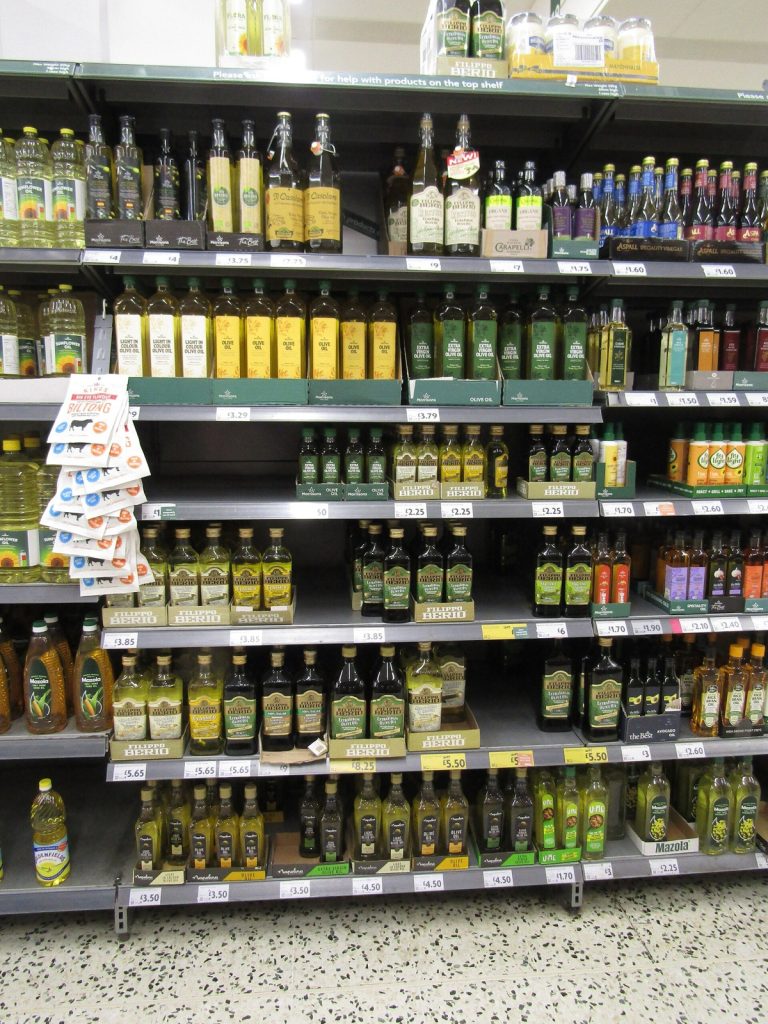
A price quoted for Spain is a price for oil in a tank at the mill, in lots of many tons. The bottle on the shelf answers to packaging, transport, listing fees and the retailer’s own promotions, so it barely notices what the mill is paid. When a shop tells you its prices went up because the harvest was poor, ask when the oil in that bottle was actually bought.
Sources
- International Olive Council: Market Newsletter October 2011 (archived copy)
- Olive Oil Times: Still Lower Prices, Black Olives for Breakfast in Latest IOC Data, 13 November 2011 (archived copy)