Italy: Olive Country in Profile
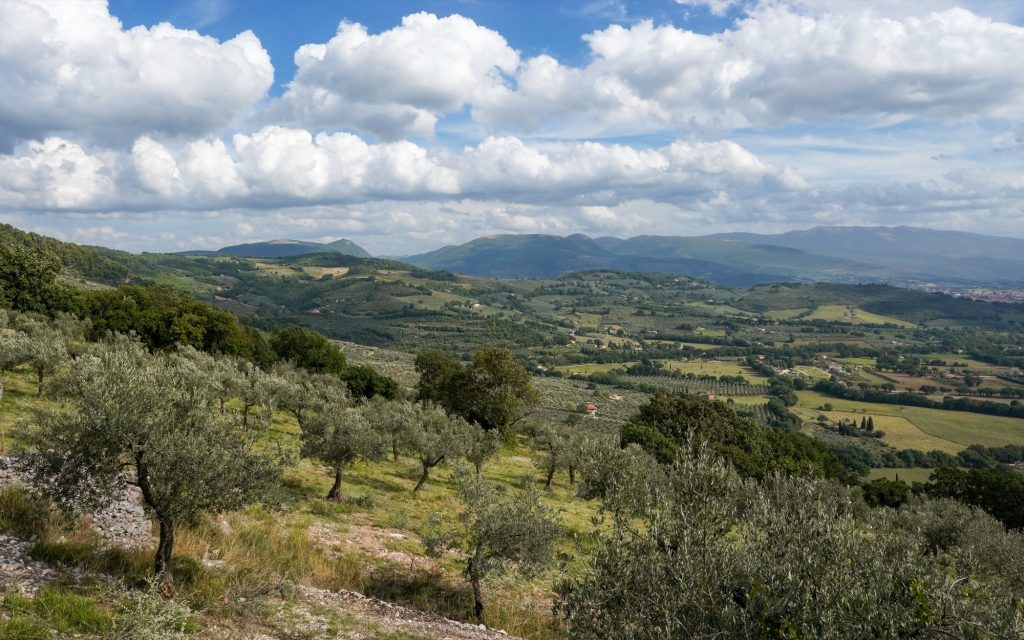
Italy makes less oil than Spain, exports a reputation far larger than its harvest, and grows a bewildering number of native varieties. To understand Italian oil you have to stop thinking “Italy” and start thinking region by region — because that is exactly how Italians do.
There is no such thing as “the” Italian olive oil, and the sooner you accept that, the better you will buy. Italy is not one oil-growing country but a couple of dozen stitched loosely together, each with its own native varieties, its own climate and its own fierce conviction that it does it best. A Ligurian and a Pugliese would barely recognise each other’s oil as the same product. What they share is a flag — and that flag, as the trade learned long ago, is worth more on a label than the oil behind it sometimes is. So we read Italy the way Italians do: by region, by variety, by seal.
A country of regions, not one style
Olives grow in nearly every Italian region, but the character changes completely as you move down the map. Liguria gives the soft, sweet, almondy Taggiasca. Tuscany leans green, grassy and peppery on Frantoio, Moraiolo and Leccino. Umbria runs in a similar register, often with a hard, elegant bitterness. Puglia — which presses more oil than any other region — goes bold and bitter on Coratina and Ogliarola. Down in Sicily you meet Nocellara del Belice, prized both as a fat green table olive and for a delicate oil, alongside the vivid, tomato-and-herb Tonda Iblea. Up at Lake Garda, Casaliva makes a fine, gentle northern oil. There is no single “Italian taste.” There is a Ligurian taste, a Tuscan taste, a Pugliese taste — and they would all argue about it over dinner.
The reputation problem
Italy’s name sells oil, which is exactly why “bottled in Italy” became one of the trade’s most abused phrases. The country imports enormous volumes of oil from Spain, Greece and Tunisia, blends or simply bottles it, and ships it under an Italian flag. That oil may never have touched an Italian tree. None of this is necessarily illegal — the label says “bottled,” not “grown” — but it trades on an impression the words are careful not to state outright. Genuine regional Italian oil exists and is superb; it is simply a minority of what wears the Italian label abroad. The lesson is blunt: read the small print, not the flag. We pull this trick apart in “bottled in Italy”.
- Reassuring: a named region and a DOP or IGP seal.
- Reassuring: a harvest date and a single estate or cooperative.
- Vague: “product of Italy” with no region named.
- A quiet warning: “packed in Italy” / “bottled in Italy” alone, no origin of the fruit.
The seals that actually mean something
Italy’s defence against its own reputation problem is its geographic-protection system: DOP (the Italian PDO) and IGP (PGI) seals that tie an oil to a defined place, set of varieties and method, and put it under third-party control. Toscano IGP, Terra di Bari DOP, Val di Mazara DOP, Riviera Ligure DOP, Garda DOP — these are not marketing flourishes but legal guarantees of origin. They cost the producer money and paperwork, which is precisely why the cheapest anonymous bottles never carry them. A seal is no promise of brilliance — a dull oil can still be DOP — but it does promise that the fruit grew where the label says. In a country this haunted by blending, that promise is worth paying a little for.
| Region | Southern Europe, the long Italian peninsula |
|---|---|
| Rank | World’s second-largest producer, behind Spain |
| Top oil region | Puglia (the heel and the south) |
| Signature varieties | Frantoio, Leccino, Coratina, Taggiasca, Nocellara |
| Harvest | October–December |
| Watch for | “Bottled in Italy” with no origin of the fruit |
Italian olive oil: common questions
Is Italy the world’s biggest olive oil producer?
No — Spain produces far more. Italy is usually the world’s second-largest, but its reputation and exports loom much larger than its actual harvest, which is part of why so much foreign oil ends up bottled under an Italian label.
Does “bottled in Italy” mean the oil is Italian?
Not necessarily. It means the oil was packed in Italy — the fruit may have been grown in Spain, Greece or Tunisia and shipped in for blending and bottling. To know the origin of the oil itself, look for a named region and a DOP or IGP seal.
What do DOP and IGP mean on Italian oil?
They are protected-origin seals (Italy’s versions of PDO and PGI) that tie an oil to a specific place, set of varieties and method, under independent control. They guarantee where the fruit grew, though not that the oil is brilliant.
Why is there no single “Italian” taste?
Because Italy grows hundreds of native varieties across very different climates. A soft Ligurian Taggiasca, a grassy Tuscan blend and a fierce Pugliese Coratina are all “Italian” and taste nothing alike. The region and variety, not the flag, tell you the flavour.
Which Italian region makes the most oil?
Puglia, in the south, presses more olive oil than any other Italian region by a wide margin, much of it bold and bitter from Coratina and Ogliarola. Tuscany is more famous but produces far less.
Here is the blunt version sellers won’t give you: the Italian flag on a cheap bottle is closer to a packaging detail than a provenance. Italy imports oceans of Spanish, Greek and Tunisian oil, bottles it, and lets your imagination do the rest — and the words on the label are written precisely so they never quite lie. The fix is simple and it never fails me: refuse to buy “Italian” oil that won’t name a region. Make it tell you Toscano, or Terra di Bari, or Garda, with a DOP or IGP seal and a harvest date. The good stuff is proud of exactly where it comes from; the anonymous stuff is hoping you won’t ask. Ask.
Drawn from Italian DOP/IGP designations, regional production data and International Olive Council figures.