In Focus: The Royal de Cazorla Olive
Jaén is Picual country, the engine room of Spanish oil. But tucked into its mountains is a small local olive that tastes nothing like Picual: the Royal de Cazorla, a genuinely rare variety prized for an unusually sweet, fresh and delicate oil — that nonetheless carries real antioxidant backbone.
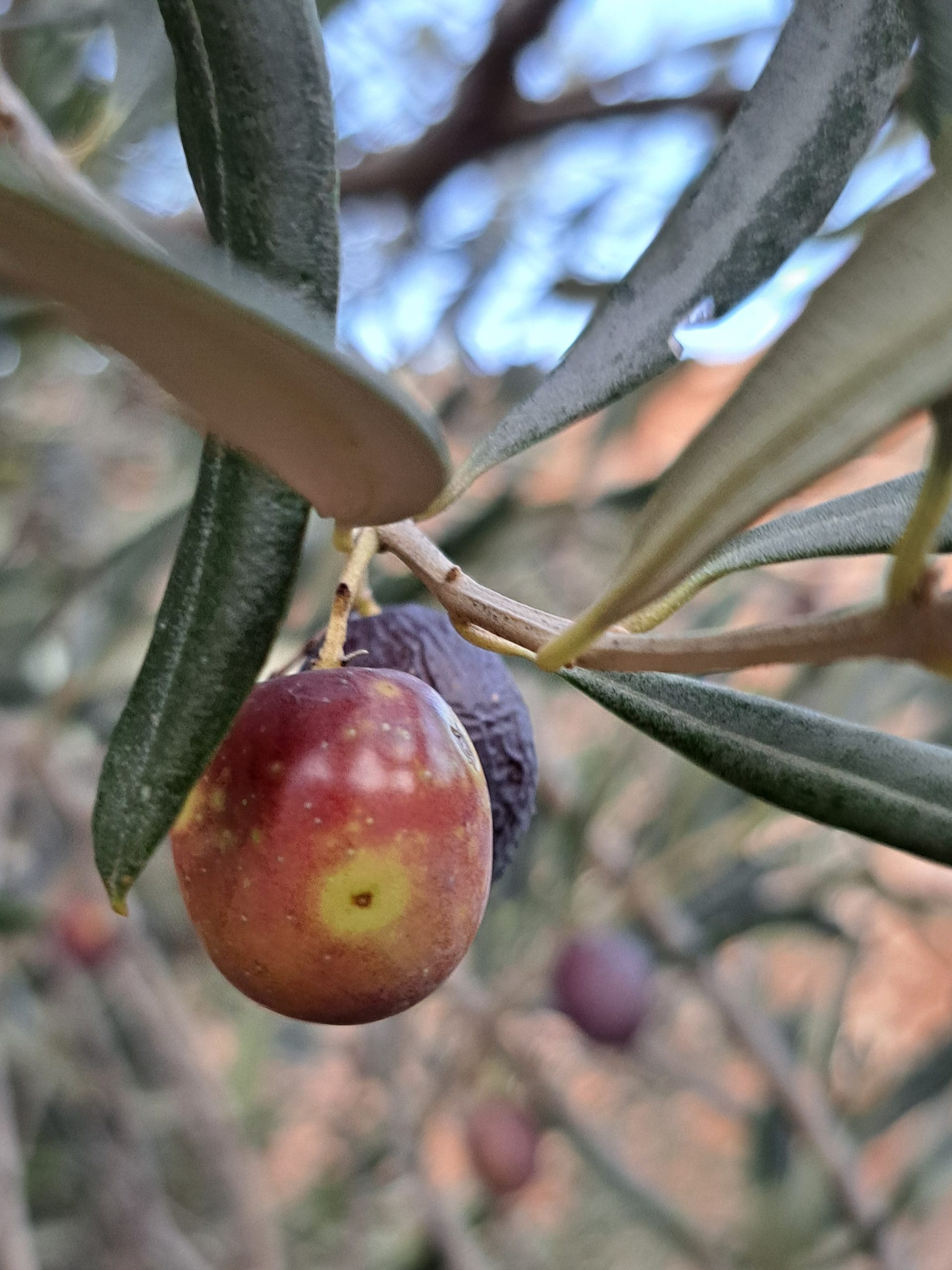
The Royal de Cazorla is the native olive of the Sierra de Cazorla in the province of Jaén, southern Spain — effectively the only local variety of that mountainous corner, grown chiefly around Cazorla and Quesada. It is genuinely rare, with only a couple of thousand hectares planted, and it gives a relatively low oil yield, which keeps it exclusive. The fruit ripens to a distinctive reddish colour dotted with visible lenticels, on a tree whose branches are notably brittle and easily damaged at harvest.
A rare olive in a giant’s land
Picture it: Jaén is the largest olive-growing province on earth, an unbroken ocean of Picual rolling to the horizon. And then, up in the Sierra de Cazorla, a small island of something completely different. The Royal is a local survivor — too low-yielding and too fiddly to harvest (those brittle branches) to ever conquer the plains, but cherished by the mountain growers who keep it for a flavour Picual cannot match.
How the oil tastes
Royal de Cazorla oil stands apart from Jaén’s robust Picual. Its hallmark is a fresh, sweet fruitiness — green grass and hay, with hints of green almond and ripe fruit like apple and fig — and only a mild bitterness and gentle pepperiness. Despite that softness it is notably stable and rich in polyphenols, among the highest of Jaén’s varieties. The result is an aromatic, approachable oil that wins over people who find big peppery oils too aggressive, while still offering real antioxidant character.
What ‘sweet’ hides
Here is the non-obvious bit sellers rarely spell out. Sweet, gentle oils are usually assumed to be low in polyphenols and quick to fade — the trade-off for that easy charm. The Royal breaks the rule: it is both delicate and high in antioxidants, which is unusual and is exactly what makes a single-variety bottle worth hunting. You are not paying premium money for a fragile, fleeting oil; you are paying for a rare combination.
| Origin | Sierra de Cazorla, Jaén, Spain |
|---|---|
| Type | Oil olive |
| Rarity | ~2,000 ha; low yield |
| Protected origin | Sierra de Cazorla PDO area |
| Harvest | November–December |
| Flavour | Sweet, fresh, aromatic; high in polyphenols |
| Best use | Raw finishing on delicate food |
Buying & using Royal de Cazorla
- Genuine Royal is usually a single-variety, PDO-area oil from a small Jaén producer — not a supermarket blend.
- Treat it as a finishing oil: its sweet, delicate fruit is wasted in cooking but lovely raw.
- Pour it over salads, white fish or fresh cheese where its fruit can shine.
- It keeps better than its softness suggests, thanks to high polyphenols — but still buy it fresh.
Royal de Cazorla olives: common questions
Is Royal de Cazorla related to Picual?
No — it is a distinct local variety of the Sierra de Cazorla. It tastes quite unlike the robust Picual that dominates the rest of Jaén.
Why is it so rare?
Only around two thousand hectares are planted, yields are low, and its brittle branches make harvest awkward — so it never spread beyond its mountain home.
What does the oil taste like?
Sweet and fresh — grass, hay, green almond, apple and fig — with mild bitterness and gentle pepper, yet high in antioxidants.
Is a delicate oil low in polyphenols?
Usually, but the Royal is an exception: it is both sweet and gentle and unusually high in polyphenols, which makes it notably stable.
How should I use it?
Raw, as a finishing oil over salads, white fish or fresh cheese. Its delicate fruit is wasted heating in a pan.
Because yields are low and plantings small, genuine Royal de Cazorla is usually a single-variety, PDO-area oil from a small Jaén producer — not a supermarket blend. If you find one, treat it as a finishing oil: its sweet, delicate fruit is wasted in cooking but lovely raw over salads, white fish or fresh cheese. And don’t write it off as a fragile sweetie — it is unusually high in polyphenols for so gentle an oil, which is exactly the rare trick you’re paying for.
A olives101 variety profile, drawn from Jaén variety records and the Sierra de Cazorla designation.