The olive grove maintenance year
The olive’s reputation for needing nothing is the most expensive myth in the business. The tree will indeed survive almost anything. The fruit is another matter entirely — and the work that decides next year’s crop is done long before harvest.
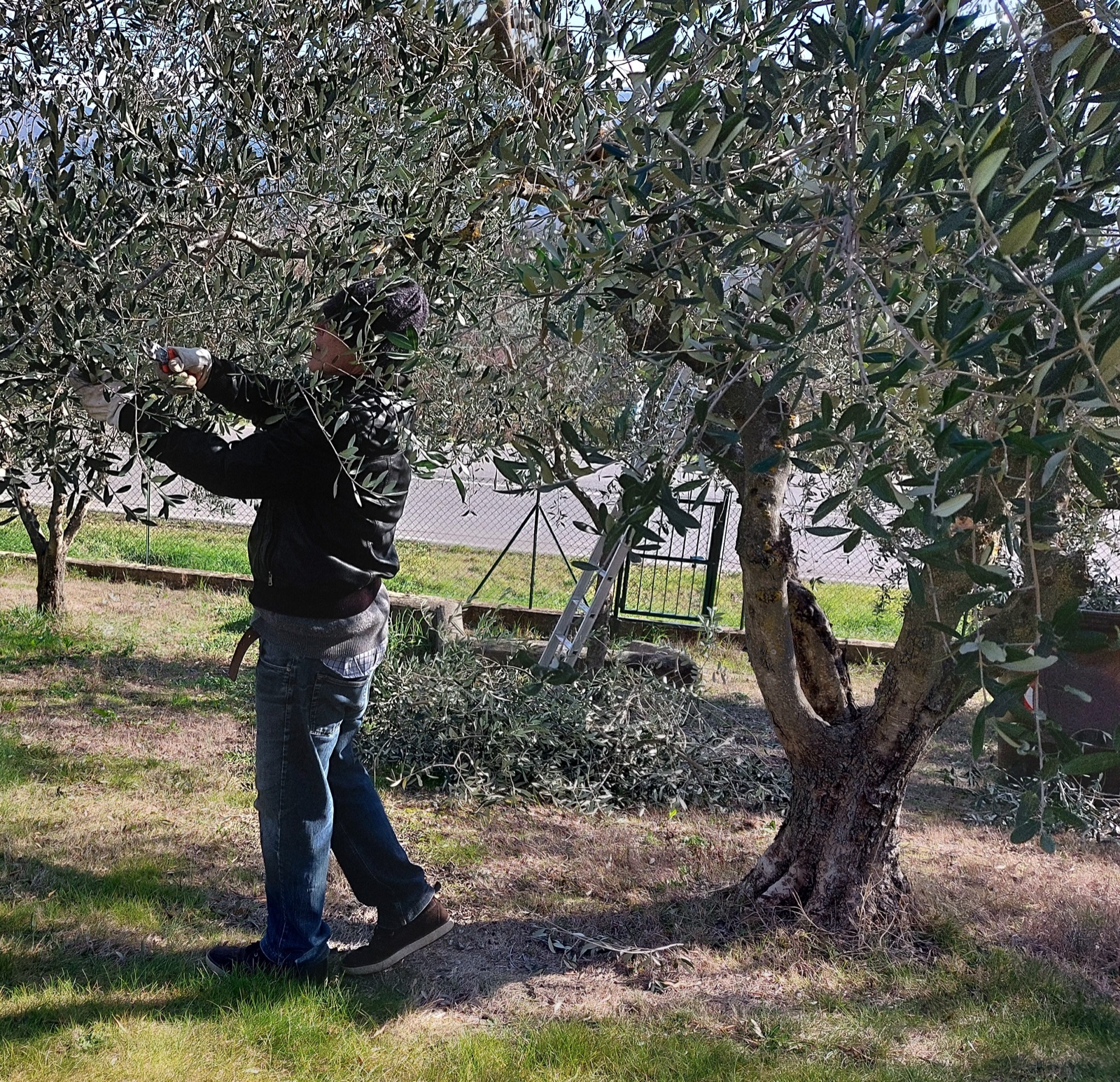
Ask why olives are grown on the poorest ground in the Mediterranean and the answer is usually that the tree tolerates it. That is true, and it has produced a lazy belief that olive growing is a matter of planting something and coming back in November with a net. It is not. A neglected olive tree lives for centuries and gives you a handful of small, fly-bitten fruit in the years it feels like it. A managed one gives you a crop you can sell. The difference is a calendar of unglamorous work, most of it done when nothing appears to be happening.
Winter: pruning, and the argument about it
Pruning is the single most consequential job of the year and the one growers argue about hardest. The principles are not really in dispute: olives fruit on the previous year’s growth, so you are managing renewal, not just tidiness. You open the canopy so light and air reach the inside — an olive that fruits only on its outer shell is a tree wasting most of its own wood. You take out crossing branches, suckers from the base, water shoots heading straight up, and any wood that is dead, diseased or hanging into the working alley.
What growers actually fight about is severity and timing. Hard pruning in one go pushes a tree into vegetative sulking and can cost you the following season. Light, annual pruning after the coldest weather and before flowering is the boring, correct answer for most groves. And prune with the harvest method in mind: a canopy shaped for hand-picking is a different tree from one shaped for a straddle harvester, and deciding that late is expensive.
Spring and summer: flowering, water and the fly
Flowering is the moment the grove decides your year, and it is largely out of your hands — olives are wind-pollinated, they set only a small fraction of their flowers, and a hot dry spell or heavy rain during bloom can cut a crop badly. What you can control is stress. Water at flowering and during early fruit development matters far more than water later on, and the classic mistake of the enthusiastic new grower is generous irrigation in autumn, which swells fruit with water and dilutes the oil.
Then the summer watch begins. The olive fruit fly is the defining pest of the crop and the reason a beautiful-looking harvest can arrive at the mill already spoiled — the larva feeds inside the fruit, acidity climbs, and an oil that could have been extra virgin ends as something much less. Trapping through the summer tells you what pressure you are under before damage becomes visible. Watch, too, for the leaf spot that defoliates trees in wet springs, and for the rough galls of olive knot spreading through pruning wounds — which is why you sanitise tools and do not prune in the rain.
Autumn: the harvest decision
The last real decision of the year is when to pick, and it is a trade, not an optimum. Early fruit is green, lower in yield, higher in polyphenols, greener and more bitter in the glass and more stable over time. Late fruit gives more oil per tonne and a softer, rounder, sweeter result that fades faster. Neither is wrong; they are different products, and the grower who says otherwise is describing their own preference.
What is not negotiable is what happens next. Fruit begins to degrade the moment it leaves the tree, and heat and heaping accelerate it. Get the crop to the mill within a day or two, in ventilated crates rather than sacks, and you have protected the whole year’s work. Leave it in a warm heap over a weekend and you have quietly downgraded it.
| Season | The work | Why it matters |
|---|---|---|
| Late winter | Pruning, canopy opening, tool sanitation | Sets next year’s fruiting wood, light and airflow |
| Early spring | Soil work, cover crops, feeding, weed control | Feeds flowering and early fruit set; protects soil structure |
| Flowering | Minimal disturbance; irrigation if stressed | Fruit set is decided here and cannot be recovered later |
| Summer | Fly trapping and monitoring, measured irrigation | Prevents the damage that downgrades oil at the mill |
| Early autumn | Ground clearing, net and equipment prep, mill booking | A late scramble is how fruit ends up sitting in heaps |
| Harvest | Pick to a chosen ripeness, deliver within 24–48 hours | Freshness at the mill is the largest single quality factor |
| Post-harvest | Repair, disease clean-up, planning the next prune | Carries the grove into the following cycle |
What can honestly be skipped
- Heavy autumn irrigation. It inflates weight and dilutes oil. Water when it counts, in spring and early summer.
- Annual hard pruning. Little and often beats dramatic. A tree cut back savagely spends a year growing wood instead of fruit.
- Bare, tilled soil. Cover crops mown in place hold the ground, feed it and cost less than the erosion they prevent.
- Calendar spraying. Trap first and know your pest pressure — treating on a date rather than on evidence wastes money and invites resistance.
- Chasing every last olive. The final sweep often costs more in labour than the fruit is worth, especially if it delays delivery to the mill.
Olive grove maintenance: common questions
When should olive trees be pruned?
Generally in late winter, after the worst cold and before flowering. Light annual pruning is safer than occasional severe cutting, and tools should be sanitised to avoid spreading disease through wounds.
Why does my tree crop heavily one year and barely at all the next?
That is alternate bearing, and it is normal in olives. Regular pruning, adequate nutrition and picking without stripping the tree bare all soften the swing, but they do not abolish it.
Do olive trees need irrigation?
They survive without it, but yield and fruit size respond strongly to water at flowering and early fruit development. Late-season watering mainly adds water weight and dilutes oil.
What is the most damaging olive pest?
The olive fruit fly in most growing regions. The larva develops inside the fruit, raising acidity and spoiling oil quality, so summer monitoring is essential.
How soon must picked olives reach the mill?
As fast as possible — within one to two days is the working standard. Fruit stored warm or heaped deep ferments and heats, and quality lost there cannot be recovered by good milling.
If I could hand a new grower one habit, it would be this: keep a notebook per block and write the dates down. When you pruned, when it flowered, when the traps filled, when you picked, what the mill said about acidity. Olive growing is a slow feedback loop — the mistake you make this February shows up as a thin crop fourteen months later, by which time you will have invented three other explanations for it. The growers who improve fastest are not the ones with the best equipment. They are the ones who can look up what they actually did last year instead of what they remember doing.
Drawn from standard olive husbandry practice across Mediterranean growing regions and published extension guidance on pruning, irrigation and olive fruit fly management.