EU Promotion Money Includes Olive Oil Again
The European Commission has approved 16 promotion programs in 12 member states, worth 62.1 million euros with 27.8 million of it public money, and olive oil is once again on the list of products being promoted. Here is how that money actually works, and why it rarely ends up where growers assume.
What was approved
The decision was announced on July 23 and picked up in the Spanish farm press this week. Sixteen programs were selected, presented by Austria, Belgium, Finland, France, Greece, Italy, Luxembourg, Latvia, the Netherlands, Portugal, Spain and the United Kingdom. They run for one to three years, and between them they cover organic products, dairy, meat, wine, fruit and vegetables, olive oil, honey and flowers.
The total budget is 62.1 million euros, of which the Union will pay 27.8 million. The rest comes from the trade organizations that proposed the programs and from the member states concerned. The agriculture commissioner used the announcement mainly to talk about milk, which is in the middle of its own price crisis, and to flag a separate accelerated procedure with 20 million euros for dairy promotion.
How the scheme works
The rules were consolidated in December 2007 into a single regulation covering promotion inside the Union and in third countries, with the detailed rules following in June 2008. The mechanics are worth knowing if you ever wonder who paid for a poster about olive oil in a Berlin supermarket.
- Professional or inter branch organizations, not individual companies, put programs forward to their own member state by 30 November each year.
- The member state selects and forwards them; the Commission evaluates and decides.
- The Union finances up to 50 percent of the cost, with a higher rate for a couple of specific themes, and the proposers and the member state find the rest.
- The money buys public relations, advertising, fairs and information campaigns, including campaigns explaining the protected origin system and quality labels.
Two things follow from that structure. First, the beneficiary is a sector body, so the campaigns promote a category rather than a brand: olive oil in general, or the oils of a country, not a particular mill. Second, the money goes to whoever can organize an application, which in practice means the countries and sectors with strong inter branch organizations.
What it means for olive oil
Olive oil has been a regular beneficiary of these programs for years, both inside Europe and in export markets. We looked at the export side of the same machinery in the spring, when Spanish producers won backing to push into new markets. This decision is the internal market half of it.
The timing is not accidental. Olive oil prices at origin are miserable, Spanish growers have been out on the streets since January, and consumption in Europe is soft because households are trading down. Promotion is the one lever a farm ministry can pull that does not need a change in the law or a fight over the budget, so it gets pulled.
The obvious question is whether generic promotion works. The honest answer from the trade is that it works slowly, it works better in markets where the product is unfamiliar, and it is almost impossible to measure against everything else moving at the same time. A campaign explaining what extra virgin means in a country that already drinks olive oil is largely preaching. The same campaign in a market where olive oil is a specialty item can genuinely build a habit.
What generic promotion cannot do is tell a shopper which bottle to buy, which is still the thing that would raise the average price of the category fastest. That job is left to the label, and the label is only now becoming useful.
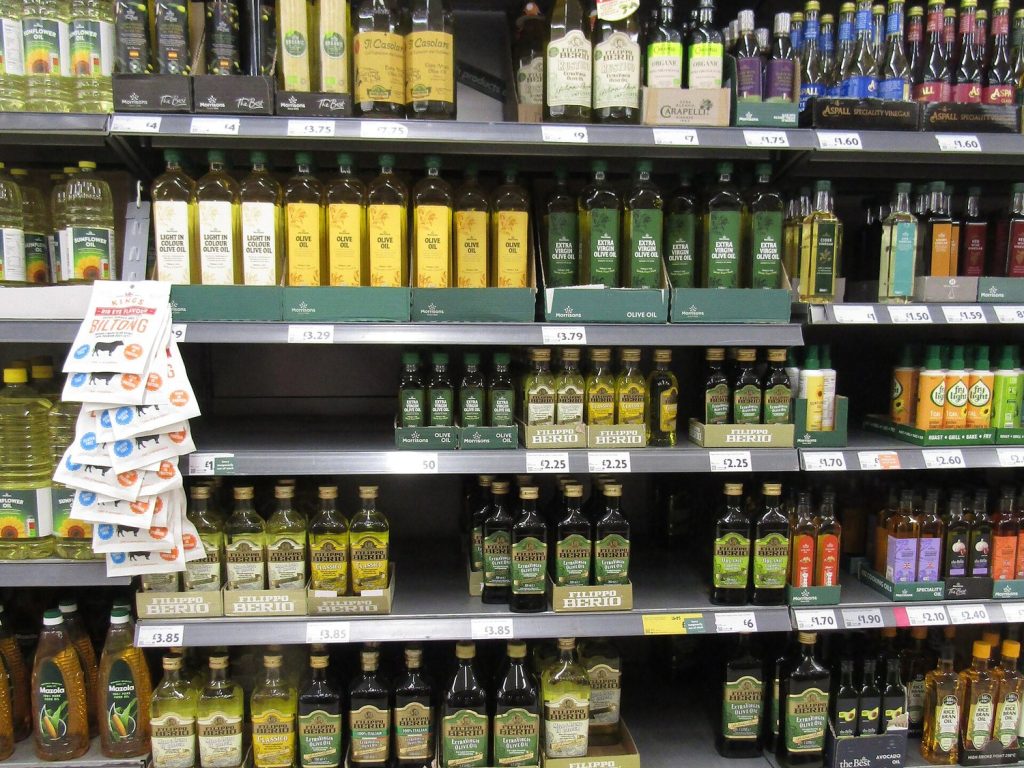
Category promotion is paid for by the whole sector and benefits the biggest sellers most, because they have the shelf space to catch the extra demand. If a campaign gets a shopper to reach for olive oil, the bottle nearest to hand is usually a large brand’s blend. Small mills funding their share through a levy have every right to be cynical about it, and many of them are.